In a nutshell
- 🌿 A simple rubber band gently corrals stems, creating a breathable microclimate that reduces bruising and moisture loss, keeping herbs fresh for up to a week.
- 🫙 Step-by-step: trim stems, rinse and dry, wrap a damp paper towel at the base, then secure with a snug (not tight) band; use a jar with 1–2 cm water and a loose bag for tender herbs.
- 🌱 Match method to herb: parsley, coriander, dill and mint thrive in jar + loose bag; basil stays at room temperature; thyme/rosemary/sage prefer a barely damp towel, no water.
- 🛡️ Troubleshoot freshness: vent if condensation builds, change water daily, re-trim stems, clean jars to avoid biofilm, and keep bundles away from ethylene-producing fruit.
- ✅ Results that matter: crisper leaves, preserved essential oils, easier handling, and less food waste—an effortless routine that elevates everyday cooking.
There’s a humble trick that saves herbs from the sad, soggy fate we’ve all seen in the salad drawer. It relies on a single, inexpensive tool: a rubber band. Harnessed correctly, it creates the gentle pressure and microclimate fresh sprigs crave, extending life from a day or two to nearly a week, sometimes longer. The method takes less than a minute and works with the herbs you reach for most—parsley, coriander, dill, mint, thyme. It’s low-tech, but surprisingly rigorous. By controlling moisture, airflow and stem contact, the band helps herbs retain turgor and aroma. Here’s how, and why, to make it your default.
Why a Simple Rubber Band Works
Fresh herbs wilt because they lose water fast. Leaves transpire; fridge air is dry; stems splay and bruise. A rubber band, placed correctly, counters all three risks. It gathers stems into a tidy bundle that limits abrasion, creates a small reservoir of shared humidity around the lower leaves, and keeps cut ends aligned so they can keep drinking. It doesn’t vacuum-seal the bunch—crucially, it just tidies and stabilises it. That balance is everything: enough structure to prevent damage, enough airflow to prevent slime.
Think of the band as a gatekeeper for microclimate control. When paired with a loosely tented bag or a lightly damp paper towel, it reduces surface evaporation while avoiding the suffocating conditions that invite mould. The result is better cell turgor, which you feel as springy leaves and perky stems. Fragile herbs, especially coriander and dill, respond dramatically. Mint, too. Woody herbs benefit as well, though they prefer less moisture overall. Get the tension right—snug, never strangling—and your herbs reward you with days of extra brightness.
There’s another bonus: the bundle is easy to move, rinse, and portion. Minimal handling means fewer broken leaves, less oxidation, and more flavour on the plate. It’s a tiny intervention with outsized impact.
Step-By-Step: The 60-Second Herb Bundle Method
First, trim a sliver from the stems with a sharp knife. Rinse quickly, then shake or spin dry until just damp, not dripping. Line up the stems. Wrap a small strip of damp paper towel around the bottom 2–3 cm of stems. Slide on a rubber band so it sits over the towel—snug enough to hold, loose enough to avoid crushing. If a leaf tears under the band, it’s too tight.
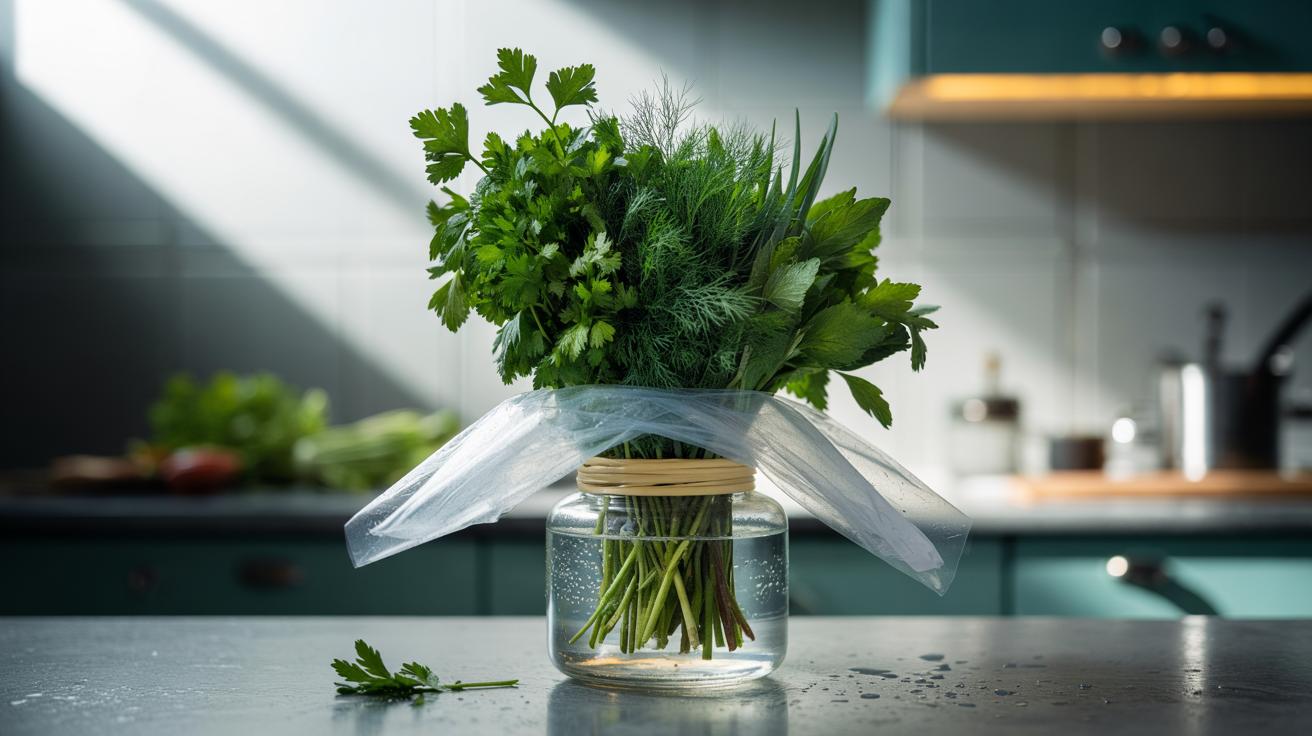
For tender herbs (parsley, coriander, dill, mint): stand the bundle in a jar with 1–2 cm of cold water, leaves above the rim. Loosely tent a food bag over the top and secure it lightly to the jar neck with a second band, leaving small air gaps. Refrigerate upright. Change the water daily, re-trim stems every two days. For basil, do the same but keep at room temperature, out of direct sun; basil dislikes the cold. For woody herbs (thyme, rosemary, sage): skip the water. Wrap the whole bundle in a barely damp towel, band at the base, and place in the fridge drawer.
Don’t skip the daily glance. If condensation builds inside the bag, lift it for a minute to vent. If leaves look limp, refresh the stem cut and water. The band stays the quiet constant—organised, gentle, reliable.
When to Use Jar vs Paper Towel: Matching Method to Herb Type
Different herbs have different thirst. Tender, leafy sprigs love a drink and gentle humidity; woody needles prefer cool, dry air and minimal wetness. The rubber band adapts to both, acting either as a collar above water or as a tidy clip for a breathable wrap. Match the method to the plant, not your habit. You’ll see the difference in aroma and texture within 24 hours.
| Herb | Best Method | Rubber Band Placement | Expected Freshness | Notes |
|---|---|---|---|---|
| Parsley, Coriander, Dill | Jar with 1–2 cm water + loose bag | Over damp towel at stem base | 5–7 days | Change water daily; re-trim stems |
| Mint | Jar with water + loose bag | Snug at base | 4–6 days | Very humidity-sensitive |
| Basil | Jar with water, room temp | Lightly snug at base | 3–5 days | Don’t refrigerate; vent bag more |
| Thyme, Rosemary, Sage | Damp towel wrap, no water | Band around towel, not stems | 7–10 days | Keep in fridge drawer |
The band’s job shifts: collar for water lovers, clip for dry keepers. Either way, it prevents scatter, reduces bruising, and preserves essential oils that drive flavour. Over-wet herbs lose perfume; controlled moisture keeps it.
Troubleshooting and Safety: Keeping Flavor, Avoiding Slime
If leaves turn black and glassy, you’ve trapped too much moisture. Vent the bag, dry the jar, and loosen the rubber band a notch. If stems look pale and thirsty, re-trim 5 mm and refresh the water. A faint pond smell means biofilm—wash the jar with hot soapy water, rinse, and start over. Clean kit equals clean flavour. Don’t let the water line reach the leaves; that’s the fast track to mush.
Watch the fridge environment. The crisper drawer is ideal for most, but not all, herbs; basil stays on the counter. Keep herb bundles away from ethylene-rich fruit like apples and bananas, which can accelerate ageing. For woody herbs wrapped in towel, use just-barely-damp fabric—if it feels wet to the touch, it’s too much. Rewrap every few days to prevent mould. If a few sprigs falter, strip and freeze them for stock rather than sacrificing the whole bunch.
Never choke the stems. The band should corral, not constrict. Aim for tidy alignment without pinching vascular tissue. That single detail often separates a crisp, perfumed bunch from a wilted one. With that, your herbs will hold their snap, their fragrance, and their green brilliance well past midweek.
That’s the quiet genius of the rubber band: small tool, big control. It orchestrates moisture, space and stability, so herbs stay bright, cook-ready and waste-free for days. The payoff is tangible—fewer last-minute dashes to the shop, more flavour in Tuesday’s omelette and Saturday’s tabbouleh. Once you’ve bundled a bunch correctly, you won’t go back. Which herb will you test first, and how will you adapt the method to suit your own kitchen rhythm?
Did you like it?4.6/5 (23)