In a nutshell
- 🌿 Vinegar’s power: acetic acid acts as a fast-acting contact herbicide, dehydrating soft foliage and showing results in minutes on seedlings.
- 🧪 Choose the right strength: 5% white for seedlings, 6% for small annuals, horticultural vinegar (20–30%) for tough weeds on hard surfaces; add a tiny surfactant, skip salt.
- ⏱️ Application matters: Warm, dry, low-wind days; target leaves closely to avoid drift; expect top-kill, not root kill, and repeat for perennials.
- 🛡️ Safety first: Wear gloves and eye protection with stronger acids, keep kids/pets away until dry, and never mix vinegar with bleach.
- 🌱 Sustainable strategy: Vinegar is non-selective and biodegradable; combine with mulching, hand weeding, and dense planting for lasting, low-impact control.
Britain’s gardeners are trading harsh chemicals for pantry power, and nothing is making faster headlines than a simple splash of vinegar on stubborn weeds. It’s cheap, quick, and surprisingly effective, especially for seedlings sprouting between patio slabs or along gravel driveways. The chemistry is simple: concentrated acetic acid dehydrates soft foliage, collapsing cells and leaving leaves brown and brittle. Results can be startlingly swift on a warm, dry day. Yet this green fix comes with rules. Not all vinegars are equal. Technique matters. So does timing. Used wisely, it’s a nimble tool in an eco toolkit. Used carelessly, it can singe lawns and irritate skin. Here’s how to get it right.
Why Vinegar Works on Weeds
Vinegar’s punch comes from acetic acid, a weak organic acid that acts as a contact herbicide. It doesn’t travel through the plant. Instead, it attacks the leaf surface, dissolving the waxy cuticle and disrupting cell membranes so water escapes. Soft, small weeds shrivel quickly; woody perennials resist. On a sunny, breezy day, evaporation accelerates the effect. Expect visible wilting within minutes on delicate seedlings and within hours on tougher annuals when conditions are warm and dry. That speed is why a quick, precise splash can feel almost surgical on a weedy path.
There’s a catch. Vinegar is non-selective. It does not distinguish between a dandelion in block paving and the thyme you prize in a kitchen bed. Overspray can scorch nearby leaves. And because acetic acid rarely reaches or kills roots, many perennials rebound, especially if they hold strong energy reserves below ground. Think of it as a fast, cosmetic knockback on small weeds and a tactical top-kill on larger ones. You can combine it with mulching and hand weeding to exhaust regrowth over time, turning speed into lasting control without persistent residues.
Choosing the Right Vinegar and Mix
Pick your bottle with purpose. The classic is distilled white vinegar at 5% acetic acid; it’s safe to handle and effective on very young weeds. “Cleaning vinegar” at 6% gives a slight edge without much extra sting. For stubborn targets, gardeners sometimes use horticultural vinegar (20%+ acetic acid). Treat it with respect. It is caustic, can burn skin, and absolutely requires gloves and eye protection. Stronger is not always better; it is about matching strength to the job and applying carefully.
| Vinegar Type | Acetic Acid % | Best Use | Notes |
|---|---|---|---|
| White Distilled | 5% | Seedlings, fresh sprouts | Budget-friendly; repeat if needed |
| Cleaning Vinegar | 6% | Small annuals, path edges | A tad stronger; handle sensibly |
| Horticultural Vinegar | 20–30% | Tougher weeds on hard surfaces | Wear PPE; avoid drift near plants |
Keep the recipe simple. Use straight vinegar in a trigger sprayer for spot work. Add a drop or two of washing-up liquid as a surfactant to help the solution cling to waxy leaves; don’t exceed a tiny amount or you’ll risk foaming and runoff. Skip salt—while it boosts damage, it lingers in soil and harms beds long after weeds vanish. Choose fan-pattern nozzles for control, label your bottle, and store it out of reach of children and pets.
How and When to Apply for Fast Results
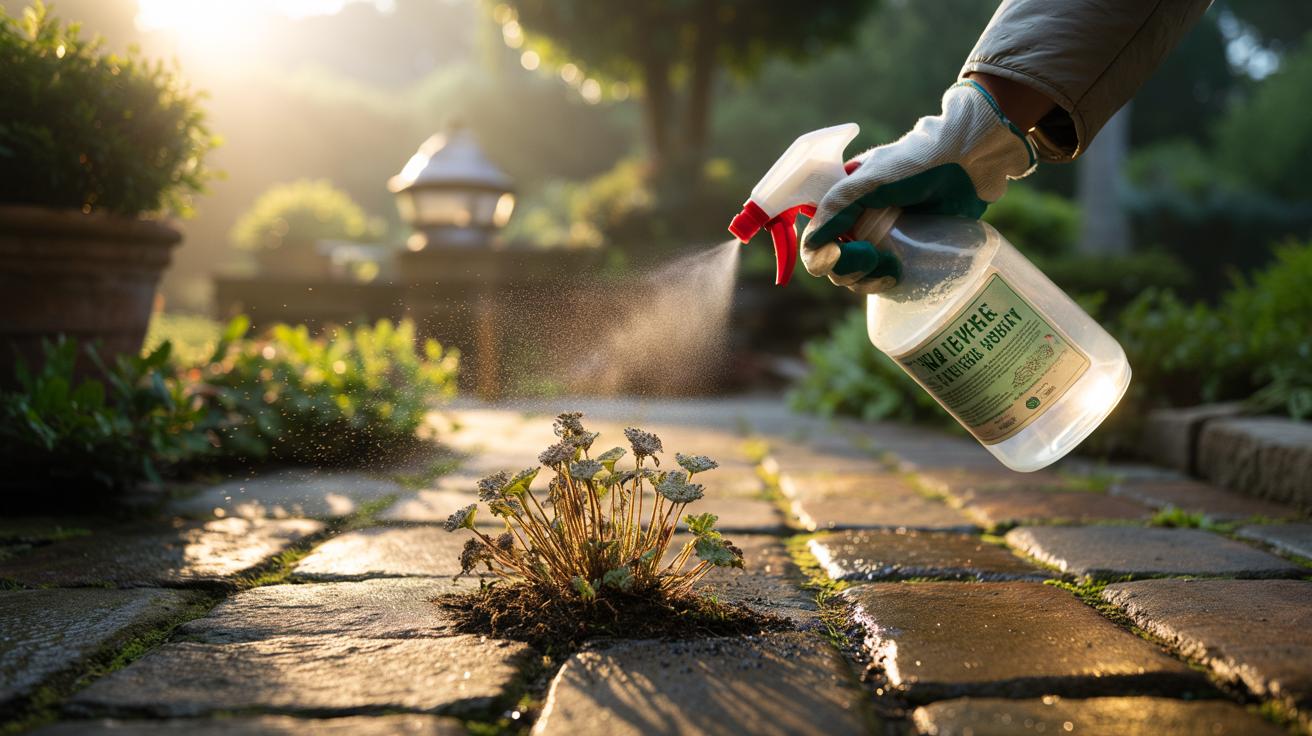
Timing is everything. Choose a dry, bright day with little wind. Late morning to mid-afternoon works best because warmth and sunlight speed desiccation. Start with clean, dry leaves; water dilutes vinegar and blunts the effect. Hold the nozzle close—10 to 15 cm—and wet the leaf surface until it glistens, avoiding drip. Hit only the weed: a careful splash beats a broad mist every time. Within minutes, young plants start to limp; by evening, they look bruised and dull. Rinse your sprayer with clean water afterward to protect seals.
Where to use it? Hard standings, gravel paths, brick edging, and gaps in paving are ideal. Keep clear of lawns and ornamental beds unless you’ve shielded nearby plants with cardboard or a kneeling board. For perennials like plantain or bindweed, expect bounce-back; repeat treatments chip away at new leaves and starve the root over several cycles. On cool, overcast days, you’ll still get results, just slower. Rain within two hours can undo the work, so check the forecast. If drift worries you, apply with a sponge or paintbrush to keep the splash on target and your conscience clean.
Safety, Limits, and Eco Footprint
Acetic acid is natural, but strength matters. Wear gloves with any vinegar and add eye protection when using horticultural grades. Keep pets and children away until leaves are dry. Never mix vinegar with bleach—it releases chlorine gas. Store solutions in their original containers or clearly labelled sprayers, and avoid metal parts that can corrode. Skin splashes? Rinse with plenty of water. If you catch a whiff, step back; mist in the air is a sign to lower the nozzle and slow your pace.
From an environmental angle, vinegar biodegrades quickly and leaves no persistent herbicide residues. That’s a win. Yet non-selective burn-down can still harm nearby plants and invertebrates if drift or runoff occurs. Be cautious near ponds or drains; direct applications to impermeable surfaces and keep doses modest. Recognise limits: vinegar rarely defeats deep-rooted weeds alone. Blend strategies—hand weeding, dense planting, mulching, flame or hot-foam weeding on paths—to cut seed banks and shade out stragglers. Sustainable control is a rhythm, not a single spray day.
The humble splash of vinegar proves that greener gardening can also be brisk and practical, dispatching fledgling weeds in the time it takes to make a cup of tea. Use the right strength, aim with care, and you’ll see quick, clean results—especially on paths and patios where roots can’t dig deep. For persistent offenders, combine small, regular treatments with mulching and a sharp hoe to finish the job without resorting to harsher chemistry. Which patch of your plot will you trial first, and how will you fold vinegar into a longer-term, low-impact weed plan?
Did you like it?4.4/5 (25)