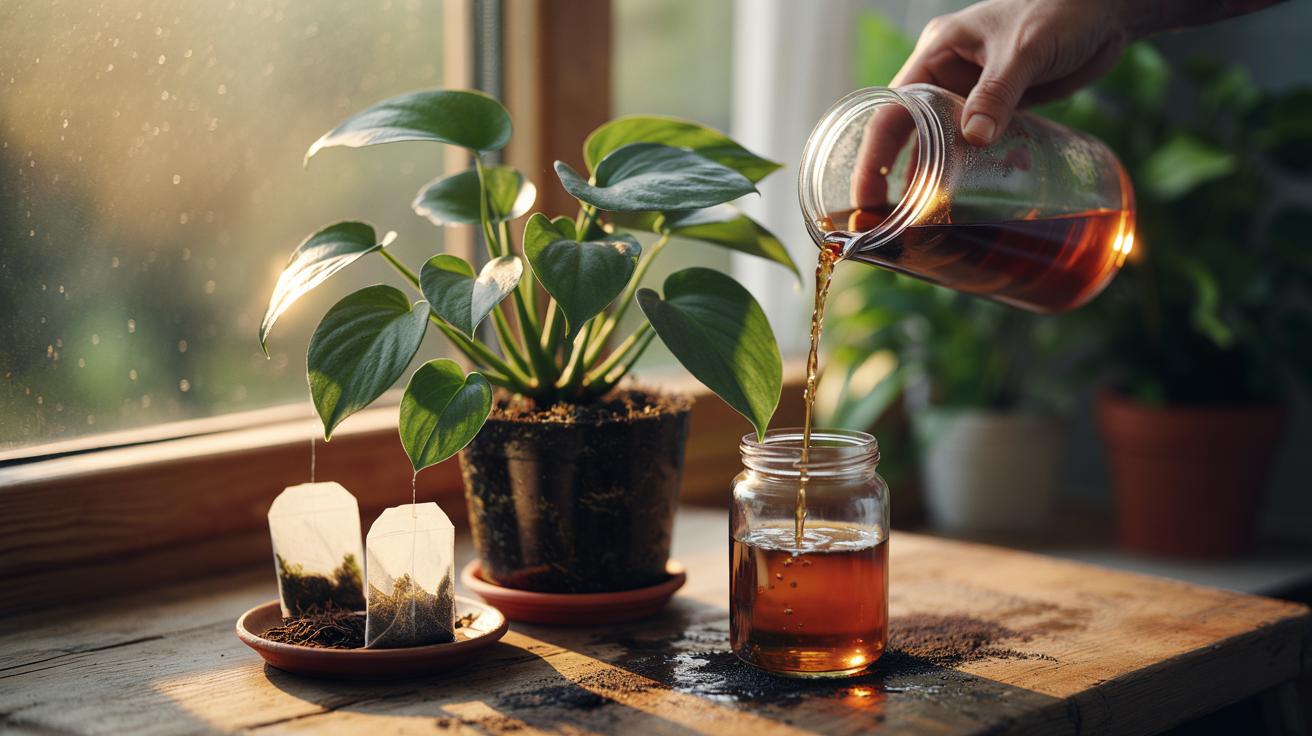
In a nutshell
- 🍵 Tea bags act as a gentle plant tonic, offering mild nitrogen, traces of potassium, helpful polyphenols, and slight acidity that feed beneficial microbes and improve soil structure.
- ⚡ The “10‑minute” boost is mostly rapid rehydration: restored turgor pressure and responsive stomata make leaves look greener fast, while true nutrient gains take days.
- 🧪 Use a weak infusion (1 bag per litre, cooled), apply monthly or fortnightly, compost the leaves, and avoid flavoured or plastic‑lined bags; never cap soil with intact wet bags or drench succulents.
- 🚫 Know limits: tea’s acidity shift is modest and caffeine negligible; it won’t fix iron chlorosis, waterlogging, or poor soil—reach for chelates, drainage, or balanced N‑P‑K when needed.
- 🌱 Best targets are acid‑loving plants like camellia, azalea, and blueberry; alternate with a balanced feed, monitor for salt build‑up, and keep doses light for steady, sustainable results.
British gardeners swear by quick fixes, and few are quicker than the humble tea bag. Steeped, cooled, and sprinkled around a drooping houseplant or thirsty tomato, it offers a fast pick‑me‑up that looks miraculous. Leaves perk. Green deepens. Soil seems livelier. Yet the real story is more nuanced than a viral tip. Tea brings mild nitrogen, traces of potassium, useful polyphenols, and gentle acidity, plus a buffet for soil life. The headline promise of “10 minutes” is mostly about rapid hydration and stomatal response, not instant fertilisation. Still, done well, tea bags can nudge plants towards richer colour and resilience, with almost no cost and minimal waste.
What Makes Tea Bags Plant-Friendly
Tea is a botanical concentrate. Even after brewing, a bag holds residues of nitrogen from leaf proteins, tannins that lightly acidify, and small amounts of potassium and micronutrients. When introduced to soil as a weak infusion or opened and mixed into compost, those compounds become food for beneficial microbes. As microbes feast, they release plant-available nutrients and create sticky biofilms that help roots capture moisture. For acid-loving plants such as camellias, blueberries, and azaleas, the slight pH nudge can be welcome. This is a gentle tonic, not a high-analysis fertiliser.
Structure matters too. Spent tea leaves offer fine-textured organic matter, improving crumbly tilth in pots and beds. That helps drainage yet retains moisture around root hairs, exactly where greener leaves are built. The aroma of tea is irrelevant to plants but signals the presence of phenolics that, at low concentrations, can support microbial diversity. Avoid flavoured or sweetened blends; oils and sugars can upset soil biology. Choose unbleached, plastic‑free bags or simply tear open the contents. Small inputs, repeated sensibly, can produce visible gains without the environmental footprint of synthetic feeds.
The 10-Minute Transformation: What Really Happens
Why do leaves look greener so quickly? Two reasons. First, hydration. A light drench or foliar mist with a cooled, weak tea solution restores turgor pressure in wilting tissues. Cells refill, leaves unfurl, and light catches a smoother surface, which our eyes read as richer green. Second, stomata respond to humidity and temperature; after a mist, they often regulate gas exchange more efficiently, improving short-term photosynthetic performance. Most of the “10‑minute” magic is rehydration and optics, not an overnight nutrient surge.
There is also a priming effect. Subtle doses of polyphenols and amino acids can nudge microbial partners into activity at the root zone, while the warm (never hot) solution slightly speeds movement of ions already present in the substrate. If a plant was teetering on the edge of a deficit, that can translate into a rapid, if temporary, boost. But true chlorophyll build‑up and new growth take days. Think of tea as a catalyst for conditions in which the plant can recover quickly, then thrive sustainably.
How to Use Tea Bags Safely and Effectively
Make a weak brew: one plain, unflavoured bag per litre of hot water, steeped 3–5 minutes, then cooled to room temperature. You want a pale straw colour, not café strength. Water the soil lightly or mist leaves, testing on a small patch first. For most houseplants, monthly is ample; fortnightly during active growth can help if light and temperature are right. Open spent bags and add the leaves to your compost or mix a teaspoon into potting soil, but never cap the surface with whole, wet bags; they can trap moisture and invite fungus gnats. Less is more—overuse risks sour soil and mould.
| Practice | Notes |
|---|---|
| Use plain black or green tea | Avoid flavoured, perfumed, or sweetened blends; oils and sugars disrupt soil biology. |
| Dilute to weak infusion | Strong tea concentrates tannins and can stress roots or stain leaves. |
| Choose plastic‑free bags | Some bags contain polypropylene; tear open and compost leaves only. |
| Target acid‑lovers | Camellia, azalea, blueberry respond well; avoid heavy use with lavender or rosemary. |
| Rinse and rotate | Alternate with balanced feed (e.g., 3‑1‑2) during growth; skip if soil is already rich. |
Do not mix tea with milk. Do not drench succulents. If you see a white crust, cut back; it signals salts from water or fertiliser. Keep the brew light, the timing sensible, and the leaves will thank you.
Science, Myths, and Limitations
Claims swirl around tea, some robust, others romantic. The acidity of brewed tea is mild; in typical potting mixes, pH shifts are modest and temporary. The nitrogen contribution is real but small compared with a balanced fertiliser. Caffeine is often blamed or praised; in practice, levels in weak leftover tea are low, and effects on roots are minimal at gardening dilutions. Tea bags help most by feeding microbes and improving moisture dynamics, not by delivering a miracle nutrient payload.
Know when tea is the wrong tool. If leaves are pale with green veins, that’s likely iron chlorosis—reach for an iron chelate, not your teapot. If growth is stunted despite good light, a measured N‑P‑K feed is appropriate. Waterlogging? Tea won’t fix poor drainage. And while sprinkling dry tea leaves can add texture, leaving intact wet bags on soil invites mould and gnats. Compost them instead. For outdoor beds, tea is a nice adjunct but cannot replace bulky organic matter like leaf mould or well‑rotted compost. Treat tea as a nimble, low‑waste booster within a broader, evidence‑led care routine.
Used with a light hand and a reporter’s scepticism, tea bags can deliver quick cosmetic wins and quietly support the soil life that keeps plants vivid. The trick is understanding what’s immediate (rehydration, sheen) and what’s cumulative (microbial health, structure). Small, steady nudges beat heavy‑handed fixes every time. So brew gently, cool it, and give your greenery a sip. Then watch—first minutes, then weeks—as they settle into richer colour. What plant in your care is crying out for a subtle, sustainable lift today, and how will you test the difference?
Did you like it?4.3/5 (29)