In a nutshell
- 🍋 A quick spritz of lemon oil resets kitchen air in seconds, with limonene and citral helping neutralise lingering odours rather than simply masking them.
- 🔬 Terpenes from essential oils interact with airborne VOCs; rapid diffusion and light oxidation shift how smells reach your nose, and a little alcohol improves dispersion and evaporation.
- 🧪 Practical wins: a DIY spray (50 ml alcohol + 50 ml water + 12–15 drops lemon), cotton pads in bins, bicarb with lemon for fridges, and lemongrass or tea tree for strong cooking aromas.
- ⚠️ Safety first: dilute oils, spot-test surfaces, ventilate, and be cautious around pets; essential oils are aromatics, not approved disinfectants.
- 🌱 Sustainable and savvy: a small bottle delivers hundreds of refreshes at low cost; choose reputable sources, store well, and rotate with eucalyptus, lavender, or peppermint for variety.
A single, sharp spritz of lemon oil can reset a kitchen in seconds. Smell disappears. Freshness lingers. It’s not magic, it’s chemistry delivered with citrus snap. When cooking aromas cling to curtains, cloths, or the air itself, volatile compounds from essential oils latch on and change the game fast. Small molecules travel quickly, which is why the effect feels instant. The result is a cleaner-smelling space without reaching for heavy aerosols or synthetic perfumes. As home cooks rediscover pantry-friendly fixes, lemon, eucalyptus, and tea tree are returning to the fore—simple, effective, and surprisingly scientific. Here’s how these oils blitz lingering odours and make a kitchen feel newly scrubbed.
Why Lemon Oil Works in the Kitchen
Open a bottle of lemon essential oil and you meet limonene, a powerhouse terpene responsible for that archetypal zesty punch. In kitchens, limonene does more than smell bright; it loosens greasy residues and helps neutralise stubborn odour molecules rising from pans, drains, and bins. That’s why one mist can make a space feel freshly cleaned even when you haven’t touched a mop. The nose reads “citrus” as safe and sanitary, amplifying the impression of hygiene while chemistry does the heavier lifting behind the scenes.
Another key player is citral, found in lemon and lemongrass oils. Citral is recognised for antimicrobial activity, which matters when odours have a bacterial component—think wet sponges, compost caddies, or raw-fish prep boards. While essential oils aren’t disinfectants in the legal sense, their compounds can disrupt malodour formation by reducing the microbial party that produces it. You get a rapid sensory reset now and less stink later. Keep it simple: a 5–10 drop blend in water and alcohol as a countertop spritz; a cotton ball tucked discreetly by the bin; a lemon-oil wipe across handles and seals. Quick delivery. Noticeable payoff.
The Science of Odour Neutralisation
Most kitchen smells come from volatile organic compounds (VOCs), sulphur notes, amines from ageing proteins, and lipid oxidation by-products. Terpenes in essential oils—limonene, alpha-pinene, cineole—are themselves volatile, so they disperse fast, collide with airborne odour molecules, and alter how those molecules reach your nose. Some terpenes oxidise on contact with air, creating products that bind or mask specific malodours more effectively than a flat fragrance. The speed you perceive is diffusion at work, not just a cover-up. There’s also a psychological layer: the brain associates citrus with “clean,” so a small chemical shift creates a big sensory shift.
Delivery matters. Oils dissolve poorly in plain water, so pairing with a little high-proof alcohol improves dispersion and evaporation, increasing surface contact with odour molecules. Ultrasonic diffusers create a fine mist, increasing the reactive surface area of each droplet. On surfaces, diluted oils can address the source—oily films that hold odours—by lifting residues while leaving behind lighter, more agreeable notes. It’s targeted, not just scented fog. And because these compounds evaporate quickly, the kitchen doesn’t smell cloying, just newly aired. Think chemistry first; fragrance second. That’s the trick.
Practical Methods to Deploy Essential Oils
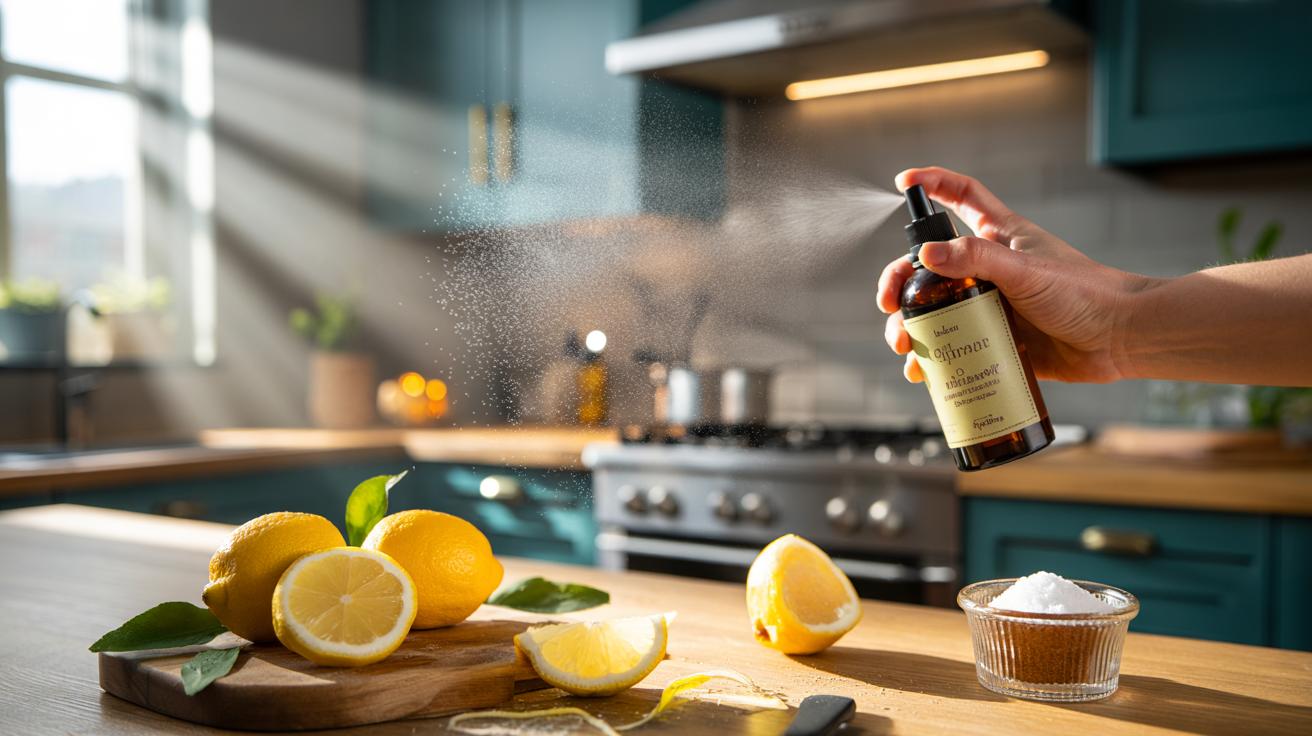
For speed, a DIY spray is first choice: 50 ml vodka or surgical spirit, 50 ml water, 12–15 drops of lemon oil. Shake. Mist near sinks, chopping boards, the hob after frying. Two sprays can cut through last night’s fish in half a minute. For bins and drains, drip 2–3 drops on a cotton pad hidden under the liner or pop a drop into the plughole with a kettle’s worth of hot water. Diffusers suit open-plan rooms where odours drift; five drops of lemon with one of tea tree creates a crisp, clean edge.
If you prefer passive options, try bicarbonate of soda in a ramekin with three drops of lemon under the fridge shelf. It absorbs and refreshes. For sticky residues, a diluted wiping mix—250 ml warm water, a teaspoon of mild detergent, 5 drops of lemon—cuts grease around extractor switches and cupboard pulls. Finish with a dry cloth to avoid streaks. Keep it varied: simmer a small pan of water with lemon peel and a drop of oil while you tidy; mist fabrics lightly and let them breathe. Small actions, large impact.
| Odour Source | Best Oil | Key Compounds | Quick Method | Typical Time |
|---|---|---|---|---|
| Frying fish | Lemon | Limonene, citral | Two sprays in air | 30–60 sec |
| Bin/compost | Tea tree + Lemon | Terpinen-4-ol, limonene | Pad under liner | Hours–days |
| Onions/garlic | Lemongrass | Citral | Mist near prep area | 1–2 min |
| Stale fridge | Lemon | Limonene | Bicarb + 3 drops | Overnight |
| Damp cloths | Eucalyptus | 1,8-cineole | Rinse bowl, air-dry | 10–15 min |
Safety and Sustainability Considerations
Essential oils are potent. Treat them like concentrated chemicals. Always dilute before spraying on surfaces or near fabrics. Spot-test painted cabinets, natural stones, and plastics; citrus oils can dull some finishes over time. Avoid direct skin contact if you’re sensitive, and keep away from eyes. Pets, especially cats, can be reactive to certain oils—ventilate well and don’t diffuse continuously in enclosed spaces. Never use oils as disinfectants where food safety is critical; they’re aromatics, not approved sanitisers.
On the sustainability front, small goes far. A 10 ml bottle delivers hundreds of refreshes, cutting the need for single-use aerosol cans and heavy synthetic blends. Choose reputable brands with clear botanical names and origin to ensure purity. Store bottles away from heat and light to maintain stability. Cost per use is low—a few pence per spritz—yet the impact is immediate. If citrus isn’t your favourite, rotate with lavender for soft roundness or peppermint for a brisk, cool lift. Smart, light-touch, effective—that’s the ethos of a fresher kitchen.
Lemon oil doesn’t just mask smells; it changes how the kitchen feels and functions, fast. Short bursts tame lingering odours, while simple habits—bin pads, quick wipes, tiny diffusions—keep the air bright without overwhelming it. Use chemistry to your advantage, then let ventilation and good cleaning do the rest. With a few drops and a minute to spare, dinner aromas move from cloying to clean memory. What combination of oils, methods, and routines will you test this week to make your kitchen smell as fresh as it looks?
Did you like it?4.5/5 (26)