In a nutshell
- 🌀 Texture + airflow: The dryer sheet’s nonwoven fibres and huge surface area let moving air strip the boundary layer and release fragrance fast, with micro‑turbulence from fan blades boosting even diffusion.
- 🔧 Safe setup: Clip the sheet to the rear intake grille, keep it taut, avoid motor vents and moving parts, and use low–medium speed; if airflow drops or noise changes, reposition.
- 💷 Performance and cost: Expect 30–90 minutes of noticeable freshness on low; roughly 7.5p per sheet and under 1p/hour in energy—cheaper than most plug‑ins; pick plant‑based options and reuse before disposal.
- 🌿 Alternatives and tweaks: Use activated carbon fabric for odour reduction, or a coffee‑filter/felt pad with essential oils; try a simple frame or mount on the output cage for a directional plume while keeping vents clear.
- 🏠 Smart practices: Treat this as a scent hack, not filtration; ventilate rooms daily, dust blades weekly, and mind sensitivities (babies, pets, allergy‑prone) to keep air feeling fresh without overwhelm.
It’s the sort of homespun trick that smells like victory. Peg a single dryer sheet to your desk fan and the air shifts from stale to freshly laundered in seconds. Not magic. Mechanics. The sheet’s fibrous web and light coatings of fragrance compounds respond to moving air, releasing scent with little effort from you or your electricity bill. In small rooms it’s instant gratification; in larger spaces it’s a quiet, rolling bloom. Because the sheet isn’t heated, you get a cooler, cleaner-feeling diffusion rather than a heavy wall of perfume. Here’s how the texture works, why it disperses fragrance so fast, and the safest ways to try it at home.
Why Dryer Sheets Work With Moving Air
A dryer sheet is a nonwoven fabric with a maze of microfibrils and pores. That tangled texture does more than soften laundry. It holds a thin film of fragrance molecules and conditioners across an enormous surface area. When a fan starts up, airflow shears the thin “boundary layer” of still air hugging the sheet. With that barrier scrapped away, more scent molecules vaporise per second. This is why a gentle breeze can feel stronger, scent-wise, than a warmer but stagnant room.
There’s chemistry at play too. Many sheets use cationic surfactants that spread evenly over fibres, keeping perfume close to the surface rather than buried within the sheet. The constant pressure and small eddies off the fan blades create tiny bursts of turbulence, nudging new patches of scented coating into the airstream. Result: rapid, even diffusion without the spike-and-crash you get from aerosols. In cooler rooms, release slows slightly; in humid rooms, diffusion often feels richer. Crucially, the sheet remains intact. It’s the air doing the heavy lifting, not heat or friction.
How to Attach a Sheet Safely and Securely
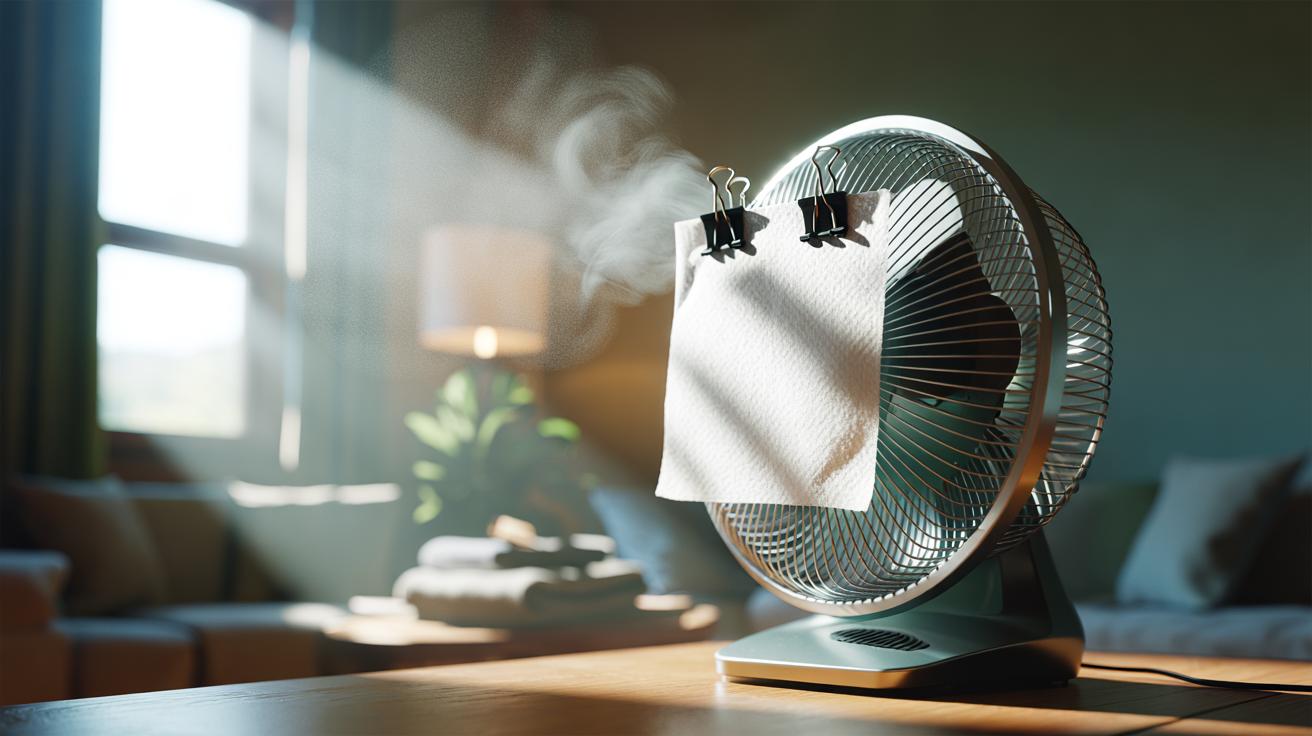
First rule: don’t choke the fan. Place the dryer sheet over the intake grille (where air is drawn in), not the motor vents, and secure it with two light binder clips or a loose elastic band. Keep it taut; a flapping sheet can buzz annoyingly and strain the grille. For a pedestal or desk fan, a single sheet is enough. Box fans can take two at opposite corners. If the fan sounds different or airflow drops dramatically, stop and re‑position—the setup should enhance air, not block it.
Position matters. Intakes create negative pressure that holds the sheet in place while spreading fragrance through the blades. Avoid contact with moving parts, and always attach when the fan is off. Run on low for a subtler, longer release; medium gives an obvious “just-washed” lift for 20–40 minutes. Mind sensitivities: households with babies, pets, or fragrance allergies should test for a few minutes with a window cracked. Below is a quick, at-a-glance guide.
| Fan Type | Attachment Point | Best Setting | Typical Coverage | Notes |
|---|---|---|---|---|
| Desk/Pedestal | Rear intake grille | Low–Medium | Small room (10–20 m²) | One sheet; keep taut |
| Box Fan | Corner of intake side | Low | Open-plan or hallway | Two sheets max |
| Tower Fan | Lower rear panel | Low | Medium room | Do not cover vents fully |
Scent Performance, Cost, and Sustainability
Performance hinges on three variables: airflow, humidity, and sheet formula. Higher airflow strips scent faster but shortens lifespan; humid air slows evaporation yet carries aroma well, making the fragrance feel rounder. Expect a single sheet to deliver a noticeable lift for 30–90 minutes on low, with a softer tail that lingers on textiles nearby. Think “freshness halo” rather than a room spray’s sharp hit.
On cost, it’s economical. A UK box of 40 sheets at around £3 works out at roughly 7.5p per sheet. If a sheet gives two hours of useful throw, that’s ~3.8p per hour, plus fan energy. A 30 W desk fan draws 0.03 kWh an hour; at 28–34p/kWh, that’s under 1p per hour. Cheaper than most plug-ins, kinder than constant aerosols. Sustainability is nuanced. Many sheets are cellulose-based but may include polymer binders and synthetic fragrance. Choose plant-based, dye-free versions and reuse each sheet first for laundry or dusting, then for fan duty to extend life. Dispose responsibly; most aren’t curbside recyclable.
Alternatives and Expert Tweaks for Cleaner Air
Want less perfume, more purity? Clip a thin square of activated carbon fabric to the intake to reduce odours without scent, or use a small HEPA desk unit for true particulate filtration. For natural aroma, dab two drops of essential oil onto a paper coffee filter or felt pad and secure that instead of a dryer sheet—light, breathable media release gently and avoid oils contacting plastic grilles. Whatever you attach, keep the airflow path open and the motor vents clear.
Power users can build a simple perimeter frame from two bamboo skewers and a rubber band, creating a shallow “scent rack” that sits 1 cm off the grille. This keeps material flat, prevents flutter, and preserves flow. Another tweak: place the sheet downstream, on the output cage, for a more directional plume aimed across a sofa or hallway. Just remember the golden rule: this is a scent hack, not a cleaner. This freshens the air you breathe; it does not remove pollutants. Ventilate for five minutes daily, wipe dust from blades weekly, and rotate scents sparingly to avoid nose fatigue.
Used thoughtfully, a dryer sheet on a fan is a small, clever intervention that leverages texture, airflow, and surface chemistry to make a room feel newly aired without an ounce of aerosol propellant. It’s cheap, quick, and entirely reversible. Be mindful of sensitivities, keep vents unobstructed, and treat it as a finishing touch after basic ventilation and cleaning. Ready to experiment with placement, fan speed, and sheet type to discover the freshest combination for your space—or do you have a different micro-hack that beats it?
Did you like it?4.5/5 (24)