In a nutshell
- 🧼 The science: dryer sheets carry cationic surfactants and anti-static agents that lift oily haze and repel dust, delivering a five-second swipe from cloudy to clear.
- 🪞 How-to: start dry with a used dryer sheet, swipe in a broad “S” from top to bottom, then lightly buff with microfibre; avoid soaking mirror edges to protect the backing.
- ⛔ Limits: they won’t remove limescale or etched marks—use diluted white vinegar or purpose cleaners; over-wiping can leave a film that needs a quick buff.
- ⚠️ Safety: fragrances and quaternary ammonium compounds may irritate—ventilate, consider gloves, keep from kids and pets, and never use on camera lenses or coated screens.
- 💷 Value & alternatives: low-cost, rapid touch-ups; for a pristine finish switch to glass cleaner, or try a hybrid method—quick sheet swipe, then a light cloth-only mist and buff.
In bathrooms across Britain, it’s the same small headache: a mirror that refuses to sparkle, smeared by steam, toothpaste spray, and hairspray mist. Then someone rubs it with a dryer sheet and, almost cheekily, the fogged glass goes pristine. What’s happening? The humble laundry staple hides a cocktail of fabric softeners and anti-static agents that lift grime while preventing new particles clinging to the surface. For light haze, the fix can take as little as five seconds. It’s quick, wallet-friendly, and strangely satisfying. Here’s the science behind the swipe, how to do it properly, where it excels, and when a different tool is the better shout.
Why Dryer Sheets Cut Through Mirror Haze
Dryer sheets are coated with cationic surfactants—often quaternary ammonium compounds—and waxy fatty acids. On clothing, they reduce static and add softness. On glass, those same molecules behave like tiny diplomats: the cationic heads latch onto negatively charged dust and residue, while the fatty tails loosen greasy films from hairspray, face oils, and toothpaste specks. The sheet’s slightly textured fibres then shuttle loosened grime away from the reflective surface. This duo effect is why a single pass can make a cloudy mirror look unexpectedly brilliant.
The anti-static chemistry matters. Glass accumulates charge and attracts airborne fluff; your sheet’s quats neutralise that pull. That means less re-soiling and fewer lint flecks settling immediately after you clean. A faint, hydrophobic film can also form, resisting fresh mist for a short while and making subsequent wipes easier. Important caveat: that film is not a substitute for glass cleaner on mineral deposits. If your cloudiness is hard-water scale—matte, gritty, almost etched—no softener will dissolve it. For most bathroom haze, though, the sheet wins on speed and simplicity.
When you see the mirror “pop” from grey to crisp within seconds, you’re watching surfactants rebalance the surface, not magic. It’s fast chemistry, made visible.
How to Do the Five-Second Swipe
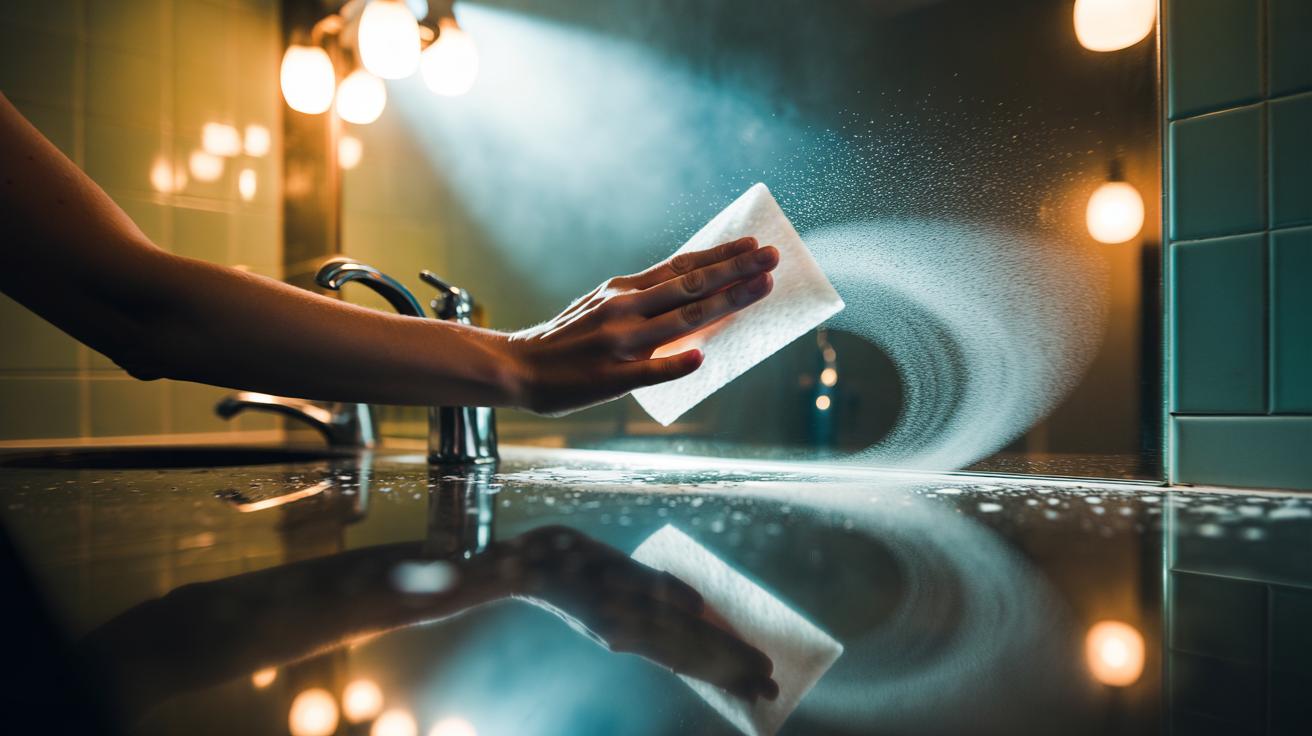
Start dry. A clean, unused sheet works, but a used dryer sheet can be even better: it’s less coated, less likely to over-deposit softener, and still carries enough surfactant to lift light grime. Hold the sheet flat and make a broad “S” motion from the top corner to the opposite bottom edge. This spreads pressure, reduces streak paths, and avoids grinding debris in circles. For light haze, one smooth pass often does it. If you see faint tracks, flip the sheet and do a second, lighter glide.
For heavier splatter, breathe lightly onto a small section to add a touch of vapour, then polish that patch with the sheet before expanding outward. Avoid soaking the mirror’s edges; trapped moisture can creep behind the backing and tarnish the silvering. Once the residue lifts, follow with a quick buff using a lint-free cloth—microfibre or an old cotton T-shirt—to even the finish and remove any trace film. The result should be crisp and reflective, not squeaky-dry like a solvent clean, but impressively clear for the effort expended.
If fragrance is a concern, choose unscented or hypoallergenic sheets. Sensitive skin? Use gloves. And always test a small corner first. Most households will find the method painless, speedy, and oddly addictive.
Science, Limits, and Safety Considerations
There’s real chemistry at work, but it has boundaries. Dryer sheets excel at disrupting oily grime, dust-bound static, and light soap residues. They do not remove etched marks, micro-scratches, or white, crusty limescale. If a bead of vinegar fizzes on the spot, you’re dealing with minerals—reach for a mild acidic cleaner and a non-scratch pad instead. Don’t keep scrubbing a mineral stain with softener and expect a different outcome. You’ll just deposit more film and raise streak risk.
Safety-wise, quaternary ammonium compounds can be mild skin and eye irritants in concentrated form, though the sheet’s dose is low. Keep out of reach of children and pets, and avoid rubbing your eyes after handling. Ventilate if you’re sensitive to perfume; many sheets carry fragrance and fixatives designed to linger on textiles. On mirrors, less is more: over-wiping can leave a visible sheen. If that happens, simply buff with a damp microfibre cloth, then finish dry. Crucially, protect the mirror’s edges and backing—no prolonged wetting, no ammonia-heavy cocktails seeping behind the glass. The trick is speed, contact, and restraint.
Treat the dryer sheet as a spot-cleaning tool, not a universal solvent. Deploy it for quick clarity; switch to purpose cleaners for scale and sanctioned deep cleans.
Cost, Time, and Alternatives
Part of the appeal is practical economics. A single sheet often handles multiple mirrors and chrome taps in a pinch, saving a rummage for sprays. It’s hard to beat for post-shower touch-ups or pre-guest blitzes, where thirty seconds is all you have. That said, classic glass cleaner delivers a squeakier finish on large panes, and white vinegar handles mineral stubbornness more predictably. Think of the dryer sheet as your shortcut, not your only play. Use it for light haze and maintenance; escalate method when the surface tells you to.
| Method | Best For | Speed | Finish | Approx. Cost per Use |
|---|---|---|---|---|
| Dryer sheet (used or new) | Light haze, hairspray mist, dust | 5–30 seconds | Clear, slight protective film | £0.02–£0.10 |
| Glass cleaner + microfibre | General smears, fingerprints | 1–2 minutes | Pristine, squeak-dry | £0.05–£0.15 |
| White vinegar (diluted) | Limescale, mineral haze | 2–5 minutes | Matte to bright, requires buff | £0.02–£0.05 |
If you want the best of both worlds, try a hybrid: quick dryer sheet swipe, then a single mist of glass cleaner on a cloth, not the mirror, and a gentle buff. You’ll keep speed while erasing any residual film. Always keep sheet fibres away from camera lenses or coated screens; glass mirrors are forgiving, optics aren’t.
The surprise of a dryer sheet turning a grey, fogged mirror crystal clear is less of a hack and more of a clever reapplication of textile chemistry. Softener agents seize residue, anti-static compounds stop dust reattaching, and a light buff completes the job. For everyday haze, it’s a five-second win. For mineral marks and deep grime, bring in the specialists and protect the mirror’s backing from moisture. Ready to try the laundry-cupboard solution on your own hallway mirror, or will you pit it head-to-head against your favourite glass cleaner to see which finish you prefer?
Did you like it?4.5/5 (25)