In a nutshell
- 🌱 Living soil: Enrich with compost, mulch, and mycorrhizae; maintain pH ~6.0–6.8 so biology unlocks phosphorus and trace minerals for abundant buds.
- 🧪 Bloom-focused feeding: Keep nitrogen modest; prioritise phosphorus and potassium (1-2-2 or 1-3-2); use small, regular doses, with seaweed and magnesium foliar sprays for quick corrections.
- 💧 Deep, infrequent watering: Irrigate in the morning via drip/soaker under mulch; use rainwater for acid-lovers; keep a consistent rhythm, especially in containers.
- ✂️ Pruning and deadheading: Prune spring bloomers after flowering; cut back new-wood summer bloomers in late winter; pinch annuals and stake tall perennials to channel energy into new buds.
- ☀️ Light management and airflow: Aim for 6–8 hours of sun or bright shade; map seasonal light, minimise night lighting for photoperiod-sensitive plants, and space wisely to deter mildew.
British gardeners whisper about it on allotments and in village halls: the real secret to luscious, repeat blooms isn’t just a fancy feed or a trendy cultivar. It’s a quiet system, built beneath your feet and reinforced by small, precise habits in watering, light, and pruning. The best-looking borders are engineered, not chanced. Think living soil, carefully timed nutrition, deep but measured moisture, and decisive deadheading. Do that, and even a modest terrace can look like Chelsea week after week. The payoff is startling: tighter bud clusters, richer colour, and plants that sail through stress with poise. Here’s what homeowners truly need for a flowering garden.
The Soil Biology Behind Lush Blooms
Healthy soil is the unseen engine of every flower garden. The most reliable path to abundant colour starts with a thriving soil microbiome. Mycorrhizal fungi, beneficial bacteria, and earthworms trade nutrients for sugars, unlocking phosphorus and trace minerals that buds crave. Aim for a friable structure enriched with steady organic matter: well-rotted compost, leaf mould, and a light dusting of worm castings. For most ornamentals, keep pH between 6.0 and 6.8; acid-lovers like azaleas and camellias prefer closer to 5.5. In compacted beds, swap digging for surface mulching to protect fungal networks. Resist the urge to turn soil too often; let life build.
Test annually with a reputable kit and correct gently: a touch of sulphur lowers pH; garden lime raises it. Top-dress in spring with 2–3 cm of compost, then mulch 5–7 cm to hold moisture and moderate temperature. Consider inoculating transplants with mycorrhizae for rapid establishment. Compost teas and seaweed extracts can nudge microbial activity without blasting plants with salts. Feed the soil, and the soil feeds the flowers. This simple inversion—nourish biology first—transforms weak, leggy growers into sturdy bloom machines, and it pays dividends in drought resilience and disease suppression all season long.
Feeding for Blooms, Not Leaves
Once roots and soil life are humming, tune nutrition for flowers. Build a base with a slow-release organic mix in early spring, then pivot to bloom-leaning inputs as buds set. Keep nitrogen (N) modest to avoid leafy sprawl and prioritise phosphorus (P) and potassium (K) for bud formation and colour retention. Ratios like 1-2-2 or 1-3-2 suit mid-season flowering. Liquid feeds are fast; organics are steadier. Both can work, especially in containers where nutrients leach quickly. The rule is simple: enough fuel for buds, never so much N that petals are sacrificed for foliage. Watch the leaf tone and adjust in two-week increments.
| Stage | Aim | Approx. NPK | Examples |
|---|---|---|---|
| Establishment | Roots & shoots | 3-1-2 or 2-1-2 | Slow-release base feed, fish hydrolysate |
| Pre-bud | Buds priming | 1-2-2 | Bone meal, soft rock phosphate, liquid seaweed |
| Peak bloom | Colour & longevity | 1-3-2 | PK boosters, tomato feed-style liquids |
For quick corrections, foliar sprays of seaweed (trace minerals) and magnesium (Epsom salts at 1 tsp/L) can deepen greens and support chlorophyll without pushing leaves over flowers. Container gardens need little-and-often feeding due to runoff—weekly half-strength is safer than monthly shock doses. Salt buildup? Flush pots thoroughly with plain water. Small, consistent nudges beat occasional blasts, and the result is tighter internodes, richer petals, and fewer mid-summer slumps.
Watering Routines That Trigger Flowering
Deep, infrequent watering encourages roots to chase moisture, anchoring plants against heat and wind. Most borders thrive on roughly 2.5 cm per week in warm weather, factoring rainfall. Morning watering reduces mildew and leaf scorch; evenings invite fungal parties. Use drip lines or soaker hoses under mulch to deliver water to roots, not leaves. Then leave the surface to dry slightly. Moist roots, dry foliage: that’s the bloom-safe formula. In clay soils, water more slowly and less often. In sandy beds, smaller, more frequent sessions may be necessary. Always check 5–7 cm down with your finger; gadgets are helpful, but touch is honest.
Hard water can raise pH in containers, especially problematic for acid-loving shrubs. Harvest rainwater in a butt and reserve it for hydrangeas, camellias, and blueberries. Mulch is your ally—wood chips or composted bark stabilise moisture swings and temperature spikes. Don’t misread midday flagging; some plants droop to conserve water and recover by evening. Pots are different: they heat fast, dry quicker, and may need daily attention in July. Self-watering planters extend the window. Consistency beats volume—keep a rhythm, and flowers respond with a rhythm of their own, opening on schedule and holding longer on the stem.
Pruning, Deadheading, and Light Management
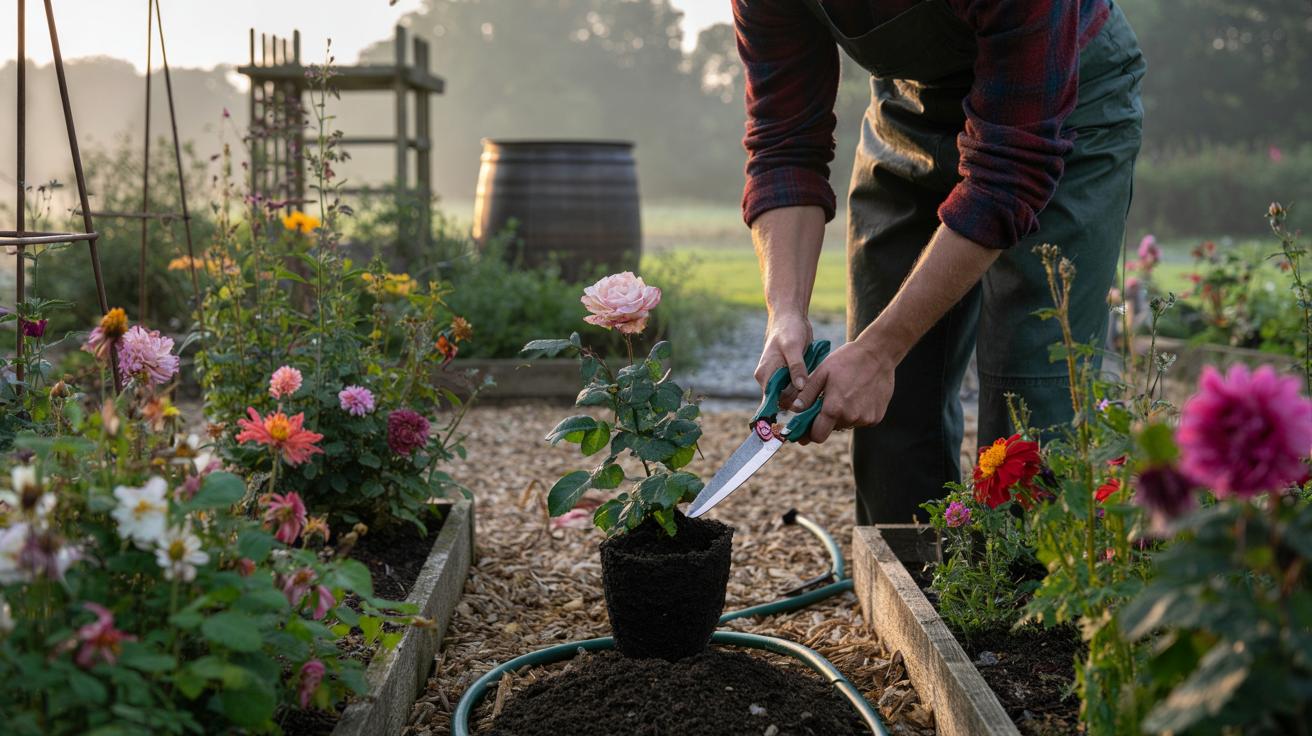
Pruning sets the stage for bloom. Spring-flowering shrubs (lilac, forsythia) set buds the previous year, so prune immediately after flowering. Summer bloomers on new wood (many roses, buddleia) appreciate a late-winter cut to invigorate shoots. Deadhead with intent: remove spent blooms to the first strong leaf node to redirect energy from seeds to new buds. Pinch young annuals—cosmos, zinnias—to encourage branching and more flowering stems. Sharp tools, clean cuts, right timing: three habits that turn good gardens into great ones. Stake tall perennials early to avoid flopping that shades neighbouring buds.
Light is non-negotiable. Most flowering plants need 6–8 hours of direct sun; some perform beautifully in bright, dappled shade. Study your plot’s sun path across seasons; a plant happy in May may sulk in September. If trees steal light, lift the canopy or reposition containers. Reflective surfaces—pale gravel, limewashed walls—bounce photons back into borders. Maintain airflow with sensible spacing; mildew steals blossoms faster than you can spray. Some species are photoperiod-sensitive, setting buds as day length shifts; keep night lighting minimal near beds. Right plant, right light, right cut—the trio that unlocks relentless flowering.
Strip the mystique away and you find a system: living soil, bloom-focused feeding, disciplined water, and precise light and cuts. Put those pieces together and your borders stop surviving and start performing, week after week, even when the weather toys with you. Begin with one tweak this weekend—mulch deeply, adjust your feed, re-time watering—and watch how quickly plants respond. The best-kept secret is a set of small, repeatable habits. Which change will you test first to turn your garden into a full-season fireworks display of flowers?
Did you like it?4.7/5 (29)