In a nutshell
- 🧪 Science of abrasion: dry rice acts as a micro-abrasive softer than burrs but harder than oily residues, breaking films, wicking loosened fines, and reducing static for steadier particle distribution.
- ☕ Flavor and flow: stale grounds oxidize and smear rancid notes, causing clogs and inconsistency; a quick rice clean restores clarity, stabilizes extraction, and reduces channeling.
- 🛠️ How-to: use a tiny pinch of plain white rice, pulse 10–15 seconds, brush out residue, then purge with a few beans; repeat weekly; avoid moisture, enriched rice, and overfilling.
- 🔧 Safety and alternatives: safe in small doses; check warranties; pair with cleaning pellets for heavy, oily build-up; skip oats, nuts, and sugar; keep the method dry and gentle.
- ⚙️ Grinder compatibility: effective for steel and ceramic burrs and for blade grinders in brief bursts; monitor sound and heat, and consider a blower puff for single-doser chutes.
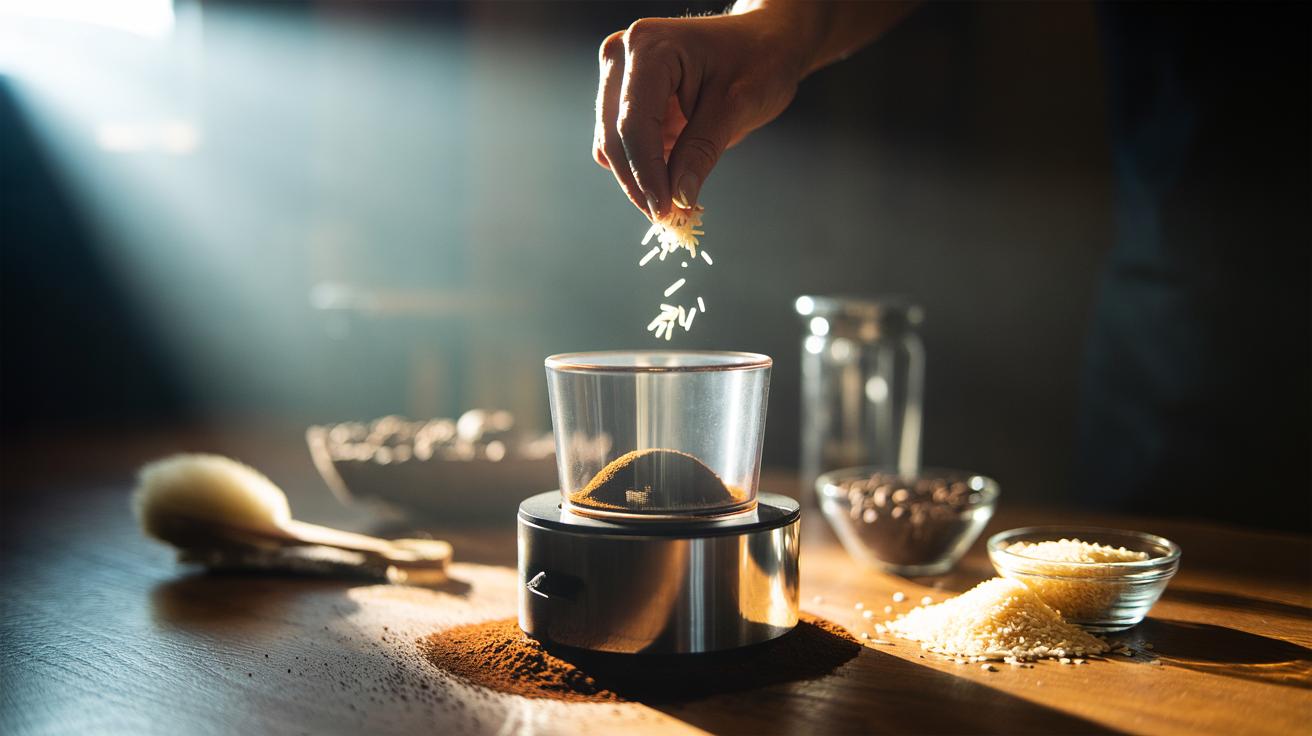
Coffee grinders slow down for boring reasons. Oils gum up. Fines pack tight. A simple fix lurks in the pantry. Drop a small pinch of dry rice into the hopper and let the machine do a brief whirl. The grains act as a micro-abrasive, sweeping away clinging residue without gouging metal or ceramic. It’s low-tech, cheap, and quick. A pinch of rice can revive grinder efficiency in minutes, returning lively flavour and a reliable grind size. This isn’t folk magic; it’s physics and food science combining to cut through stale films and static cling. Your morning cup tastes brighter. Your grinder breathes easier.
The Science of Gentle Abrasion
Rice is hard enough to scrub, yet soft enough to spare the cutting edges. On the informal scale that matters to home kitchens, a raw grain sits below tempered steel and ceramic burrs, but above caked coffee oils and brittle fines. That makes it a perfect gentle abrasive. Each shard’s angular particle morphology boosts contact points, so the grains rub off residue as they fracture. At the same time, rice’s moderate friability ensures it breaks before your burrs do. Think of it as a biodegradable scouring pad that the grinder safely pulverises and ejects.
There’s more. Sticky coffee oils form thin, polymer-like films under heat and pressure, increasing friction and trapping dust. Rice disrupts that film mechanically, then wicks some of the loosened residue thanks to its dry starch surface. The process also reduces static build-up by shifting the charge balance inside the chute, which helps grounds exit instead of clinging to crevices. Short pulses amplify the scrubbing action while avoiding heat spikes. The net result: smoother rotation, steadier feed, and a tighter spread of particle sizes, especially noticeable on espresso-fine settings.
Why Old Grounds Sabotage Flavour and Flow
Leftover coffee in a grinder is not inert. It oxidises. Oils go sticky, then rancid, and that rancidity carries. Every fresh batch is dusted with yesterday’s stale notes, flattening sweetness and muting acidity. A thin film of old grounds can tank a carefully dialled recipe without you noticing the culprit. Clumps behave just as badly: they clog chutes and force beans to bounce, which skews feed rates and makes grind size inconsistent. Heat builds, edge geometry suffers, and the motor works harder than it should for the same dose.
In espresso, the penalties multiply. Caked fines create micro hot-spots in the burr stack, promoting uneven grind distribution and encouraging those dreaded spurts of channeling. Shots race, then stall. Filters blind prematurely. On filter brews, resistance through the bed changes from cup to cup, shifting extraction midstream and leaving you chasing ghosts with your kettle. A tidy grinder stabilises all of this. Your flow rate normalises. Your berries, caramels, and florals pop again. The rice trick shines because it tackles the root cause: adhered residues that normal brushing leaves behind.
How to Clean With Rice: A Step-by-Step Guide
Start with an empty hopper and a cool machine. Add a small pinch of uncooked white rice—about one teaspoon for domestic burr grinders, one tablespoon for blade models. Pulse for 10 to 15 seconds, stopping if the pitch drops or the chamber warms. Tip out the powder, then brush the chute and burr face with a soft, dry brush. Run a few grams of sacrificial beans to re-season the edges and purge lingering starch. Use short, controlled pulses; you’re scrubbing, not milling porridge. Aim to repeat weekly if you grind daily, or after particularly oily roasts.
White long-grain rice works neatly because it fractures cleanly and sheds little dust. Avoid enriched, flavoured, or parboiled rice, which can leave colour or odd aromas. Keep the dose tiny; more is not better. And never add water—moisture plus coffee equals paste. For heavy build-up, alternate rice with a purpose-made cleaning pellet to finish the job. Consistency improves the day you start treating your grinder like the precision tool it is.
| Grinder Type | Rice Suitability | Notes |
|---|---|---|
| Steel Burr (Flat or Conical) | Yes, in small doses | Short pulses; follow with a few beans to purge starch |
| Ceramic Burr | Generally safe | Use minimal rice; listen for strain and stop if noisy |
| Blade Grinder | Yes, brief bursts | Avoid overfilling; shake between pulses for even scrubbing |
| Heavily Oiled Residue | Use pellets first | Rice as a final polish after the worst gunk is lifted |
Safety, Myths, and Alternatives for Every Grinder
Will rice dull burrs? Not in the tiny quantities recommended here. Coffee beans themselves are harder on edges than a teaspoon of rice, and burrs are engineered for abrasion. The real risks are operator error and overenthusiasm: overfilling the hopper, running hot, or adding moisture. Keep the dose small, the pulses short, and the machine cool, and the method stays within conservative safety margins. If you’re under warranty, check your manual—some brands prefer commercial tablets, which are similarly soft yet engineered to bind oils.
Alternatives exist for specific needs. Purpose-made cleaning pellets excel on espresso workhorses that chew through dark, oily roasts. A soft pastry brush and a blast of air can tidy daily, with rice or pellets reserved for weekly deep cleans. Avoid oats or nuts; they smear. Avoid sugar; it melts. For single-doser grinders, a tiny puff from a blower clears chutes post-clean. If your grinder sits in a damp kitchen, store rice in a dry jar and skip the method on humid days. The ethos is simple: dry media, light touch, repeatable routine, better cups.
Small habit, big payoff. A two-minute rice clean refreshes burr bite, steadies grind flow, and rescues the sparkle in your brews without buying new kit. It’s the kind of low-cost maintenance that separates good from great in daily coffee. Once you’ve tasted the difference, the ritual feels less like housekeeping and more like tuning an instrument. What other simple, evidence-led tweaks have transformed your home coffee routine—and which one are you tempted to try next?
Did you like it?4.4/5 (25)