In a nutshell
- 🍋 Citrus oils in lemon peel—especially limonene—disrupt ant pheromone trails, masking routes and collapsing foraging lines.
- 🧪 Make a quick DIY spritz: 250 ml water + 1 tsp unscented washing-up liquid + 10–15 drops lemon essential oil; shake, spray trails, wipe, then re-spray a light film.
- 🧼 Prioritise sanitation: dry counters, seal sticky jars, empty bins, and rinse recycling to remove rewards that attract ants.
- 🚪 Target entry points: caulk gaps, fix door sweeps, and lay a citrus repellent barrier along skirting boards and window frames; patch-test sensitive stone.
- ⚠️ Avoid mistakes: juice alone fades fast, over-dilution weakens results, poor timing misses peak activity; mix small batches weekly to maintain potency.
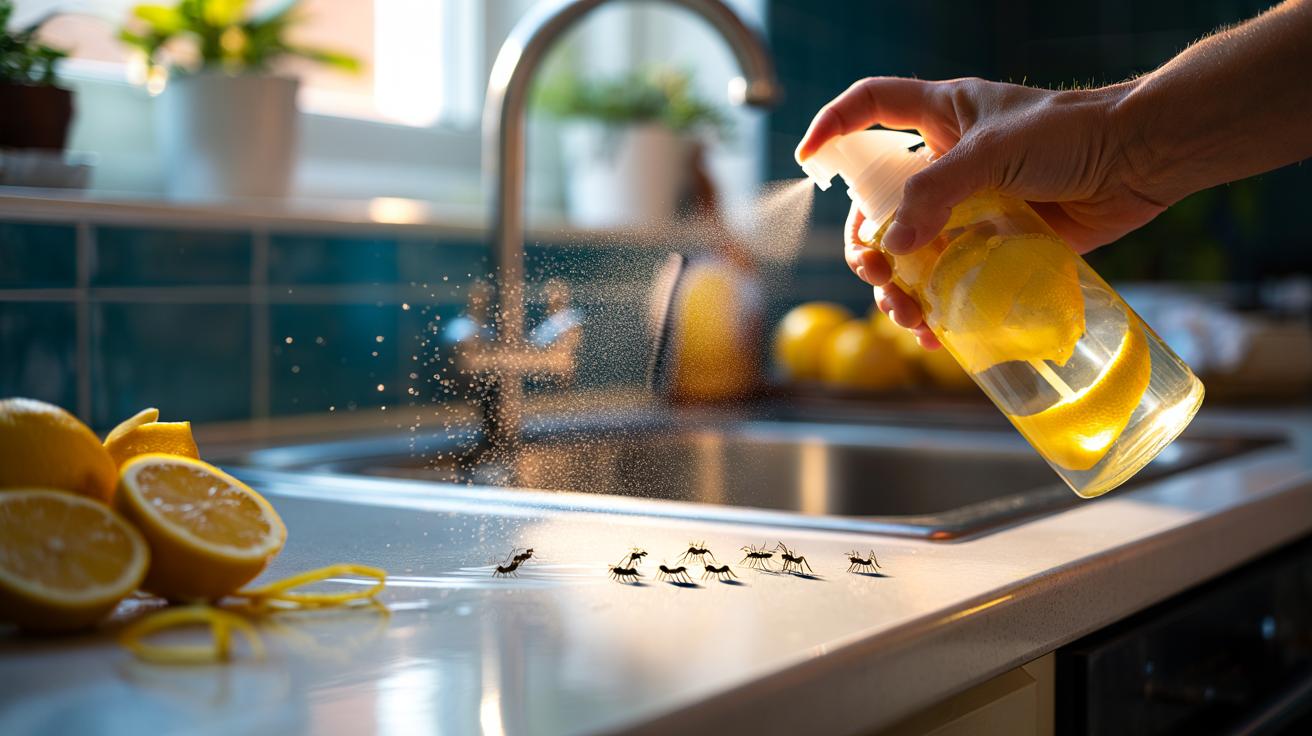
One squeeze of lemon across a kitchen counter and the foraging line vanishes. It feels like magic, yet the explanation is chemistry. The fragrance that lifts a summer pudding also stops ants dead in their tracks. That’s because citrus oils, abundant in the peel and expressed in the zest, scramble the delicate language ants use to organise food raids. A quick lemon spritz can strip their pheromone trails from your worktops and send the scouts home empty-clawed. Here’s how it works, why it’s safer than harsh sprays for everyday use, and the precise, no-fuss recipe that keeps British counters pristine and ant-free.
Why Citrus Oils Disrupt Ants
Ants don’t wander. They follow maps written in scent. Those chemical breadcrumbs—pheromone trails—are read by exquisitely tuned receptors on their antennae. The dominant volatile in lemon peel, limonene, clogs that language. It overwrites trails, masks landmarks and, at higher concentrations, can act as a light neurotoxin to some small insects. To an ant, a lemony counter is a radio playing static. The result is striking: scouts lose the path; workers stall; the column collapses. Your lunch stays yours.
Note the distinction. It’s not the juice’s sharp citric acid alone that does the trick. The heavy lifters are the essential oils tucked in the peel—limonene, citral, and linalool—oily molecules that cling to surfaces longer than watery juice. They evaporate slowly, offering a repellent aura that lasts through the tea break and beyond. Because these oils act on behaviour, not brute force kill, they fit neatly into a home where children and pets roam. Used correctly, citrus is a clean, fragrant deterrent, not a scorched earth tactic.
Quick Recipe and Safe Application
For a reliable spritz, think peel, not pulp. Combine 250 ml water, 1 teaspoon unscented washing-up liquid, and 10–15 drops of lemon essential oil. Shake hard to disperse the oil. No essential oil to hand? Steep a generous ribbon of fresh lemon zest in hot water for 15 minutes, cool, then fortify with a few drops of washing-up liquid to help it cling. Spray along skirting boards, door thresholds, behind bins and—crucially—directly over active trails. Wipe after a minute to lift any residues and re-spray a light film. Contact, then clean, then a protective veil: that’s the rhythm.
Surface sense matters. The detergent amount is small, but acidity can be unforgiving to natural stone. On sealed worktops—laminate, stainless steel, most composites—the mix is safe and leaves a bright kitchen scent. On granite, marble and limestone, keep oils but reduce or omit juice; always patch-test. Refresh daily during peak activity, then taper to twice weekly maintenance. Store the bottle in a cool, dark cupboard; light degrades citrus terpenes and blunts performance.
| Citrus Source | Primary Compound | Main Effect | Best For |
|---|---|---|---|
| Lemon peel oil | Limonene | Masks trails; repels | Counters, skirting, bins |
| Lemongrass oil | Citral | Strong odour barrier | Entry points, door frames |
| Orange peel oil | Limonene | Repels; deodorises | Large areas, splashbacks |
Winning the Kitchen War Without Chemicals
Prevention beats pursuit. Clean lines crush food lines. After the evening wash-up, dry your counters; a bead of cordial or a breadcrumb the size of a comma can summon a hundred workers. Take out the bin nightly, wipe the rim, and rinse recycling. Seal honey jars. Cap cooking oils. Sanitation turns your lemon spritz from firefighting to perimeter control. Remove the reward, erase the route, and the army disbands.
Consider access as well as allure. Caulk hairline gaps along windowsills. Fix the back door sweep. Pop a bead of silicone where pipes meet the wall. Lay your citrus shield precisely on these junctions. Compared with synthetic insecticides, a citrus approach avoids lingering residues and reduces risk to pollinators that stray indoors. It’s kinder to air quality too; the scent dissipates cleanly. And should you spot a nest outdoors, resist the urge to drench it—the goal inside is repellent management, not siege warfare. Let the colony rebalance where it belongs: outside, not on your breakfast bar.
Common Mistakes and How to Fix Them
Spraying only juice is the classic misstep. Juice smells bright but fades fast; without peel-derived terpenes, trails re-form. Add oil or a strong zest infusion. Another pitfall: over-dilution. If it barely smells, it barely works. Start with 10–15 drops per 250 ml and adjust by nose. Don’t forget timing. Hit trails when they’re active—late morning and early evening for many UK species—to disrupt logistics at the busiest hours.
Surface damage worries are valid. On sensitive stone, swap acidity for oil and keep contact brief—spritz, wait 30 seconds, wipe dry. Reapply a whisper-thin film around edges only. Stale sprays are another culprit; sunlight oxidises limonene into weaker compounds. Mix small batches weekly. Finally, accept the limits: if ants are erupting from several skirting points or carrying larvae across the floor, you’re past DIY. Use citrus as a stop-gap while you locate the source, then consult a professional who combines sealing, baiting, and targeted control. Smart fixes beat stronger sprays, every time.
A lemon spritz is humble, quick and oddly satisfying, a domestic ritual that rewrites the battlefield without poisoning the air. The science supports the practice: citrus oils jam the messages ants rely on, while good hygiene starves their ambition. Combine both and you’ll keep your counters clear through the peaks of summer and the damp weeks when scouts wander inside. The method scales, costs pennies, and smells like sunshine after rain. What will your first move be—zesting a lemon for tonight’s spray, or tracing the tiny door where your uninvited guests sneak in?
Did you like it?4.5/5 (29)