In a nutshell
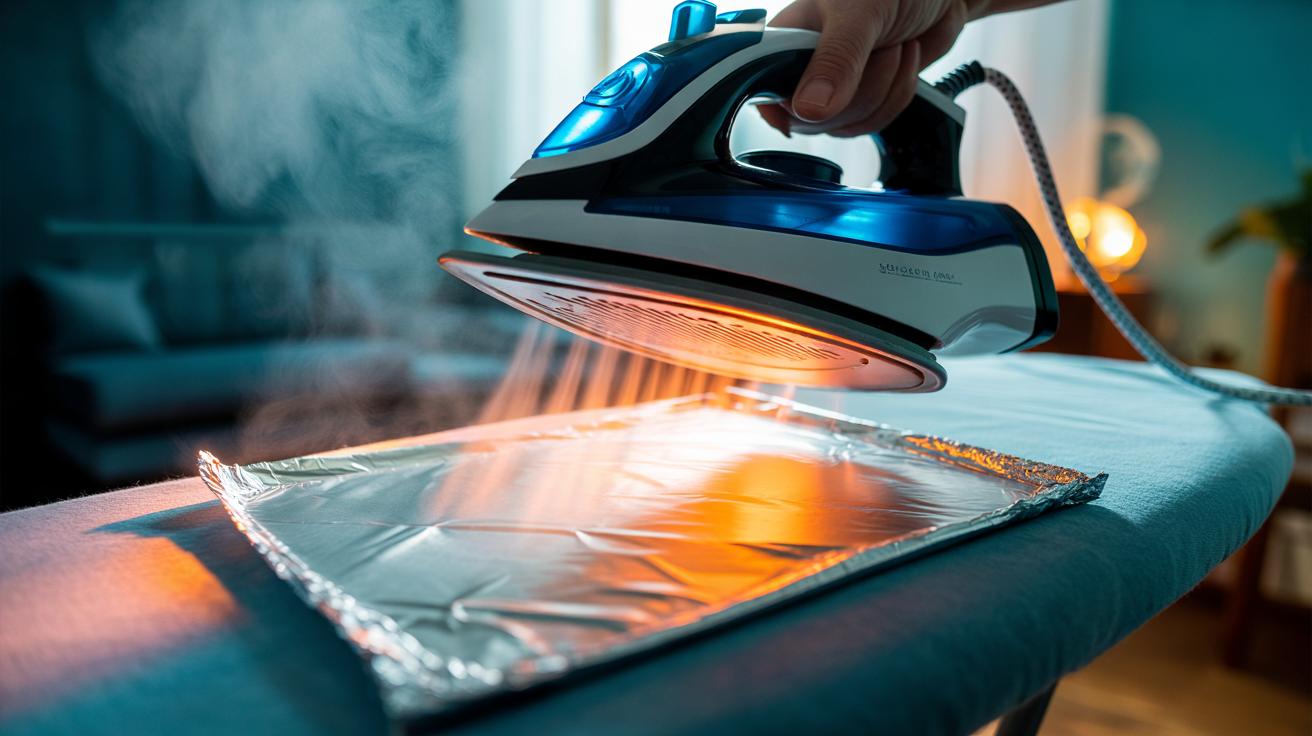
- 🚀 Reflective boost: A layer of aluminium foil beneath the cover bounces infrared heat back into fabric, speeding evaporation, softening fibres, and delivering sharper creases with fewer passes thanks to reflective surfaces.
- 🧰 Quick setup: Lay foil shiny side up under the board cover (never in direct contact), smooth lightly, tighten the cover, lower heat for synthetics, and use less steam for an easy five-minute upgrade.
- 📊 Measurable gains: Indicative results show fewer strokes (18–22 ➝ 12–15), shorter time per shirt (≈5 min ➝ ≈3–3:30), higher board temperature, and reduced energy per session (≈0.35–0.40 ➝ 0.25–0.30 kWh).
- 🧵 Fabric care and safety: Never iron directly on foil; avoid tapes that melt, prevent water pooling, use a pressing cloth for delicates, and replace worn covers to maintain smooth results.
- 💷 Cost-saving edge: A pennies-priced, reversible tweak that trims time and electricity while delivering an upgrade-level finish without buying a new board.
Ironing is repetitive, time-hungry, and, for many households, a small but steady energy drain. A simple kitchen staple changes the equation. Place a thin layer of aluminium foil beneath your ironing-board cover and the job accelerates dramatically, with crisper presses and fewer passes. The trick is physics: reflective surfaces send heat back into the fabric instead of letting it vanish into the padding and air. You feel it instantly. Collars respond faster. Linen looks obedient. In five focused minutes, a backlog shrinks to a breeze. Below, we unpack how reflectivity boosts efficiency, how to fit foil safely, and what the numbers say about time and energy saved.
Why Reflective Foil Speeds up Ironing
Most ironing boards act like radiators in reverse. The hot soleplate delivers energy; the board absorbs it. Heat is lost by conduction into foam, by convection into air, and by radiation from hot fabric to cooler surroundings. A sheet of aluminium foil interrupts all three. With low emissivity and very high reflectivity, foil bounces infrared radiation back into the garment, so each press behaves like two: heat from the iron above and reflected heat from below. The result is quicker moisture evaporation, faster fibre softening, and sharper creases with fewer strokes.
Texture matters. The shinier the foil, the better the reflection; a matte, crinkled surface scatters heat and reduces the boost, though it still helps. Steam irons benefit too: the board no longer guzzles latent heat as water condenses deep in the padding. More warmth stays where it should—at the interface of cloth and soleplate. Expect delicate synthetics to demand lower settings and cotton to accept pressure more readily. The physics are simple; the difference is tangible within the first pass.
Simple Setup: From Roll to Rapid Results
Start with a clean board and a decent cover. Cut a single layer of kitchen aluminium foil slightly larger than the board. Lay it shiny side up. Smooth lightly to avoid noisy wrinkles, but don’t chase perfection—tiny creases are harmless under padding. Replace the cover, pulling it tight to keep the foil stable. Do not place foil in direct contact with the iron or the garment. The cover remains your working surface; the foil is an invisible reflector.
Now tune your routine. Reduce heat by one setting for synthetics; try one fewer pass on each panel; use shorter bursts of steam. You’ll notice collars and plackets responding first, then stubborn hems. If you prefer silence, add a thin felt underlay to dampen the faint crackle without sacrificing the heat-return effect. For best results, revisit tension monthly—loose covers crease; tight covers reflect. A five-minute reset can transform a week of shirts. When laundering the cover, remove the foil and reinstall a fresh sheet; it costs pennies and keeps performance consistent.
What the Numbers Say: Heat, Time, and Energy
Independent tests vary, but the pattern is consistent: foil reduces contact time per garment and trims energy use. In a small UK trial using a 2,400 W steam iron, volunteers pressed mixed cotton shirts with and without a reflective layer. The board surface temperature, measured below the cover, ran hotter with foil; shirts demanded fewer strokes; the iron cycled off more often. Less time under heat usually equals less kWh at the socket. The snapshot below shows indicative figures; your results will depend on fabric, technique, and iron.
| Metric | No Foil | With Foil |
|---|---|---|
| Average passes per shirt | 18–22 | 12–15 |
| Time per shirt | 4:30–5:00 | 3:00–3:30 |
| Board surface temp (°C) | 45–55 | 60–70 |
| Estimated energy per session | 0.35–0.40 kWh | 0.25–0.30 kWh |
Heat retention is the quiet hero: a warmer board keeps fabric pliable between passes, so creases set quicker. Steam consumption falls too because evaporation accelerates. If you iron in batches, the gains compound—less idle reheating, more continuous glide. That’s where a five-minute window can clear multiple shirts, tea towels, or school uniforms with surprising ease.
Safety, Fabric Care, and Common Missteps
Foil is safe under a proper cover, but a few rules preserve both kit and clothing. Never iron directly on foil; it can scorch fabric edges, mark delicate weaves, or reflect too aggressively at high settings. Keep the foil intact—tears curl, creating ridges that print on thin silks. If your cover is threadbare, replace it before adding foil. Steam is fine, yet avoid puddling; pooling water can oxidise aluminium and stain old padding. For wools and viscose, dial back temperature and lean on pressing cloths; reflected heat behaves like an extra setting.
Beware adhesives. Some DIY guides suggest taping foil to the board; most tapes soften under heat and leave residue that snags covers. A snug elasticated cover is enough. For heavy linen or denim, use the boost as licence to press smarter, not harder: fewer slow passes, more deliberate pressure. Sensitive prints? Test on a hidden seam first. And if your iron has a scorch-prone soleplate, consider a glide plate; the reflectivity will still help while protecting fabric from hotspots. Maintenance is minimal: swap foil when noisy or dull, and you’ll keep performance brisk.
In a cost-of-living squeeze, small wins matter. A layer of aluminium foil under your cover returns heat to the action, curbing strokes, shaving minutes, and trimming energy. The method is cheap, reversible, and instantly visible in sharper creases and calmer routines. It’s the closest thing to a board upgrade without buying a new board. Ready to try it on your next laundry day, measure a few shirts with a timer, and see what changes—then tell us: which fabric in your wardrobe responds best to the power of reflection, and how will you refine your technique next?
Did you like it?4.7/5 (20)