In a nutshell
- 🧼 Baking soda works by gentle alkalinity and microcrystalline contact, delivering true odour neutralisation and lifting oils and fine grime when given ample contact time.
- 🌙 The overnight method: apply a thin, even layer, brush lightly into the pile, let sit 8–12 hours, then perform overlapping slow vacuum passes as per the table guidelines.
- 🧪 Safety first: patch test on wool and synthetics, avoid wetting or pairing with vinegar, keep pets away until vacuumed, and protect your machine with clean bags and HEPA filters.
- 🧹 When odours persist, combine tactics—a targeted enzyme cleaner for protein stains, ventilation for smoke, and a dehumidifier for damp—then finish with the bicarbonate overnight cycle.
- ✨ Expect subtle but real gains: an invisible lift of smell and soil by morning; remember the rule of thumb—less, left longer beats heavy application once.
Shake a box, brush a bit, sleep on it. By morning, carpets that smelled tired can feel theatrically reset. The quiet hero is baking soda, or sodium bicarbonate, nudged into the pile and left to rest while you do nothing at all. This overnight pause isn’t lazy; it’s strategic. Odours diffuse slowly. Oils loosen. Moisture equalises. Then a careful vacuum removes what your nose no longer notices. The trick is contact time and coverage. Too thin, and it can’t engage with trapped volatiles; too clumpy, and you’ll leave residue. Get that balance right and you’ll lift hidden grime as invisibly as it settled.
Why Baking Soda Works on Carpet Odours
Carpet smells rarely come from the air alone; they cling to fibre surfaces as a film of oils, humidity, and volatile organic compounds (VOCs). Sodium bicarbonate’s mild alkalinity (around pH 8.3) helps neutralise acidic odours, while its tiny crystalline particles increase contact with residues that hold scent. Think of it as a patient sponge and a gentle buffer in one. It doesn’t bleach. It doesn’t overwhelm with fragrance. It simply binds and quiets the molecules that linger after pets, cooking, and damp weather have done their work. Odour neutralisation is a reaction, not a cover-up.
Overnight, the powder continues to interact with the film that lives lower in the pile. As rooms cool and re-warm, micro airflows help the powder creep between fibres, where it grips fine dust and sebum. The longer dwell time improves kinetics: more touches, more exchanges, better results. There’s also a dryness effect. Bicarbonate draws a whisper of moisture from sticky spots, making them less tacky so your morning vacuum can lift more material in fewer passes. Crucially, it’s gentle on most synthetics, so you get freshness without the risk profile of harsh solvents. Time and contact are the fresheners, baking soda is the enabler.
The Overnight Method: Step-by-Step for Maximum Freshness
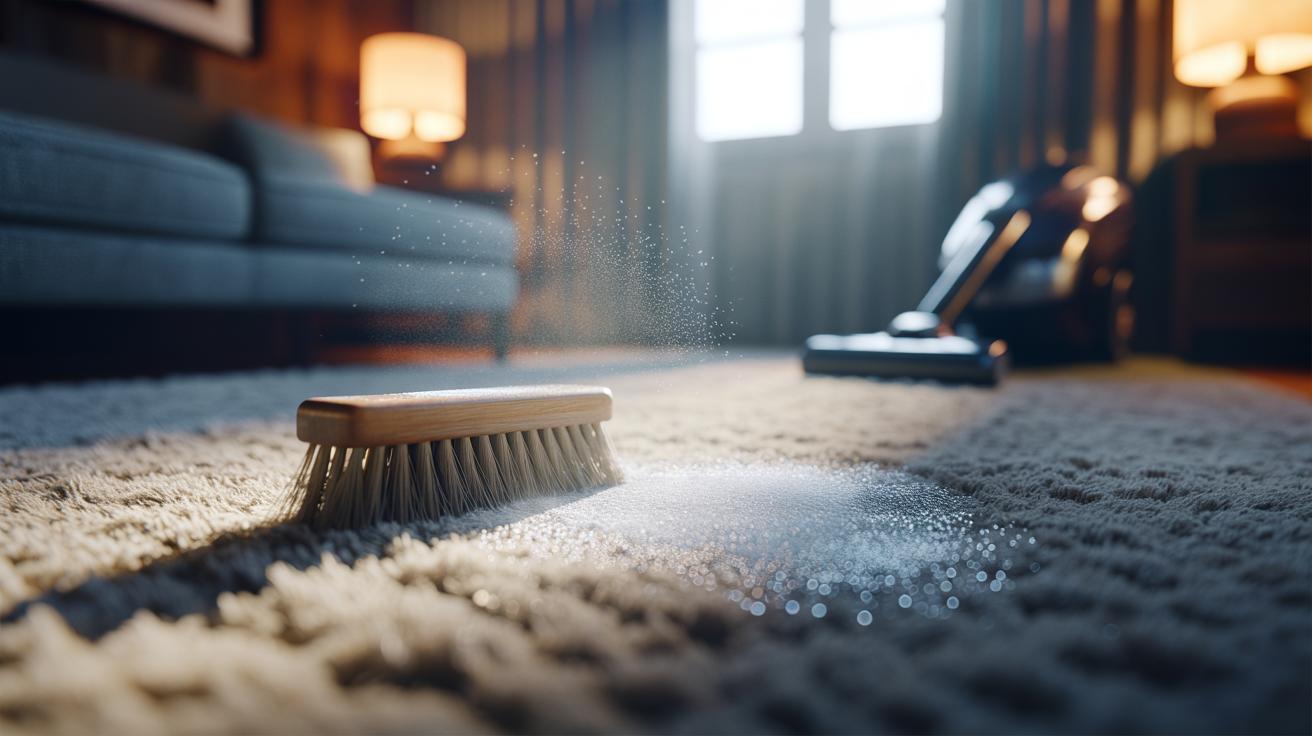
Start with a clear floor and a clean, high-performing vacuum. Pre-vacuum to remove grit that would otherwise shield odours beneath. Sprinkle fine, dry baking soda in a light, even veil—do not use clumpy baking powder. Use a soft carpet brush or broom to work it in, pushing powder just below the tips without grinding. Let the powder sit undisturbed for at least eight hours; twelve is better for pet odours. Close windows to limit drafts that would move the powder before it can work its quiet chemistry.
In the morning, vacuum slowly, overlapping passes. Replace or clean filters so fine dust doesn’t simply cycle back. If your machine has a boost mode, use it for two finishing passes across traffic lanes. Any faint residue will continue to loosen with normal use and subsequent vacuums. For persistent spots, repeat on a smaller area rather than overloading the whole room. Thin layers, longer time, careful removal—that’s the rhythm. The table below offers simple guidelines for coverage, dwell time, and vacuuming technique.
| Area Size | Baking Soda Amount | Dwell Time | Vacuum Passes |
|---|---|---|---|
| 1 m² light odour | 30–40 g (2–3 tbsp) | 8–10 hours | 2 slow passes |
| 1 m² pet odour | 50–70 g (3–5 tbsp) | 10–12 hours | 3–4 slow passes |
| Entire room (12 m²) | 400–700 g | Overnight | 2 passes each direction |
Safety, Fibres, and Vacuuming Pitfalls to Avoid
Most synthetic carpets—nylon, polyester, solution-dyed polypropylene—tolerate bicarbonate well. Wool and some delicate blends do too, but they deserve caution. Always patch test in a hidden corner, checking for texture change after vacuuming. Avoid wetting the powder in situ; moisture can create a paste that clings to fibres or settles into backing. Don’t pair it with vinegar on the carpet. The fizz looks dramatic, but the neutralisation reaction squanders odour-fighting capacity and can mobilise dyes or attract soil as it dries.
Vacuum health matters. Fine powders challenge bagless cyclones and tired filters. Swap in a fresh bag or clean your HEPA, and empty canisters outdoors. If you own an upright with a brush bar, verify it’s not too aggressive for plush piles or old wool; switch to a gentler head to prevent fuzzing. Keep pets out of treated rooms until you’ve vacuumed; baking soda is low-toxicity, yet ingestion or snuffling clouds of dust isn’t ideal. Finally, note that a thin dusting is safer than drifts: heavy application risks residue that dulls colour or interferes with anti-soil treatments. Less, left longer, beats more applied once.
When Baking Soda Isn’t Enough: Combining Tactics Without Damage
Baking soda shines on ambient odours and light grime, but it won’t erase everything. Protein-based stains and entrenched pet accidents need an enzyme cleaner to digest residues before an overnight bicarbonate pass finishes the job. Smoky rooms may require ventilation first—open windows for a full air change—then the powder phase. For damp odours, run a dehumidifier to stop the smell returning from underlay. Deodorise the air source and the fibre source together.
If you escalate to hot-water extraction, tell your technician you’ve used bicarbonate so they can rinse thoroughly. For DIY, choose a neutral-rinse detergent and light dilution. Oxidisers such as 3% hydrogen peroxide can brighten some organic marks on light carpets, but patch test, and never combine with ammonia or strong alkalis. Scented spritzes? Fine as a finishing touch, but treat them as theatre, not the script. Stick to a cycle: pre-vacuum, treat the cause, bicarbonate overnight, slow vacuum, review. This layered approach keeps carpets fresher for longer without battering the fibres or your lungs.
Used with patience, baking soda works like a night porter for your floors: silent, diligent, and surprisingly effective by sunrise. Its strength is consistency, not drama, and it invites a calmer routine—light dusting, generous time, careful removal. Keep expectations realistic; it’s a deodoriser and soil lifter, not a miracle stain eraser. Still, that quiet reset is often all a lived-in room needs. What corner of your home would benefit most from an overnight refresh, and how will you adapt the method to your fibres, habits, and nose?
Did you like it?4.5/5 (25)