In a nutshell
- 🧪 Baking soda works via acid–base neutralisation and gentle adsorption, capturing volatile acids and turning them into low-odour salts.
- ⚡ Speed comes from surface area: a thin, well-dispersed layer boosts molecular contact, delivering noticeable deodorising in seconds and stronger results in minutes.
- 🧭 Placement and practice matter: set a shallow layer mid-shelf near airflow, stir to refresh the crust, and avoid contact with uncovered food for clean, fast results.
- 🧂 Choose the right setup: open box for background control, shallow dish for rapid response, paper towel sprinkle for emergencies, or a perforated sachet for tidy use.
- 🚫 Know the limits and safety: identify the smell source first, replace used soda monthly, never cook with deodorising soda, and pair with activated charcoal for stubborn sulphurous odours.
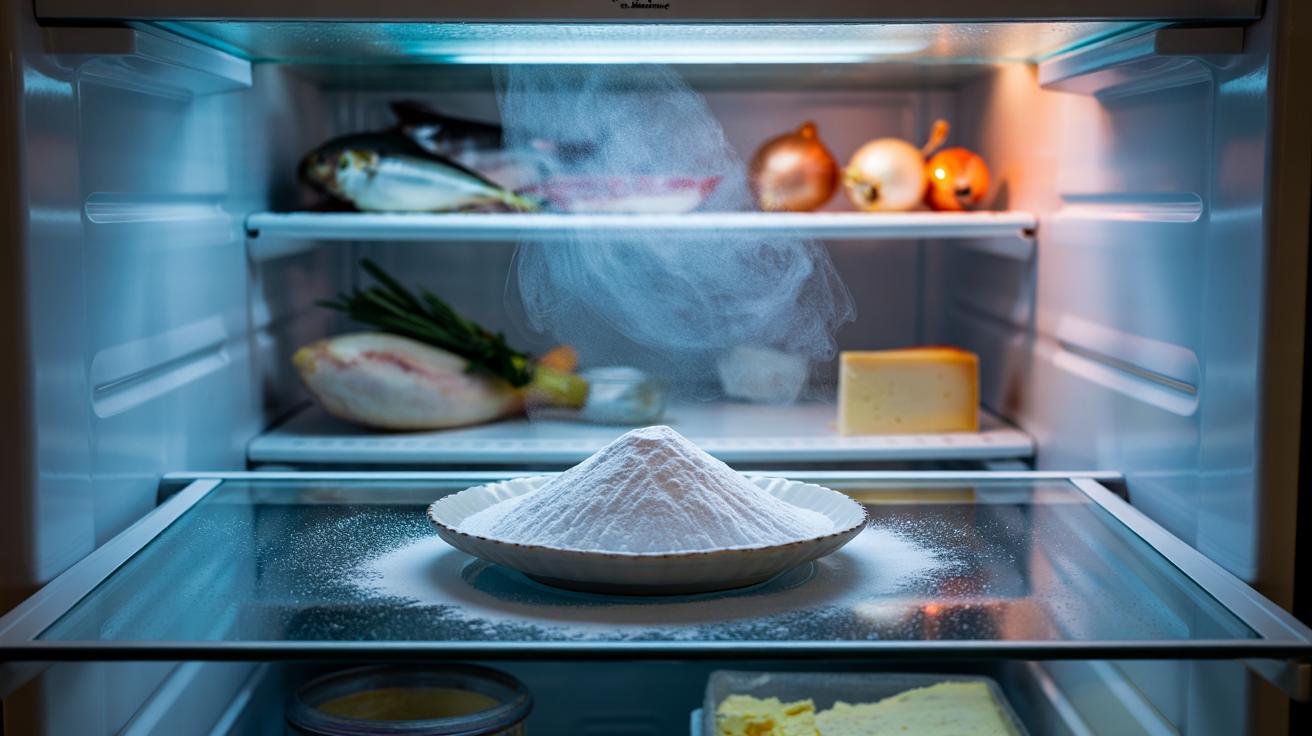
Open the fridge and meet a mystery: a sour whiff, a stale tang, a hint of fishy funk. You don’t need bleach or perfume. You need powder. When scattered thinly, humble baking soda (sodium bicarbonate) can begin neutralising those odours almost at once. The trick isn’t brute force. It’s contact. Spread across a wide surface, the powder meets more volatile molecules, faster, and locks them down. Surface area is the secret to speed. In kitchens across Britain, this quiet chemistry plays out daily, rescuing busy households from lingering smells without masking agents or complicated kit.
The Science Behind Baking Soda’s Instant Deodorizing
What makes sodium bicarbonate such a quick fixer? Two mechanisms, working together. First, classic acid–base neutralisation: many fridge smells come from acidic volatiles such as acetic acid (from ageing condiments) or butyric undertones (from dairy mishaps). Bicarbonate, a mild base, reacts at the powder’s surface to form salts that are far less pungent. Second, gentle adsorption. The microcrystalline powder presents a vast, irregular surface. Odour molecules, darting in fridge air, cling to that surface, then are quenched by the buffer action.
Cold air slows diffusion, but fridges are moist. That’s helpful. A microscopically thin film of water vapour forms on bicarbonate granules, dissolving acidic gases and bringing them into direct chemical reach. In practice, that means the first sniff of relief can arrive in seconds, with meaningful reduction following in minutes as more molecules contact the powder. Think of it like a sponge, but for volatiles: quiet, patient, effective, and safe around food when kept in an open dish or box.
There’s also buffering. Bicarbonate’s pH sits in a sweet spot, neutralising without aggressive causticity. No chlorinated harshness. No perfumes to mingle weirdly with cheese. Just chemistry doing what chemistry does best: rebalancing.
Why Dispersion Supercharges Results
One open carton on a crowded shelf works, eventually. A thin layer on a shallow tray works fast. Physics explains the gap. When you increase exposed area—by spreading the powder—more odour molecules can collide with active surface at the same time. Collisions drive reactions. More collisions per second equals quicker deodorising. Even the simple act of shaking the dish to refresh the crusted top exposes fresh sites and restores pace.
Location matters. Smells rise from spills and strong foods; cold-air flows loop from the back panel. Park your tray near the back, mid-shelf, away from direct drips. Door openings create quick pulses of airflow that sweep volatiles across the powder. Small kitchen? Big curry night? Split the dose: two saucers beat one tub. And for urgent cases—fish sandwich left overnight, onion leak—dust a paper towel with a teaspoon of bicarbonate, leave it inside for 10 minutes, then discard towel and clumps.
Avoid dusting the powder directly on uncovered food or produce, as it can dry surfaces and change taste. Keep it open, nearby, and thin. A few millimetres deep is plenty. Any thicker and you’re hiding active surface in a quiet, buried bulk that can’t touch the air.
Practical Setups for Speed and Convenience
You don’t need special gear to win the odour war. Keep it simple and smart. For everyday prevention, an open box tucked at the back provides background control. For rapid response, tip 2–3 tablespoons into a shallow ramekin or small plate, spread it out, and set it near the source. Stir after 5 minutes if the smell lingers. Dealing with a spill? Mop first with warm, mildly soapy water, rinse, then place a fresh layer of bicarbonate nearby to catch residual volatiles.
| Method | How It Works | Speed | Best For |
|---|---|---|---|
| Open Box | Passive exposure through carton opening | Slow to moderate | Ongoing background control |
| Shallow Dish Layer | Maximised surface area, quick contact | Fast | Sudden, strong odours |
| Paper Towel Sprinkle | Temporary, disposable contact pad | Very fast | Short, urgent fixes |
| Sealed Sachet (Perforated) | Controlled exposure, tidy | Moderate | Small fridges, neat use |
Replace deodorising bicarbonate monthly, or immediately after tackling a major smell event. It’s inexpensive; use it generously for hygiene, but never return the used powder to your baking tin. If it cakes from moisture, crumble and stir to reveal new surface, or simply refresh with a new layer.
Safety, Limits, and Smart Habits
Baking soda is food-safe as an ingredient, but treat the deodoriser itself as a tool, not a seasoning. Keep it in dishes or sachets, not loose among vegetables. Label the container “Fridge Deodoriser” to prevent mix-ups. If you clean the fridge, rinse residues so they don’t alter flavours later. Never eat or cook with bicarbonate that has absorbed odours. It has done its job and is ready for the bin.
There are limits. If the smell source persists—a cracked container weeping brine, a blocked drain hole, spoiled meat—no powder will fully mask it. Find the culprit first, then deploy bicarbonate as finisher. Strong sulphurous notes may respond better to a two-pronged approach: a shallow bicarbonate tray plus a small pouch of activated charcoal on another shelf. For freezers, use a sealed sachet with pinholes to reduce spillage during drawer movement.
Routine helps. Wipe spills quickly. Store onions, cheeses, and fish airtight. Keep the tray thin, stir weekly, refresh monthly. That steady rhythm turns a once-embarrassing pong into a non-event—and preserves the honest aromas you actually want: crisp greens, clean dairy, last night’s pie waiting for lunch.
Bicarbonate’s power lies in a simple idea: give those volatile molecules something friendly, reactive, and abundant to meet, right now. Spread wide, it works fast. Left in a box, it works steadily. Either way, the fridge breathes easier, and so do you. Clean source, then deploy surface area—that’s the playbook for odour peace. What’s your go-to setup for keeping the weekly shop smelling like itself, and which stubborn fridge odours would you like tested head-to-head against a thin layer of baking soda?
Did you like it?4.5/5 (27)