In a nutshell
- 🧪 The science: sodium bicarbonate is amphoteric, rapidly neutralises acidic volatiles into non-volatile salts, with fridge humidity aiding reactions and light adsorption for basic notes.
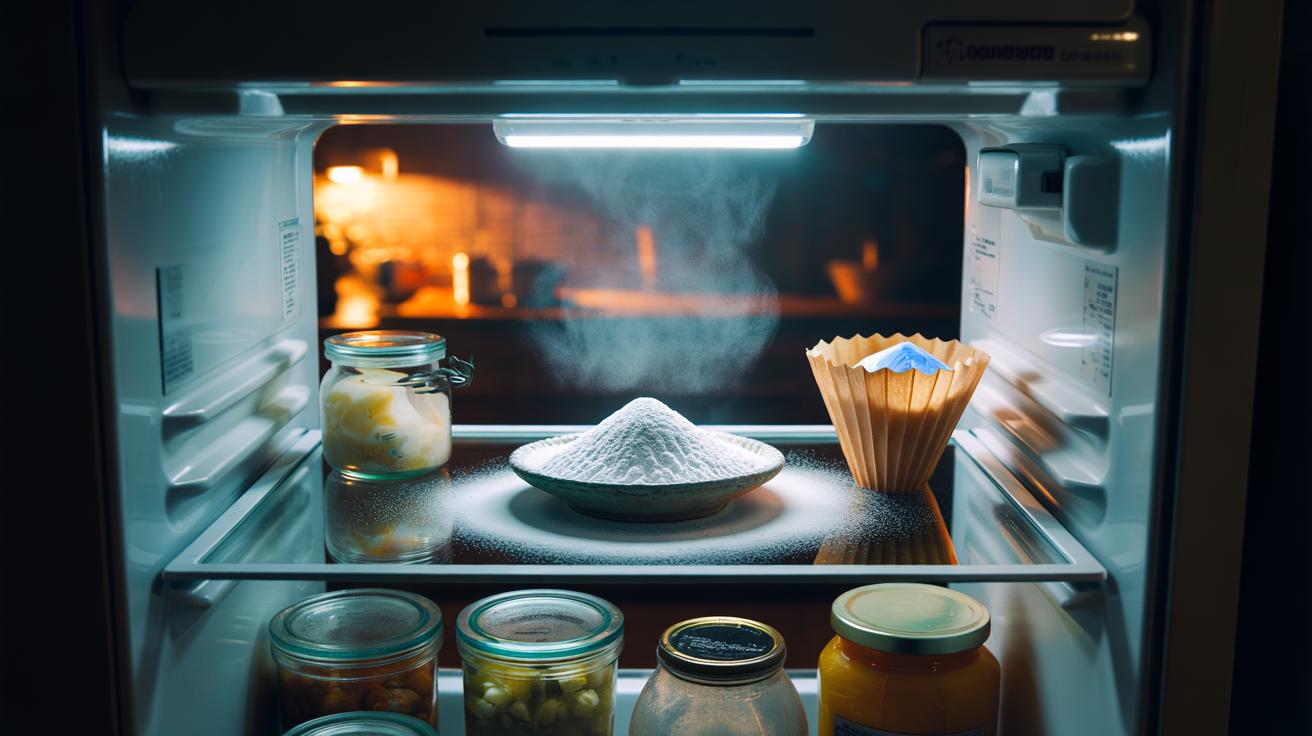
- ⚡ Speed method: create a fine dust on a tray or sachet to maximise surface area, place centrally (or split between shelves), and expect a one-day clear-out of lingering smells.
- 🧹 Prep and safety: wipe spills first, keep powder off food, use shallow dishes or coffee-filter sachets, replace after heavy odours or monthly; use a bicarbonate paste for stained plastics.
- 🚫 Limits and myths: stubborn amines (fishy notes) need washing before deodorising; exposure beats a closed box; skip oven “recharging”; pair with activated carbon for broader coverage.
- 📊 Expected results: typical times—dairy 4–12h, vinegar 6–18h, fish 12–24h, curry 8–24h—aim for the gold standard of no smell rather than fragrance.
Open the fridge and a sour waft hits you. Cheese rinds, last night’s curry, a forgotten onion—volatile compounds mingle and linger. The fix is almost laughably simple: a light dusting of baking soda—plain sodium bicarbonate—can tame the fug in a single day. Not a perfumed cover-up, a chemical reset. It works fast because it targets what odours are: reactive molecules escaping into air. In the presence of moisture and surface contact, bicarbonate neutralises acids, mops up sulphurous notes, and steadies the air’s pH balance. In practice, that means fewer stink molecules and a fridge that smells of nothing at all. Here is the science, the one-day method, and the limits to know.
The Science Behind Bicarbonate’s Rapid Deodorising
The speed comes from two intertwined principles: reaction and exposure. Bicarbonate is amphoteric, which means it can react with both acids and bases. In a typical fridge, many problem odours—acetic acid from pickles, butyric acid from dairy, isovaleric acid from ageing cheese—are acidic. When these volatile acids land on a bicarbonate particle, they are converted into far less smelly non-volatile salts, alongside harmless water and a trace of carbon dioxide. This is not masking: it is chemical removal of the culprit molecules.
Exposure matters as much as reactivity. A “dust” creates huge surface area, so more odour molecules collide with crystal faces in a short window. Fridge humidity forms a microscopically thin film of water on the powder, helping dissolve incoming volatiles and accelerating neutralisation at the crystal–liquid interface. The result feels like sorption, but it’s primarily neutralisation with a supporting role from adsorption—temporary sticking of molecules to the solid surface. Some alkaline buffering also blunts basic notes (think amine traces from fish). A fine dust exposes thousands of fresh crystal faces, multiplying its odour‑grabbing power and making “one day” realistic in busy family fridges.
A One-Day Method: From Dusting to Dinner-Safe Freshness
Start clean-ish. Remove obvious spill sources, wipe a sticky shelf with hot water and a tiny splash of washing-up liquid, dry thoroughly. Now deploy the deodoriser. Sprinkle 3–4 tablespoons of baking soda through a tea strainer onto a wide saucer or baking tray, creating a thin, even dust—more snow than dune. Place it centrally or split between two shelves to intersect airflow. Shut the door. Avoid slamming; you want air to circulate gently, not plume the powder. Do not dust directly onto food or open containers; keep it on trays, sachets, or shallow dishes.
| Odour Type | Likely Compounds | Bicarbonate Action | Typical Result Time |
|---|---|---|---|
| Sour dairy | Butyric, lactic acids | Neutralises to non-volatile salts | 4–12 hours |
| Pickle/vinegar haze | Acetic acid | Acid–base reaction, buffering | 6–18 hours |
| Fishy trace | Amines (basic) | Partial adsorption; needs cleanup | 12–24 hours |
| Spilled curry | Sulphur/aromatics | Adsorption + surface reaction | 8–24 hours |
For speed, make two “boosters”: a coffee-filter sachet filled with bicarbonate on the top shelf, and a dusted tray low down. Replace after heavy odours or monthly in normal use. If you had a major spill, finish with a paste (bicarbonate + a little water) on the affected plastic for 10 minutes, then rinse and dry. A day later, the most accurate result should be the absence of any smell at all.
Limits, Myths, and Smart Upgrades
Not every stink surrenders equally. Strong amines from aged fish or prawns cling to surfaces; neutralisation helps, but mechanical wash first, then deploy bicarbonate. Rancid fat odours come from oxidised lipids lodged in gaskets—clean the seals with warm soapy water, then dust a tray. Mouldy notes? They originate in damp drawers; dry them thoroughly. If the source continues producing volatiles, any deodoriser is working uphill. Another limit: sealed containers trap their own odours, so the fridge air may sweeten while the moment you open a box, a puff returns—address the packaging.
Some myths persist. An unopened “box in the door” is slow; exposure is king, so decant to a shallow dish. Crushing crystals lightly increases effective contact area. Recharging by oven “drying” isn’t necessary; sodium bicarbonate can convert to sodium carbonate at high heat, changing behaviour. Just replace it. Want to supercharge? Pair a bicarbonate tray with a small pouch of activated carbon for broad-spectrum adsorption. Keep powders away from fans and avoid breathing dust. The winning formula remains simple: maximise surface area, minimise moisture traps, and remove the root cause.
By harnessing mild chemistry and smart exposure, a thin dusting of baking soda restores the quiet neutrality we expect from a fridge—often within a single day. It’s cheap, food-safe when kept contained, and reliable, particularly against acidic vapours that dominate everyday kitchen odours. The trick is treating it like a reactive surface, not a talisman in a cardboard sleeve. Place it wide, keep it dry, change it regularly, and find the source. Fresh air is not an accident; it’s a quick habit. What odour challenge are you going to test this one-day bicarbonate method on first, and how will you measure the difference?
Did you like it?4.4/5 (27)