In a nutshell
- 🔥 Sodium bicarbonate works instantly by decomposing into CO₂ and water vapour, cooling the flame zone and creating a smothering crust that starves grease fires of oxygen.
- 🚫 Never use water on burning oil; it flashes to steam, ejects flaming fat, and can create a dangerous fireball.
- 🎯 Use a BC dry powder extinguisher with the PASS method: pull the pin, aim low at the base, squeeze in short bursts, and sweep while turning the heat off.
- 🧰 Match kit to risk: BC powder for home grease and electrical fires; Class F wet chemical for deep fat fryers; a fire blanket is a safe close-range option; CO₂ lacks cooling and can reflash.
- 🧹 After use, ventilate and clean the alkaline residue with mild vinegar then soap; check the gauge for recharge or replacement, and remember baking soda can help only with tiny flare-ups—never use baking powder.
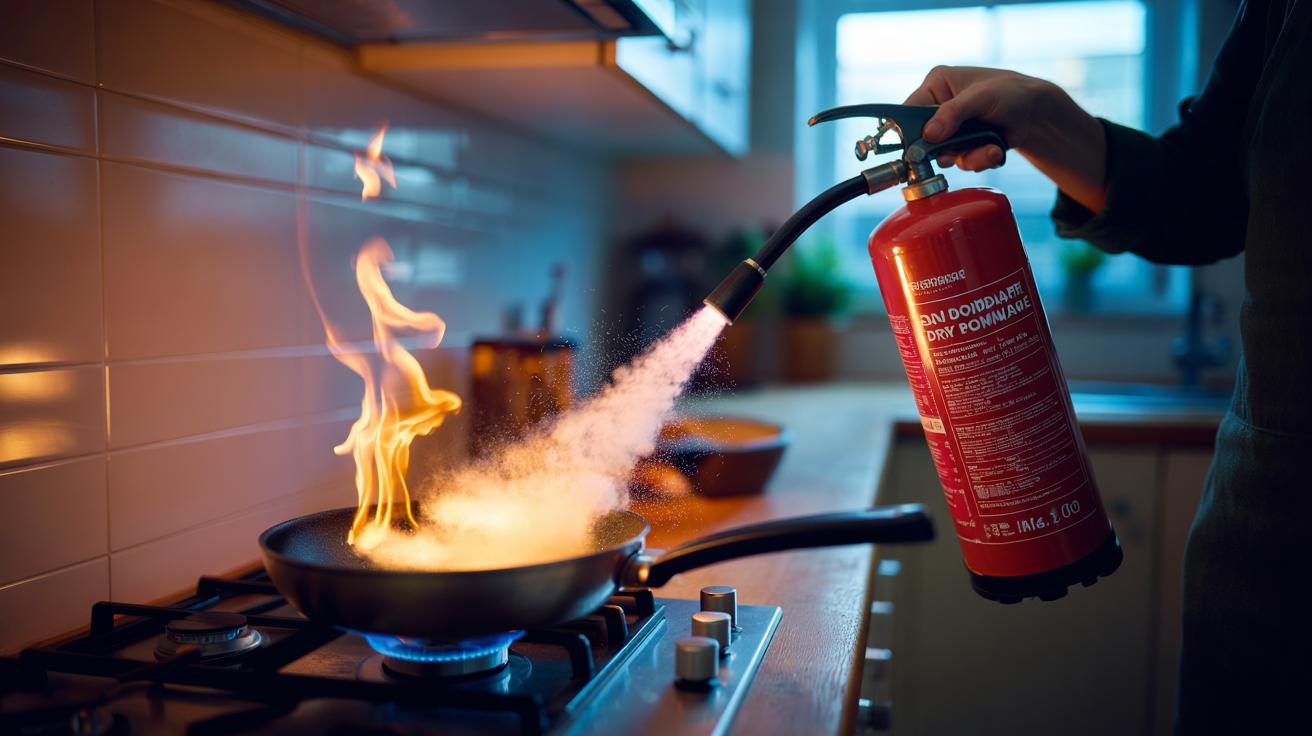
Grease fires move fast. A sputtering pan becomes a rolling flame in seconds, smoke thickening, instincts screaming for water. Don’t. The science-led fix is a baking soda fire extinguisher, a device that propels sodium bicarbonate powder that smothers flames on impact. It’s quick, targeted, and cools the fire’s core. In plain terms, the powder knocks out heat and displaces oxygen at once. For kitchens, that’s gold. Never throw water on burning oil. You’ll blast flaming droplets across the hob and up the walls. Understanding why sodium bicarbonate works, and how to use it without risk, is the difference between a close call and a catastrophe.
What Happens When Baking Soda Hits a Grease Fire
A sodium bicarbonate charge meets heat and decomposes. Chemically, it breaks down into carbon dioxide, water vapour, and sodium carbonate. That split does two jobs simultaneously. It cools the flame zone because the decomposition is endothermic, and it releases CO2 that blankets the fire, displacing the oxygen the flame feeds on. The powder itself creates a physical crust over the hot oil, isolating fuel from air. Stop the oxygen, starve the flame. In a confined pan, that rapid oxygen displacement can look almost instantaneous.
There’s also flow control. Modern “BC” dry powder extinguishers propel a dense, free-flowing bicarbonate powder with enough momentum to reach the base of the fire without disturbing the burning liquid. Applied low and flat, the particles settle like a quilt, dampening the vapour layer where ignition lives. Short bursts keep the oil undisturbed while maintaining the gas blanket. Think surgical, not forceful.
One myth persists: all powders are equal. They aren’t. Potassium-based blends (like Purple-K) inhibit flame chemistry even more aggressively, but for domestic kitchens a sodium bicarbonate unit is common and effective. Water is out, aerosols are risky, and baking soda powder is purpose-built for flammable liquids and live electrics. That balance is exactly what a cooker-top emergency demands.
Why a Sodium Bicarbonate Extinguisher Beats Water and Lids
Water and hot fat are enemies. A spoonful flashes to steam, expands violently, and jets burning oil into the air. Result: a fireball. A lid can work, yet only if it seals perfectly, fits the pan, and you can place it safely. In real kitchens, that’s a big “if”. Dry powder gives you reach, control, and an immediate oxygen knockdown. Crucially, it’s non-conductive, so it’s safer around hobs and cooker hoods with electrics. Speed and distance matter in a grease fire.
| Agent | How It Works | Ideal For | Caveats |
|---|---|---|---|
| Sodium bicarbonate (BC) powder | CO2 release, cooling, smothering crust | Grease/liquid fires, electrical | Residue cleanup; not rated for deep fat fryers in commercial settings |
| Wet chemical (Class F/K) | Saponifies oil, deep cooling | Deep fat fryers, catering | Slower reach; specialised unit needed |
| CO2 | Oxygen displacement | Electrical cabinets | Poor outdoors; no cooling, reflash risk |
| Water | Cooling by absorption | Solids (Class A) | Explosive with hot oil |
The UK reality: many homes don’t keep a wet chemical unit, but do have a BC dry powder extinguisher. Used correctly, it ends small pan fires before they escalate. For commercial fryers, the gold standard is a Class F wet chemical, which chemically neutralises oils. At home, the bicarbonate extinguisher’s advantage is immediacy. You can act from a safer distance, aim at the base, and halt flame growth before it climbs the cabinets.
Using Cupboard Baking Soda: Last-Resort Tactics and Risks
You might have a big tub of bicarbonate of soda in the baking drawer. Can it help? Yes—sometimes. But only for very small flare-ups, and only if you can sprinkle from height without leaning over the pan. If you must move closer than an arm’s length, don’t try it. A handful tossed clumsily can splash burning fat or create a dust cloud you’ll breathe in. Baking powder is worse: it contains starches and acids, works poorly, and can flare.
The smart plan is preparation. Keep a BC-rated dry powder extinguisher or a fire blanket within easy reach of the hob. If fire starts: switch off heat at once; keep the pan where it is; and apply short bursts at the base using the PASS method—Pull, Aim, Squeeze, Sweep. Aim low, from the side, not from above. If the flame isn’t out within seconds, shut the kitchen door, get everyone out, and call 999. No pan or meal is worth a lungful of smoke.
After discharge, ventilate. Powder is alkaline; wipe surfaces with mild vinegar solution, then soap and water. Dispose of oil safely once fully cool. Finally, check the extinguisher’s gauge and replace or recharge as needed. A calm drill today means calm hands tomorrow.
Grease fires punish hesitation, yet they yield to smart physics. Sodium bicarbonate powder cools, displaces oxygen, and forms a crust that denies the flame its fuel—all without the splashy chaos water creates. Pair that clarity with placement, practice, and a plan: extinguisher or blanket at arm’s reach, heat off, short bursts, exit if it doesn’t work immediately. Never carry a burning pan. Are you confident your kitchen has the right kit in the right place—and would everyone in your home know exactly what to do if a pan suddenly ignited tonight?
Did you like it?4.5/5 (21)