In a nutshell
- ✨ A simple baking soda paste refreshes faded garden gnomes in about 5 minutes, combining mild abrasion and gentle alkalinity to lift grime without stripping sound paint.
- 🧽 Follow a quick method: dust off, mix 3:1 (heavy grime) or 2:1 (routine) baking soda to water, apply with a soft sponge/toothbrush using light pressure, allow up to 90 seconds dwell, then rinse and pat dry.
- 🔬 Science at work: microcrystalline particles act as micro-abrasives that roll rather than cut, while slight alkalinity loosens biofilms and oily residues—safer than pressure washing and self-limiting as crystals dissolve.
- ⚠️ Care tips: spot-test first, avoid on gold leaf, delicate foils, and chalky limewash; keep paste out of deep crevices, wear gloves if sensitive, and stop if coloured paint lifts.
- 🌞 Aftercare: apply a UV-resistant acrylic sealer once dry, re-clean gently each spring, and store gnomes indoors over winter to prevent microcracks and future dirt anchoring.
Sun-faded, dirt-caked garden gnomes can make a lively border feel tired. Yet the fix is quick, cheap, and oddly satisfying: a simple baking soda paste revives surfaces with mild abrasion and gentle alkalinity. In five minutes, you can lift pollen films, oily grime, and algae without reaching for harsh chemicals or a pressure washer. Done gently, it lifts grime without stripping sound paint. The secret lies in the micro-texture of sodium bicarbonate crystals, which rub without gouging, and the slightly alkaline pH that loosens the binders holding dirt in place. Here’s how the method works, why it’s safe for garden ornaments, and what to avoid if you care about finish and colour.
What Makes Baking Soda So Effective
Baking soda—sodium bicarbonate—is a soft, microcrystalline powder whose Mohs hardness sits well below common decorative coatings. That matters. The particles act as micro-abrasives, rolling and sliding across grime layers rather than cutting into intact paint. Their edges, rounded relative to silica scourers, scrub biofilms and soot without the bite that would score resin or ceramic glazes. At the same time, its mildly alkaline pH (about 8.3 in solution) helps break the weak bonds in greasy residues and algae exudates. Dirt loosens. Colour reappears. Detail pops.
This dual action—chemical and mechanical—explains the speed. The paste softens contaminants while the granules nudge them off the surface. Because the crystals dissolve slowly as you work, the “grit” becomes progressively gentler, which is perfect for painted gnomes where a heavy hand risks burnishing. Crucially, baking soda doesn’t carry the corrosion risks of stronger alkalis, nor the fume hazards of bleach-based cleaners. When rinsed, residues are minimal and non-tacky, so dust doesn’t re-adhere immediately. The result is a cleaner, brighter figurine with less effort and lower risk than aggressive methods.
Step-by-Step Paste Method for Gnomes
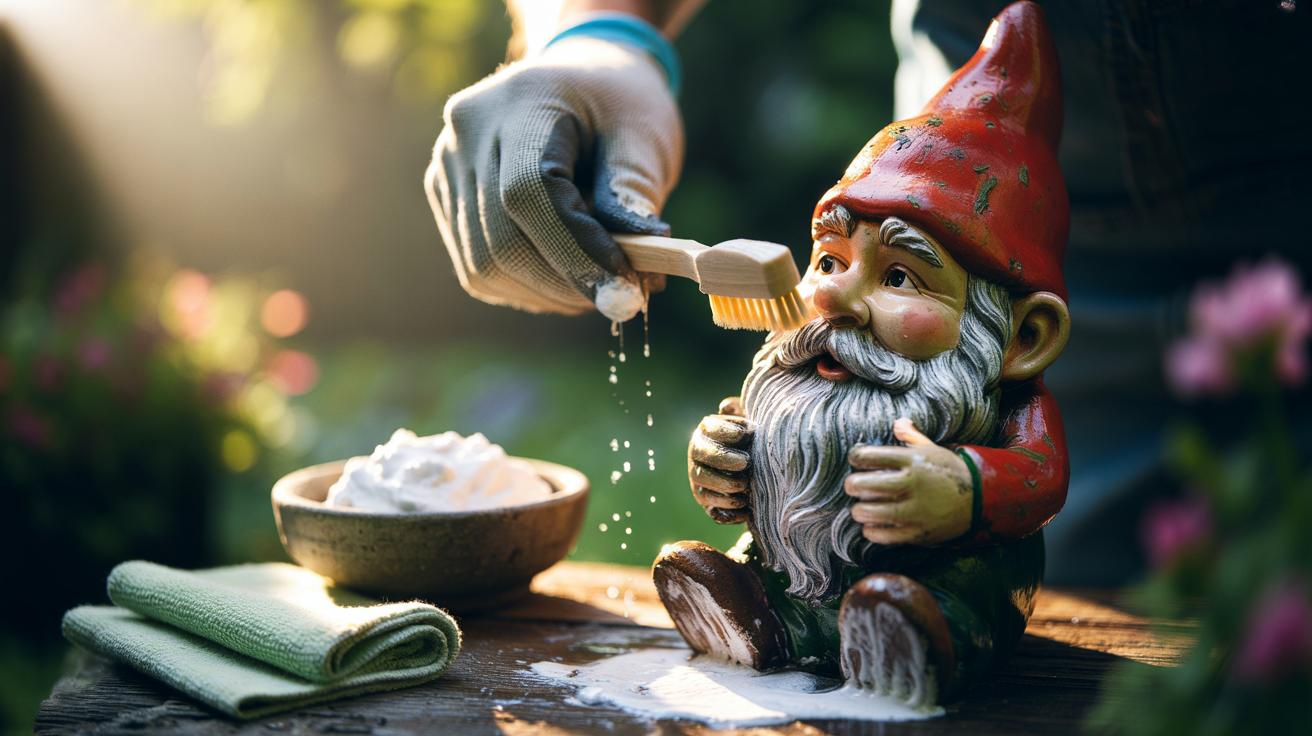
Start with a dry dust-off using a soft brush; removing loose grit prevents accidental scratching. Mix a paste: three parts baking soda to one part water for thick grime, or two-to-one for general refresh. Add a drop of mild dish soap if the gnome has oily splashes, but skip soap on matte chalk paints. Test a discreet spot. Using a damp sponge or soft toothbrush, apply in small circles with feather-light pressure. Let it dwell for 60–90 seconds if the dirt is stubborn, misting with water if it starts to dry. Work in sections: hat, face, coat, base. Rinse with low-pressure water and pat dry with a microfiber cloth to avoid water marks.
| Parameter | Guideline |
|---|---|
| Mix Ratio | 3:1 (baking soda:water) heavy grime; 2:1 routine clean |
| Tools | Soft sponge, microfiber cloth, soft toothbrush for crevices |
| Pressure | Light only; let the paste do the work |
| Dwell Time | Up to 90 seconds; keep moist |
| Rinse | Low-pressure, clean water; no jet wash |
| Drying | Pat dry; air-dry fully before sealing |
Stop if coloured water appears—this suggests active paint loss. Otherwise, continue section by section. For concrete or stone bases, a stiffer nylon brush is fine, but keep it away from painted faces and decals. When dry, consider a UV-stable clear acrylic sealer to slow future fading and make the next clean even faster.
Understanding Mild Abrasion: The Science in Five Minutes
Grime rarely arrives as a single slab. It builds in layers: airborne soot, sticky pollen, algae biofilms, and the oily mist from barbecues or traffic drift. Each layer bonds differently—some electrostatic, some greasy, some biological glue. Baking soda targets these bonds. The alkaline water fraction disrupts acidic residues and the polysaccharide “glues” that biofilms exude. The undissolved crystals add kinetic energy at the surface, nudging particles free. Think of it as thousands of tiny ball bearings coaxing dirt away, not chisels gouging paint.
The goal is to remove deposits, not paint. That’s why time and touch matter more than muscle. A minute of gentle motion beats 10 seconds of scrubbing hard. The particles’ softness compared with quartz or pumice helps protect acrylic and outdoor enamel paints commonly used on gnomes. Contrast this with pressure washing: a jet can drive water under edges and lift entire flakes, especially on older, weathered ornaments. Soda’s slow-dissolving nature is self-limiting; as you work, abrasion tapers, reducing the risk of overshooting from clean to scoured. Clean smart, not hard.
Care, Safety, and When Not to Use
Check for loose or flaking paint before cleaning; consolidate or touch up first. Avoid the paste on gold leaf, delicate metallic foils, or chalky limewashes—they mark easily. On unsealed terracotta or clay, moisture can darken the surface temporarily; test and dry slowly in shade. Wear light gloves if you have sensitive skin, and don’t inhale the dry powder. Keep paste out of crevices where water might pool; trapped moisture encourages algae regrowth.
If stains persist—sap, rust spots, or tannin bleed—repeat the paste after drying rather than escalating to harsh chemicals. For organic green staining on unpainted stone, a short-contact oxygen bleach (sodium percarbonate) can help, but keep it away from painted sections. Rinse thoroughly. Once fully dry, apply a UV-resistant acrylic sealer to painted areas to slow fading. Re-clean gently every spring; it takes minutes when grime is thin. If your first wipe reveals colour and detail quickly, stop there—over-cleaning can dull a satin sheen. Store gnomes indoors over winter to reduce freeze–thaw microcracks and future dirt anchoring.
Reviving a cherished garden gnome shouldn’t feel like restoration work. With a humble baking soda paste, light touch, and a rinse, you can strip away months of grime in about five minutes while keeping paint intact and colours true. The method is cheap, quiet, and neighbour-friendly—no harsh fumes, no roaring jets. Seal wisely, clean gently, and your ornaments will reward you with brighter faces and crisper detail through the season. Which gnome will you rescue first, and what detail do you hope to rediscover under that chalky film?
Did you like it?4.5/5 (26)