In a nutshell
- ✨ The banana peel’s natural oils, mild acids, and gentle micro-abrasion lift film and water spots to leave glazed plates bright and streak-free.
- 🍌 Step-by-step: rub the inner peel in circles for 30–60 seconds, buff with a damp microfibre cloth, then rinse and dry immediately; one peel can polish several plates.
- 🧪 It works because pectins and minerals emulsify grime while fibres polish without scratching; use as a finishing touch after regular washing.
- ⚠️ Best on porcelain, stoneware, and glass; avoid unglazed or crazed surfaces and keep off gilded rims; light pressure and good hygiene are essential.
- ♻️ A low-waste trick: repurpose peels, then compost; for grey marks, try a tiny bicarbonate of soda paste; quick pre-wipe helps with limescale halos.
What if the path to gleaming plates was hiding in your fruit bowl? The humble banana peel—so often tossed without a thought—contains natural oils, gentle acids, and soft fibres that can lift film, smudges, and water spots from dinnerware. It’s quick. It’s thrifty. And it turns waste into a handy cleaning aid that feels satisfyingly resourceful. Used correctly, a peel can give glazed plates a bright, streak-free finish in minutes. Below, we explore the science, the simple method, and the caveats that keep your crockery safe. Prepare to polish, plate by plate, with nothing more high-tech than yesterday’s snack.
Why Banana Peels Make Dishes Shine
The inside of a banana peel is rich in natural waxes, mild fruit acids, and tiny fibres that act as a non-scratch polish. When you rub the inner side over a glazed plate, those components loosen soap film, limescale specks, and everyday fingerprints. The peel’s light oils add a micro-sheen while the fibrous surface provides gentle micro-abrasion, helping dislodge residue without biting into a durable glaze. That delicate balance—slip from oils, lift from acids, and polish from fibres—is why the trick works so fast.
There’s also a chemistry bonus. Trace minerals and pectins in the peel emulsify grime when combined with a splash of warm water, creating a thin slurry that carries particles away as you buff. The result is not a waxy coating but a clean, bright surface that reflects light more evenly. On high-shine porcelain or well-fired stoneware, the effect can be instant. Think less scouring, more buffing. And because the peel is soft and damp, it glides—no squeal, no scratch—leaving plates tactilely smooth and visibly clearer at first glance.
Environmental logic seals the deal. You’re repurposing what would become food waste, then composting it after use. One peel can service several plates before it’s spent. For households chasing low-waste routines without buying niche cleaners, this method feels both clever and credible. It won’t replace washing-up liquid for greasy pans, but for the final flourish on clean dinnerware, it’s a tiny intervention with oversized shine.
Step-by-Step: The Banana Peel Plate Polish
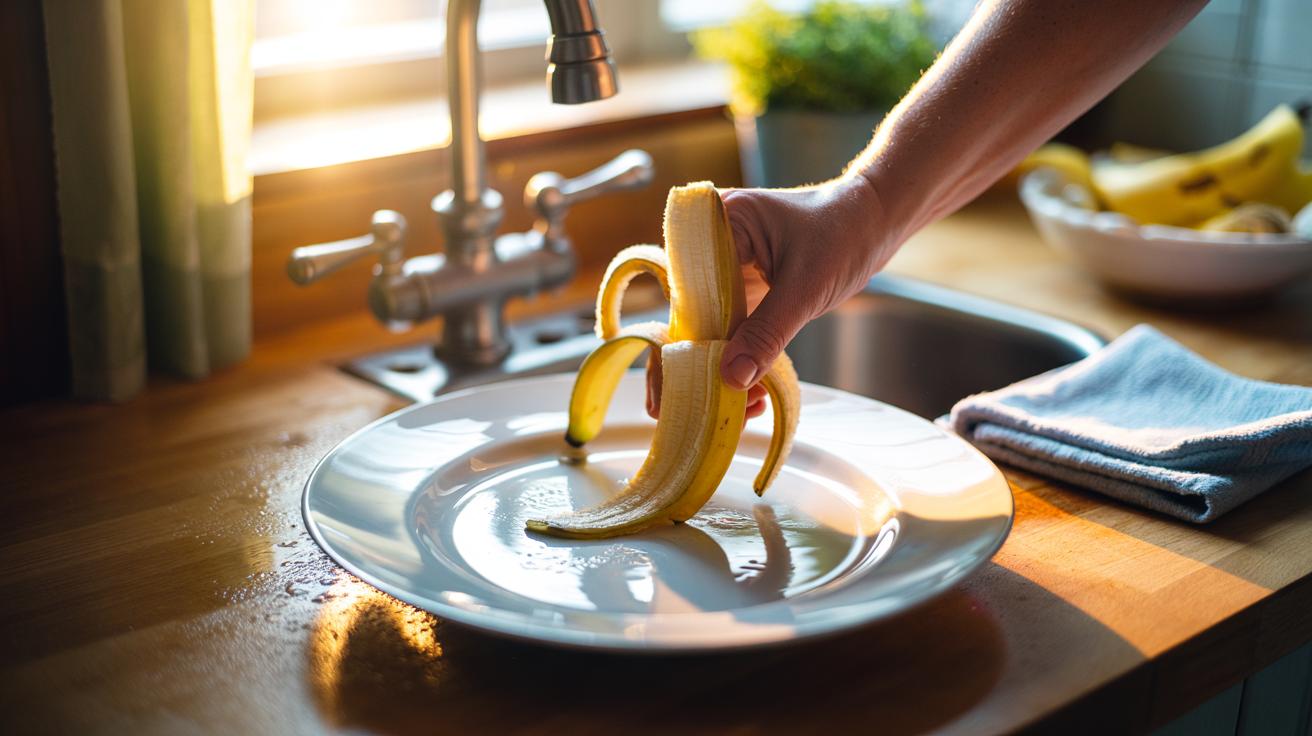
Start with plates that are already clean of grease. This is a finishing step, not a replacement for washing. Choose a ripe but firm banana; the inner peel should feel moist, not mushy. Work over the sink to make rinsing quick. Hold the plate in one hand and, with the other, rub the inner peel across the surface in gentle circles. Focus on dull patches, rings from drying, or faint marks where cutlery has left an optical haze.
After 30–60 seconds per plate, you’ll see the sheen return. Wipe the surface with a slightly damp microfibre cloth to lift the loosened residue, then rinse briefly with warm water. Dry immediately with a lint-free tea towel to prevent new spots forming. For glass plates, shorten contact time to avoid streaks; for sturdy glazed stoneware, give an extra pass along the rim where scale gathers. Keep pressure light. This is polish, not elbow-grease scrubbing.
For clarity, here’s a quick plan you can follow tonight:
| Step | Action | Time |
|---|---|---|
| 1 | Wash plate as usual; shake off water | — |
| 2 | Rub inner banana peel in small circles | 30–60 sec |
| 3 | Buff with damp microfibre | 15 sec |
| 4 | Rinse lightly; dry with tea towel | 30 sec |
| 5 | Compost peel and cloth fibres | — |
Rinse and dry immediately for a spotless, mirror-like finish. If you spot a stubborn halo, repeat the peel rub for another quick pass. The whole routine is faster than brewing a cuppa, and the payoff is unmistakable: crisp edges, clear glaze, and that quiet “new plate” look that elevates the table.
Troubleshooting and Plate Types
Not all dinnerware is created equal. On fully glazed porcelain and high-fired stoneware, the peel trick shines—literally. Always test a thumbnail-sized patch on the underside first. For delicate bone china with gilded rims, avoid direct contact with the decorative edge; polish the centre only and keep strokes feather-light. Glass plates respond beautifully, provided you keep contact brief and buff thoroughly to stop faint streaks. Melamine and bamboo composites? Proceed carefully: if the surface looks matte or porous, switch to a damp cloth only.
Avoid unglazed earthenware and hand-painted matte finishes; the peel can leave a tint or catch in the texture. If you encounter faint cutlery grey marks on glazed plates, create a quick paste by mashing a coin-sized bit of peel with a pinch of bicarbonate of soda, dab gently, then rinse. It’s mild, yet effective. For plates with hard water build-up, pre-wipe with a cloth dampened in warm water and a drop of vinegar, then finish with the peel to restore shine without an acidic soak.
Hygiene matters. Use fresh peel, and don’t mix this process with raw-meat prep areas. Clean, rinse, and dry are non-negotiables. Finally, if a plate shows crazing (fine cracks in the glaze), skip the method and hand-wash only; liquids can migrate into those micro-lines. Respect the material, polish lightly, and you’ll keep dinnerware bright for years, with no scratches and no faff.
This small ritual—banana peel, buff, rinse, dry—turns routine washing into a tiny act of care. Your plates gleam, waste shrinks, and your cupboard looks showroom-ready without chemical odour or extra spend. It’s clever because it’s simple, and it works because you keep it gentle. Next time you finish a banana, don’t bin the peel; give your dinnerware a quick spa treatment, then send the peel to the compost. Ready to put the trick to the test—and which plate in your cupboard deserves the first instant sparkle?
Did you like it?4.5/5 (28)