In a nutshell
- 🍌 The inner banana peel delivers natural wax, mild oils, and minerals that act as a micro‑polish, creating a quick shine and a thin protective layer on smooth leather.
- ⏱️ Quick method: dust shoes, rub with the peel’s inner side in light circles, wait ~1 minute, then buff briskly with a clean cloth; use only on smooth leather, not suede or nubuck.
- 🧪 Science in brief: fast-setting wax film fills pores and levels micro-scratches, boosting light reflection; compared with beeswax and carnauba, banana gives speed and ease, not maximum durability.
- ⚠️ Key caveats: sugars can leave tack if over-applied—wipe residue, patch test on pale/aniline finishes, avoid exotics and heavy stitching buildup; pick polish for long-lasting water resistance.
- 🌿 Smart routine: use the peel for weekday upkeep and portability, then deepen gloss and protection with a weekend tin-and-brush session—an effective, eco-friendly stopgap between full care.
Pressed for time, staring at scuffed Oxfords before a meeting? There’s a fast, oddly satisfying fix sitting in your fruit bowl. The inside of a banana peel carries a blend of natural waxes, oils and minerals that can clean, feed and brighten leather in minutes. Swipe, wait, buff: that is the simple rhythm. While it won’t replace a full spa for your shoes, it delivers a surprising shine and a light protective layer when you need quick results. It’s a clever shortcut, not a cure‑all, and it trades on the same principles used by traditional polishes—film formation, pore-filling, and a glossy surface that bounces back the light.
Why Banana Peel Works on Leather
Look closely at the inner membrane of a ripe peel and you’ll find a thin cocktail of lipids, natural waxes, trace sugars and potassium. On finished leather, those constituents behave like a micro-polish. Waxes lay down a faint film, sugars help that film level and cling, while potassium and mild acids assist in lifting light grime. The result is a smoother surface that reflects more light. It isn’t magic; it’s chemistry. The same optical trick that gives a car wax its wet look happens here—tiny pores and micro-scratches are filled, scattering less light, boosting perceived shine.
Leather’s topcoat, typically a polymer finish, tolerates small amounts of benign oils. A banana’s waxy trace reinforces that finish without the solvent load of many quick shines. Crucially, the peel’s moisture softens surface dirt so it wipes away. Then, the wax fraction sets quickly as water evaporates, leaving a light, hydrophobic sheen. Expect a gentle protective layer against splashes, not a parade-ground mirror gloss. And observe one hard rule: never use this on suede or nubuck. Those open, velvety leathers will stain and mat. Stick to smooth calf, corrected grain, or coated leathers for best results.
How to Polish Shoes in Minutes
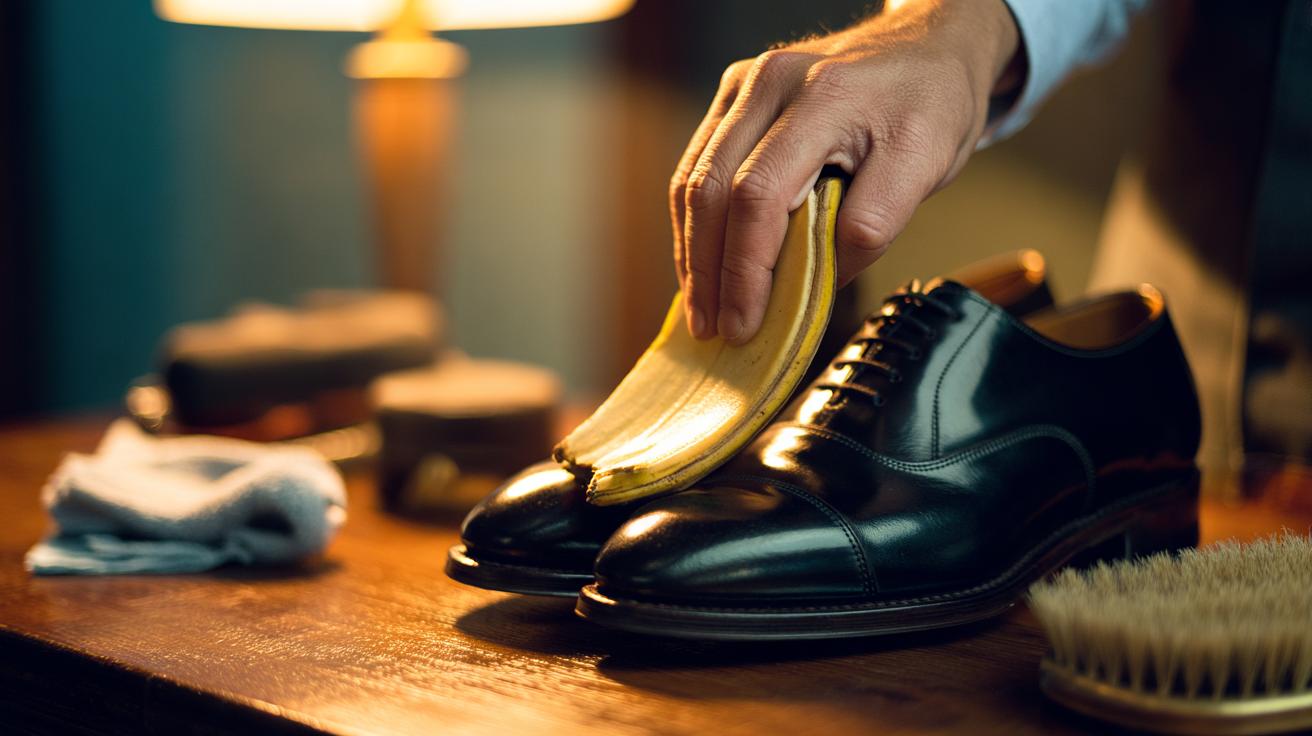
Pick a ripe, yellow banana—not green, not brown. Tear off a section and expose the inside. Knock loose dust from the shoes first with a soft brush or cloth; you want to avoid grinding grit into the finish. Then glide the peel’s inner side across the leather in quick, overlapping circles. Work toe caps, quarters, and heels. Keep pressure light. The film forms fast, so there’s no need to saturate the surface or linger.
Wait about a minute. That short pause lets moisture flash off while the natural wax fraction settles. Now buff energetically with a clean cotton cloth or microfibre—thirty seconds per shoe is enough. You’ll see a crisp, revived shine. For stubborn scuffs, repeat a light pass and buff again. Finish by wiping the welt and edges to remove any sugary residue, which can attract dust. If you want an extra pop, a final dry buff, or a few brisk strokes with a horsehair brush, elevates the gloss. For speed, this method beats most liquid quick shines—and it smells nicer, too.
What the Science Says About Natural Waxes
Polishes work because they lay a thin, hard film that smooths the surface and resists moisture. Banana peel offers a gentle version of this: a soft wax/oil matrix with traces of starch and sugars that self-level as it dries. Traditional tins rely on beeswax for pliability and carnauba for hardness. Carnauba’s higher melting point creates a tougher film and a glossier “bloom,” but it takes longer to set and needs elbow grease. Banana-derived wax is softer; it sets quickly and buffs easily, yielding an instant, everyday sheen rather than a concours gloss. In short: fast film, modest durability.
| Source | Key Action | Finish | Time to Shine |
|---|---|---|---|
| Banana Peel | Light wax film + mild cleaning | Clean, natural gloss | 1–3 minutes |
| Beeswax Polish | Condition + medium-hard film | Warm, rich lustre | 5–10 minutes |
| Carnauba-Rich Polish | Hard, durable film | High, sharp gloss | 10–20 minutes |
If your priority is speed and a tidy appearance before a commute or broadcast hit, the peel trick excels. For storm-proofing and long intervals between care, conventional waxes still win. A savvy routine can blend both: banana for weekday upkeep, tin and brush for weekend depth and protection.
Care Caveats and When to Use Conventional Polish
There are limits. The peel contains sugars that can leave a faint tack if you over-apply. Always finish with a dry cloth to remove residue. Do a patch test first on a hidden area if your shoes are aniline, pale, or hand-dyed; very absorbent finishes may darken slightly with any oil, however natural. Avoid stitching overload—sugars can stiffen thread if not wiped away. Skip exotic skins, suede, and nubuck entirely. For deep nourishment, reach for a dedicated conditioner; the peel is a surface solution, not a full treatment.
When you need a mirror toe or long-lasting water beading, shift to a proper beeswax/carnauba blend. These polishes build layered films that withstand rain and scuffs, especially when combined with a brisk horsehair brushing routine. Think triage: banana for quick recovery, tin for long campaigns. Keep a small microfibre cloth in your desk drawer; pair the peel method with occasional edge dressing to keep welts smart. The smartest shine is the one you’ll actually do, and convenience often decides whether shoes look loved or left behind.
Used thoughtfully, the banana peel technique is more than a party trick; it’s a practical way to revive leather fast, powered by the same principles that underpin time-honoured polishes. A swift pass, a short wait, a vigorous buff, and you’ve built a thin, light-reflecting protective layer that keeps shoes presentable between full-care sessions. It’s frugal, green, and quietly effective. Speed matters on busy mornings, and this method respects the clock. Will you keep a peel handy for emergency shine, or does your routine demand the ritual of brush, tin, and a Saturday sit-down with your favourite pair?
Did you like it?4.5/5 (21)