In a nutshell
- 🍽️ Freshly cracked black pepper acts as a flavour “harmoniser,” sharpening salt, amplifying umami, and adding structure that turns ordinary dishes into standouts.
- 🔧 Technique rules: grinding, toasting, and timing determine character—coarse for texture, fine for dispersion, early for depth, and a finishing grind for lift.
- 🧪 The science: piperine triggers trigeminal heat while volatile oils (limonene, pinene) boost aroma, lengthen finish, and support bioavailability, enabling bold flavour with less sodium.
- 🥚 Smart pairings: eggs, cacio e pepe, steak, roasted veg, strawberries, and dark chocolate shine with a judicious twist; use a light hand for balance.
- 🌍 Forms and origins matter: whole, coarse, fine, white, and green pepper deliver distinct results; Tellicherry and Sarawak bring different profiles—buy whole, store airtight, and remember the pepper mill is essential.
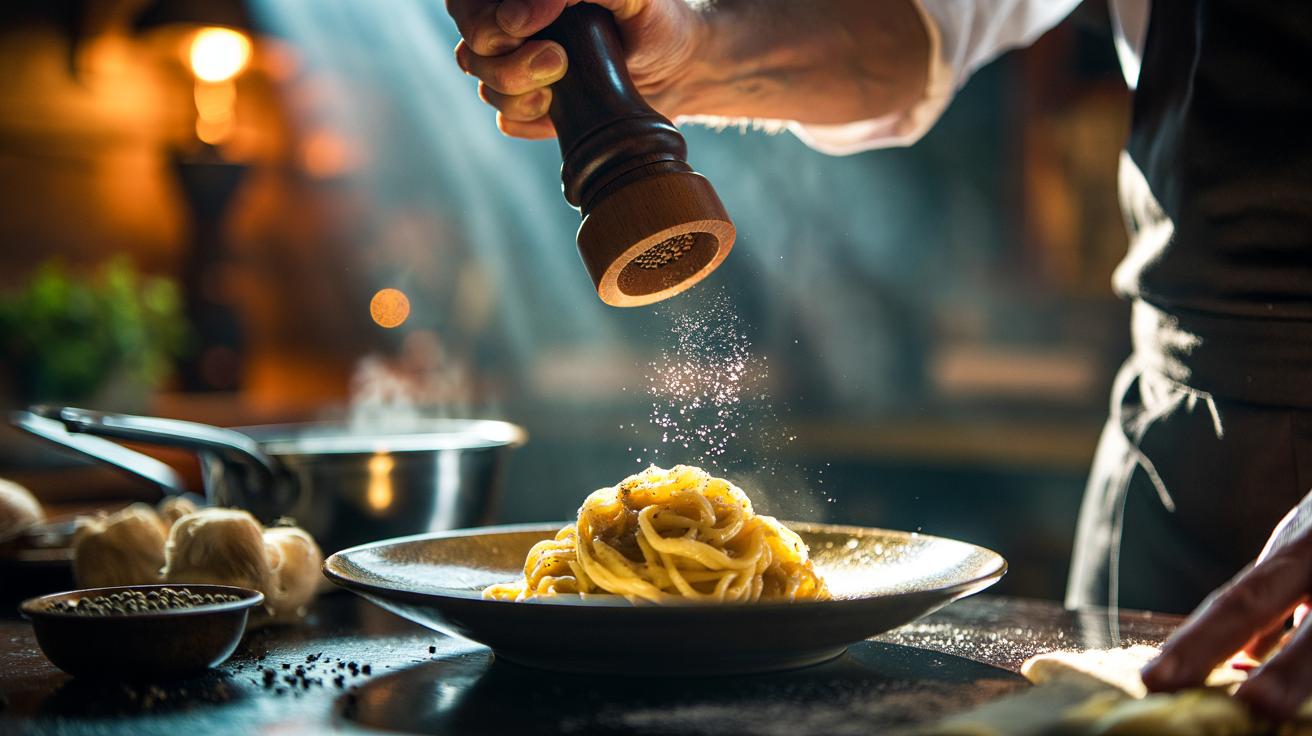
British chefs whisper it like a trade secret shared at the pass: black pepper is the quiet force that lifts home cooking into something restaurant-worthy. Not the pre-ground dust, but freshly cracked peppercorns with their citrusy top notes, resinous depth, and a measured bite. This common spice does more than make food “peppery.” It structures flavour, accentuates aroma, and frames acidity and sweetness, giving dishes a finishing snap they often lack. Use it with intent and it behaves like a conductor, bringing order to a crowded band of ingredients. From eggs to chocolate, soup to strawberries, chefs explain that pepper doesn’t shout; it clarifies, connects, and finally, compels.
Why Black Pepper Is the Quiet Alchemist
Ask any seasoned cook and you’ll hear the same refrain: pepper unlocks balance. It does so by stimulating the palate in three directions at once — aroma, heat, and subtle bitterness — which in turn amplifies umami and makes salt taste brighter without increasing salinity. Chefs call it a “harmoniser.” A simple tomato sauce becomes rounded, less thin at the edges, when a pinch of freshly ground pepper is added at the end. A creamy risotto gains definition. Roast chicken tastes more “chicken.” It’s not a spotlight; it’s the stage lighting that makes the scene legible.
Unlike chilli heat, the bite from piperine arrives as a warm, diffuse prickling, coaxing out hidden aromatics in fat and alcohol. That’s why pepper loves butter, cream, cured meats, and olive oil. It grips volatile compounds, helping them linger. Chefs lean on this in classic dishes — think cacio e pepe — where pepper doesn’t merely season; it provides structure. Even desserts benefit: a twist over macerated strawberries boosts their perfume, while a whisper over dark chocolate sharpens its cocoa notes and reins in sweetness.
Technique Matters: Grinding, Toasting, and Timing
The difference between ordinary and extraordinary often lies in how the pepper is treated. Whole peppercorns hold delicate volatile oils that evaporate quickly once cracked. Rule one: grind fresh. For sauces or steaks, a coarse grind gives texture and character; for soups and veloutés, a fine grind disperses evenly. Toasting whole peppercorns in a dry pan for 30 seconds wakes their citrus and pine aromas; blooming them briefly in oil does the same, particularly in curries and pan sauces. Timing matters too. Add pepper early for mellow depth, or finish at the pass for lift and sparkle.
| Form | Flavour Profile | Best Uses | Intensity | When to Add |
|---|---|---|---|---|
| Whole | Clean heat, citrus, resin | Stocks, pickles, steak crust | Medium | Early (stocks), final crush (steaks) |
| Coarsely Cracked | Aromatic, textural bite | Cacio e pepe, salads, roasts | High | Finish or late in cooking |
| Finely Ground | Even heat, subtle aroma | Soups, sauces, eggs | Medium | During and at the end |
| White Pepper | Muskier, earthy | White sauces, mash, Chinese soups | Medium | Early to integrate |
| Green Pepper | Fresh, floral | Pan sauces, pâtés, seafood | Low–Medium | Late, brief cooking |
Chefs also choose region. Tellicherry (India) tends towards warm citrus and depth; Sarawak (Malaysia) often reads brighter and more floral. Quality matters. If it smells dusty in the grinder, it will taste dusty on the plate.
Pairings That Sing: From Eggs to Strawberries
Some ingredients seem made for pepper. Eggs, for a start. A soft scramble needs the contrast of freshly ground pepper to stop it tasting flat, while a poached egg on toast takes wing with a coarse grind and a lick of good olive oil. Pepper slices through the richness of carbonara, lifts the sweetness in roasted carrots, and corrals the briny exuberance of grilled sardines. On steak, it forms a fragrant crust; on roast cauliflower, it adds definition, especially when teamed with lemon zest and tahini. It’s the finishing brushstroke that reveals the painting.
Then there are the revelations. Strawberries with cracked pepper and a drizzle of balsamic become heady, almost perfumed. Dark chocolate truffles dusted with fine pepper feel deeper, less cloying. Try pepper with pears and blue cheese, or with grilled peaches and mascarpone. In cocktails, a scant grind over a gin and tonic amplifies botanicals; a pepper syrup softens sweetness while keeping the sip lively. Chefs advise a light hand: you want a halo, not a halo turned searchlight. A twist, a taste, a second twist if the dish asks politely.
The Science Behind the Kick and Aroma
Black pepper’s magic is grounded in chemistry. The compound piperine activates trigeminal receptors, creating that warm, prickling heat, while the spice’s essential oils — pinene, limonene, and others — deliver citrus-pine aromas. This dual action wakes the palate and lengthens finish, so flavours appear to last longer. Pepper also plays nicely with salt: by stimulating saliva and gently numbing certain bitterness receptors, it can make savoury notes feel more vivid at lower sodium levels. Chefs exploit this to season more judiciously without losing impact. It’s flavour physiology, not mystique.
There’s also the matter of bioavailability. Piperine is known to enhance absorption of some nutrients and spices, especially in fat-rich contexts, which might explain why pepper-scented sauces feel so expressive. Heat and air, however, are the enemy. Ground pepper stales within weeks; whole peppercorns keep their punch for months. Store them airtight, away from light, and buy little and often. A pepper mill is not a prop; it’s essential equipment. Treat the spice with respect and it pays you back, plate after plate, with clarity, lift, and that unmistakable restaurant polish.
Black pepper won’t fix a bad recipe, but used with precision it elevates good cooking into memorable cooking. It frames, focuses, and finishes. Freshly cracked over soup, bloomed into a pan sauce, or scattered across fruit, it bridges gaps and brightens edges, all while remaining almost invisible. The food still tastes like itself — just more itself. That’s the chef’s trick, and you can borrow it tonight with a grinder and a little restraint. Which dish on your table would benefit most from a judicious twist of pepper, and how will you experiment to find the perfect grind?
Did you like it?4.5/5 (27)