In a nutshell
- 🔥 Carbon steel skillet delivers cast-iron sear with stainless-like agility, building a naturally slick seasoned patina that improves every cook.
- ⚖️ Precise heat control unlocks the Maillard reaction, effortless pan sauces, and versatility from eggs to steaks; it’s induction and oven safe yet lighter than cast iron.
- 📊 Compared with cast iron, stainless, and non-stick, carbon steel “threads the needle”: high-heat performance, responsiveness, and a repairable surface with minimal downsides.
- 🛠️ Choose a 24–28 cm, 2–3 mm pan with a comfortable handle; season in thin layers, favour early fatty cooks, and maintain with a quick rinse–dry–oil routine.
- 🍳 Everyday payoff: a durable, high-heat workhorse that elevates weeknight meals and weekend projects, encouraging better, faster, more flavour-forward cooking.
There’s a reason professional kitchens hum with the same quiet certainty: when the ticket stack rises, one pan does the heavy lifting with grace. The carbon steel skillet has become that pan—trusted by chefs, increasingly adopted by home cooks. It sears like cast iron, moves like stainless, and builds a naturally slick surface the more you cook. This isn’t a gadget. It’s a tool. Own one, and your hob-to-oven repertoire expands instantly. From steaks to souffléed omelettes, crispy-skinned fish to blistered greens, a single, well-seasoned pan can carry your weekday dinners and weekend projects with equal confidence.
The Carbon Steel Skillet: A Workhorse With Finesse
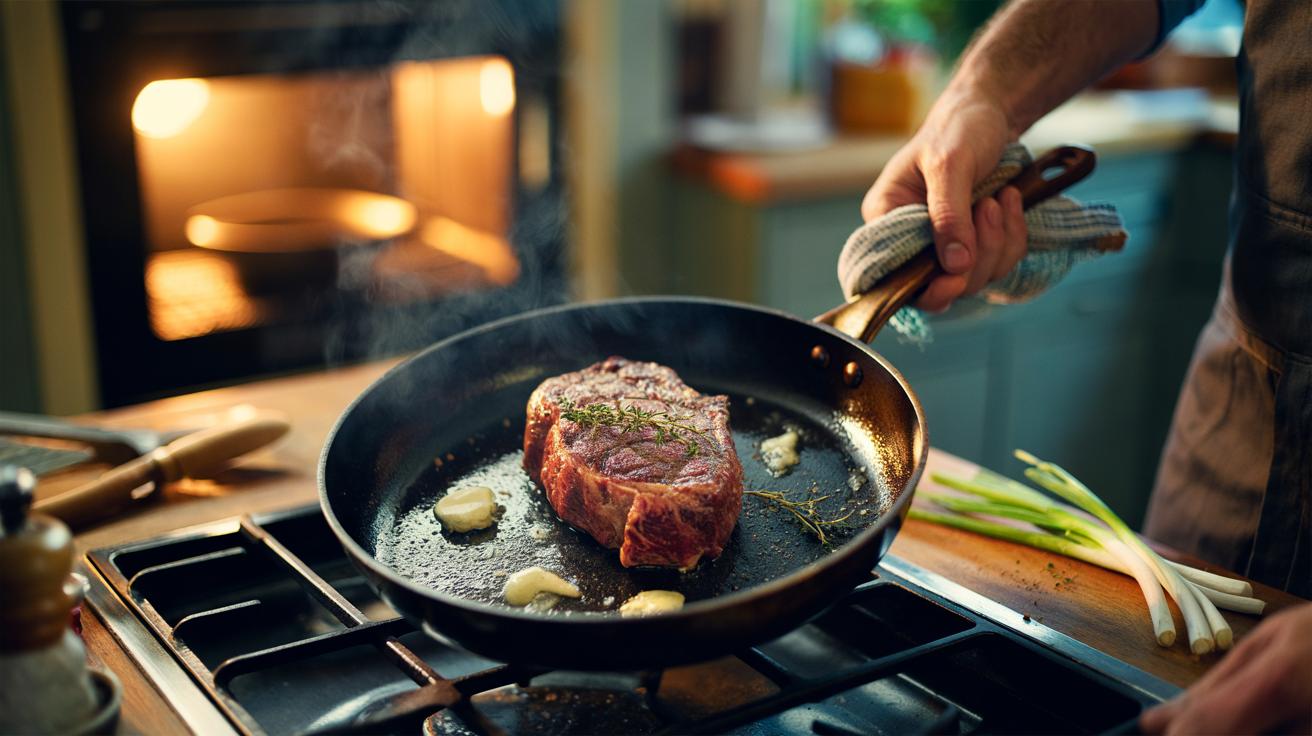
The magic of carbon steel lies in balance. It’s thinner than cast iron, so it heats up faster and responds when you dial the flame. Yet it retains enough thermal mass to deliver that coveted, bronzed crust on chops, scallops, and mushrooms. It feels agile in hand—especially the classic French-style versions with an angled handle—so flipping pancakes or tossing sautéed greens is a pleasure, not a workout.
With use, the surface develops a seasoned patina that behaves like a natural non-stick. Fry eggs? Yes. Slide a crêpe? Absolutely. The more you cook, the better it gets. Unlike coated pans, there’s no fragile layer to baby. If you scratch it, you can simply re-season and carry on. It rewards care, not coddling.
It’s also versatile across heat sources. Gas, electric, induction, and the oven are all fair game. Blast it on high heat for a hard sear, then finish gently in the oven without fear of warping or off-gassing. That range—responsive yet robust—explains why so many chefs default to carbon steel when they can only grab one pan in the rush.
Performance That Levels Up Everyday Cooking
Great cooking is control. Carbon steel gives you that. Preheat properly and the pan lays down deep colour quickly, unlocking Maillard reaction flavour in minutes. Turn the knob, and the pan cools enough to stop overcooking delicate fish. Deglaze with wine or stock to lift a glossy pan sauce from those caramelised bits. The result? Restaurant-worthy plates without drama.
Weeknight cooking becomes simpler, faster, tastier. Smash burgers, crispy tofu, buttery omelettes—no problem. The gently sloping sides encourage steam to escape, keeping food crisp. Yet the walls are tall enough to contain a quick braise, shakshuka, or a skillet lasagne finished under the grill. Because carbon steel is lighter than cast iron, you’ll actually reach for it, not leave it lurking at the back of a cupboard.
Maintenance is straightforward. After cooking, add a splash of hot water, loosen residue with a brush, dry thoroughly, then rub in a whisper of oil to protect the surface. That thin oil layer is your friend; it builds a tougher polymerised coating over time. Avoid long acidic cooks until the patina is established, then proceed confidently. The reward is a pan that adapts to you as much as you adapt to it.
How It Compares to Cast Iron, Stainless, and Non-Stick
Choosing a single, trustworthy pan means understanding trade-offs. Cast iron brought the romance and heft; stainless steel tri-ply brings clinical precision; non-stick promises ease. Carbon steel threads the needle. It marries searing power with speed, offers a repairable surface, and handles high heat without sacrifice. For most British home kitchens—modest hobs, compact ovens, induction on the rise—it simply fits better day to day.
If you love the ritual of care, carbon steel wins on longevity and flavour development. If you’re wedded to ultra-low-fat scrambling, a dedicated non-stick may still earn a place. But when you want one pan to do most things brilliantly, carbon steel is the pragmatic sweet spot.
| Pan Type | Biggest Strength | Main Drawback | Weight | Typical Uses |
|---|---|---|---|---|
| Carbon Steel | High-heat sear + responsiveness | Needs seasoning, early acid caution | Light–Medium | Steaks, fish, eggs, sautés, oven finish |
| Cast Iron | Excellent heat retention | Heavy, slower to heat/cool | Heavy | Roasts, cornbread, deep sears |
| Stainless (Tri-Ply) | Precision and deglazing | Food sticks without technique | Medium | Pan sauces, sautés, boiling |
| Non-Stick | Effortless release | Coating wears, heat limits | Light | Eggs, delicate pancakes |
Choosing, Seasoning, and Caring for Your Pan
Look for a 24–28 cm (10–11 inch) carbon steel skillet about 2–3 mm thick. That’s the all-rounder size for most hobs and ovens. A riveted, stay-cool handle with a comfortable angle improves control on the toss. If you’ve got induction, confirm magnetic compatibility (most are). Pre-seasoned models are useful, but unseasoned is fine if you like to build your own patina from scratch.
Initial seasoning is simple: wash off factory oils, dry thoroughly, heat the pan until just smoking, wipe on a micro-thin coat of high-smoke-point oil, then bake or heat on the hob until it darkens. Repeat a few times. Thin layers win; thick layers chip. In early cooks, prioritise fatty ingredients—chicken thighs, bacon, potatoes—to reinforce that polymerised shield.
Daily care is pragmatic. Rinse hot, scrub gently, dry over heat, oil lightly. Skip the dishwasher. Brief acid cooks are fine once seasoned, but long tomato braises are better in enamel or stainless. If rust appears, abrade lightly, re-season, and carry on. Treat it as you would a favourite knife: a little attention, tremendous payoff, year after year.
The best kit doesn’t just perform; it nudges you to cook more, and better. A carbon steel skillet does exactly that, turning Tuesday-night chicken into something crackling and golden, making Saturday brunch eggs slide like a dream, and encouraging sauces that taste restaurant-made. It earns its keep quickly. One pan that rewards practice is worth ten that promise shortcuts. Ready to upgrade your everyday cooking with a tool that grows with you—what will you make first when that pan hits your hob?
Did you like it?4.5/5 (22)