In a nutshell
- ⚡ The 15‑second dishwashing hack follows a three‑step routine—Scrape–Spritz–Swipe—to lift grease quickly while the tap stays off.
- 🧰 Kit check: silicone bench scraper, foaming pump with diluted detergent (≈1 tsp in 300–400 ml), and a microfibre cloth for one‑pass cleaning.
- 💧 Resource wins: cut water use to under 1 litre per load, reduce hot‑water energy, and stretch detergent for months.
- 🛡️ Hygiene first: use separate cloths for raw foods, refresh cloths at 60°C or microwave damp for 60–90 seconds, and avoid mixing vinegar with bleach.
- ♻️ Make it stick: stage items light‑to‑heavy, batch wash, finish with a small jug rinse, and build a low‑waste habit that keeps bills down.
It sounds like clickbait, until you try it. The clever 15‑second dishwashing hack eco‑conscious foodies swear by is deceptively simple, lightning fast, and kind to your bills. Instead of blasting plates under a roaring tap, you use a silicone bench scraper and a foaming pump of ultra‑diluted washing‑up liquid to break down grime in seconds, then a swift wipe and rack. The tap stays off, your water meter relaxes, and dinner doesn’t end with a puddle in the sink. This is not about cutting corners; it’s about removing the wasted bits of washing up—time, heat, and litres—without sacrificing sparkle or hygiene.
What Is the 15-Second Dishwashing Hack?
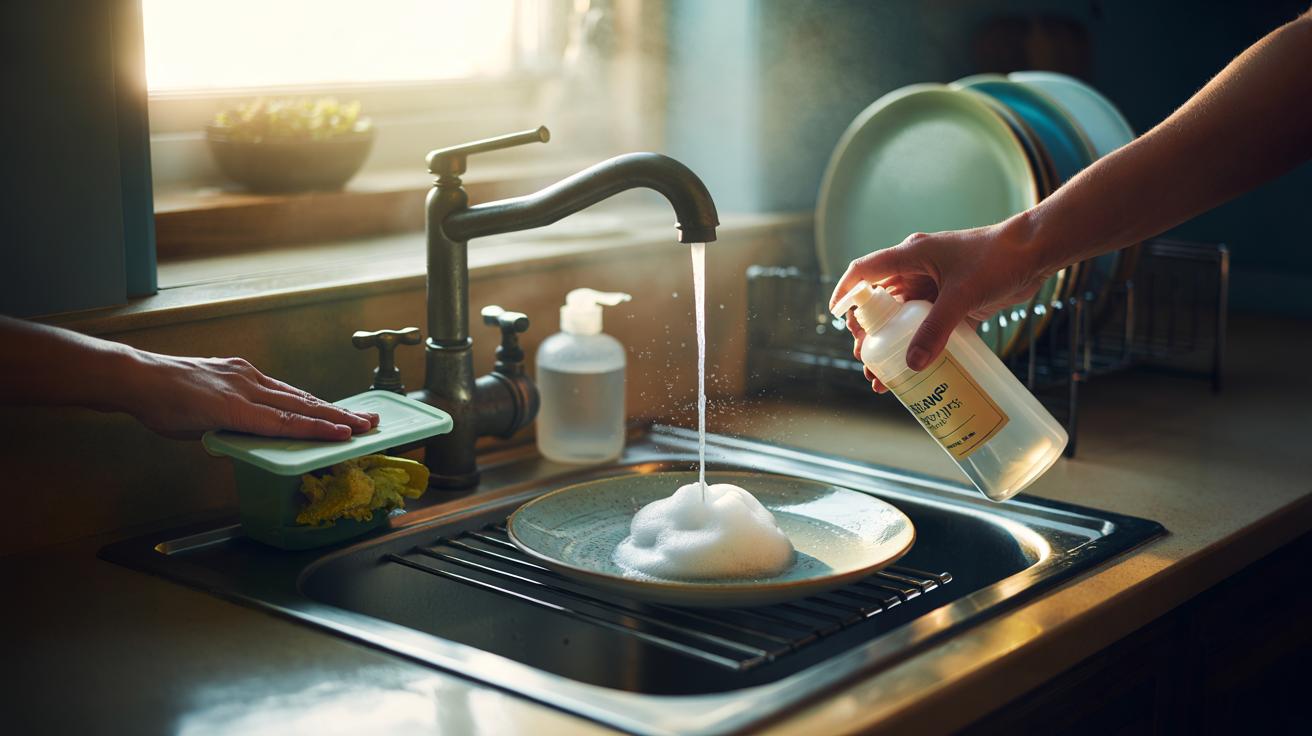
At its heart, the method is a three‑move routine: Scrape–Spritz–Swipe. First, a quick scrape with a silicone bench scraper pushes leftovers into the food‑waste caddy, avoiding clogs and keeping fats out of waterways. Then a fine mist from a foaming pump bottle—think one teaspoon of washing‑up liquid in 300–400 ml warm water—blankets the surface. The foam clings to grease, disperses quickly, and uses a fraction of the detergent you’d squeeze straight from a bottle. Finally, a microfibre cloth or sponge gets one decisive pass. Done. Plate clean, conscience clear.
It works because contact beats volume. Rather than relying on torrents of hot water to soften food residue, you apply a small amount of surfactant right where it’s needed. The scraper eliminates bulk, the foam loosens the film, and the cloth lifts it away. For pans, repeat the same sequence while they’re warm—not hot—to prevent baked‑on grief. No boiling kettle baths, no streaming pre‑rinse, just efficacy through smart sequencing and right‑sized tools.
Step-by-Step: From Greasy Pan to Gleaming Plate in Moments
Time yourself once and you’ll see where the seconds vanish. The trick is to prepare your tools—scraper on the counter, foamer by the sink, cloth wrung and ready—so each item flows through the same swift choreography. Start with the least greasy glasses and plates, end with pans. That order keeps your cloth effective for longer and stops you redirtying what you’ve already cleaned. Think production line, but gentle. Below is the 15‑second cadence most home cooks hit after a few goes; textured roasting trays may take a second pass, but still far less time than a running tap.
| Step | Tool | Time | Why It Works |
|---|---|---|---|
| Scrape | Silicone bench scraper | 3–4 sec | Removes bulk; less soil for detergent to tackle. |
| Spritz | Foaming soap bottle | 2–3 sec | Foam spreads fast; low soap, high coverage. |
| Swipe | Microfibre cloth | 6–7 sec | Microfibres lift grease films in one pass. |
| Quick Rinse (optional) | Cup of cool water | 1–2 sec | Removes light suds without opening the tap. |
That final rinse can be a cup dipped from a washing‑up bowl or leftover kettle water cooled with a splash from the cold tap. Keep the mixer off full blast. For stubborn skillet fond, sprinkle a pinch of baking soda on the foam before swiping; the mild abrasion speeds everything up without scouring coatings. Stack on the rack and let air do the drying. No tea‑towel needed, less laundry later.
The Numbers: Water, Energy, and Money Saved
Kitchen taps in UK homes often run at 6–9 litres per minute. Ten seconds of pre‑rinsing per plate can waste around a litre—before you even start washing. With the 15‑second method, you’re dispensing perhaps 1–2 ml of diluted soap and a handful of water from a bowl or jug. Multiply by a family dinner and the maths gets striking: what might have been 10–15 litres can fall below a single litre. That’s real money on a meter and fewer cubic metres through treatment plants.
Energy drops too. Because the foam does the heavy lifting, you’re not relying on steaming hot water to melt grease. If you do need heat, use leftover kettle water from tea time, cooled slightly; it’s energy you’ve already paid for. Less hot water means less gas or electricity drawn from the grid and fewer emissions attached to your meal’s aftermath. These are estimates, of course—flow rates and habits vary—but the pattern holds: aim detergent precisely, and the tap can mostly stay shut. Your plates will not notice the difference. Your bills will.
Safety, Hygiene, and Planet-Friendly Choices
Clean is non‑negotiable. The hack insists on it. Use a separate cloth for anything that touched raw meat or eggs, and rinse that cloth in hot soapy water before a quick microwave zap for 60–90 seconds to kill microbes. Replace sponges frequently, or stick with washable microfibre squares and launder them at 60°C. Hygiene comes from contact time and friction, not from drowning a plate under a tap.
On products, diluted standard washing‑up liquid works brilliantly because surfactants spread and lift grease fast. Want a greener profile? Pick a plant‑based, fragrance‑light formula and refill the foamer; you’ll stretch one bottle for months. Skip mixing vinegar with soap in one bottle—chemically, they cancel some benefits—though a separate citrus vinegar spritz is fantastic on glassware after washing. Never combine vinegar with bleach. Dispose of food scraps in the caddy or compost to keep fats out of drains. For coating‑sensitive pans, use the soft side of the cloth and avoid harsh powders; if needed, a brief soak with the foam, not a flood, keeps surfaces safe and waste minimal.
Make It a Habit: Tiny Tweaks for Big Gains
Habits win where hacks start. Keep the scraper by the hob, the foamer primed, and a cloth folded over the sink rail. Batch the washing: line up plates on the counter, run the routine, then rinse the whole set with one jug if you prefer a final splash. Families can go assembly‑line, each person owning a step; it’s oddly satisfying. Put a small washing‑up bowl in the sink to catch greywater and use it for the last rinse. The fewer times you touch the tap, the less you spend and the more you save the rivers we love. After a week, the cadence feels natural. After a month, you’ll wonder why you ever filled the sink to the brim.
In a cost‑of‑living era, the smartest kitchen wins by doing more with less. This 15‑second dishwashing hack trims water, trims energy, and trims faff—without trimming cleanliness. It’s tactile, quick, and quietly radical, proving that technique beats brute force and buckets of hot water. Small rituals change big footprints, especially when repeated night after night. Ready to lay out a scraper, prime a foamer, and give your tap a rest—what will your first 15‑second transformation be, and which tweak will make it truly yours?
Did you like it?4.5/5 (20)