In a nutshell
- 🧲 Dryer sheets exploit electrostatic charge and cationic surfactants to neutralise cling on fabrics, making pet hair jump from upholstery onto the sheet.
- 🧼 Use smart techniques: work in sections, start with short strokes then longer passes, refold often, follow the nap on pile fabrics, and finish with a lightly damp microfibre cloth.
- 🛋️ Apply fabric-specific tips: microfibre/polyester excels, velvet/chenille needs single-direction strokes, cotton/linen may require a vacuum finish, and leather benefits from a residue buff.
- ⚠️ Prioritise safety: choose fragrance-free options if sensitive, patch-test for colourfastness, ventilate, and keep used sheets away from pets to avoid chewing or ingestion.
- 🌬️ Consider alternatives and prevention: damp microfibre or rubber gloves, a squeegee for embedded fur, light anti-static sprays, room humidity control, and weekly HEPA vacuuming.
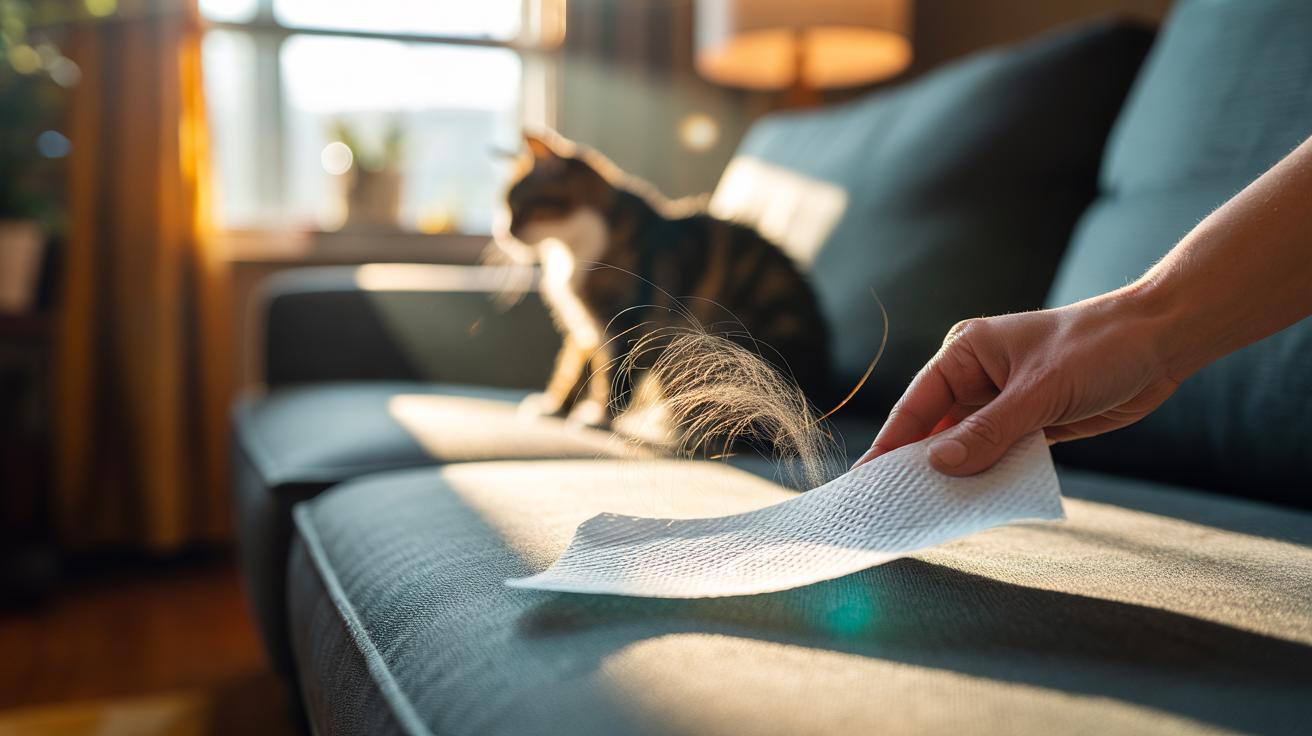
There’s a quick, oddly satisfying way to strip fur from cushions and armrests without hauling out a vacuum: a humble dryer sheet. Sweep one across the fabric and the pet hair leaps aboard. The secret isn’t magic or glue; it’s electrostatic behaviour at play, guided by the sheet’s softening chemicals. Dog and cat hair carries charge, furniture fabric carries charge, and the sheet changes the balance. The result is cling that works in your favour. Used correctly, it’s gentle on upholstery and ruthless on lint. Always test on an inconspicuous patch first to check colourfastness and finish.
How Electrostatic Charge Makes Fur Flock to Dryer Sheets
Static starts with friction. Rub two materials together and electrons shift between them, a classic triboelectric exchange. Upholstery fabrics — especially synthetic fibres — hold charge well. Stray hairs become little insulators, carrying their own charges and sticking where you least want them. Enter the dryer sheet, a nonwoven wipe coated with cationic softeners (often quaternary ammonium compounds) that change what happens at the surface.
As you sweep the sheet, two things happen. First, its coating slightly increases surface conductivity, helping charges dissipate along the fabric so stubborn cling is weakened. Second, the act of wiping sets up a new charge difference between sheet and hair; opposites attract, and the hair jumps to the moving sheet. The mild waxy finish then helps hold it there.
The chemistry matters. Those cationic surfactants orient on fibres with positively charged heads outward, which can neutralise negatively charged spots on textile surfaces. That loosens the electrostatic “lock” between fabric and hair. It’s not gluey adhesion, but a mix of electrostatic attraction and light mechanical trapping in the sheet’s web. That’s why a sheet feels “spent” once it’s loaded — the charge landscape has shifted and the web is full.
Best Techniques for Removing Pet Hair from Sofas
Work in sections. Short strokes first to lift the worst tufts, then longer passes with light pressure. Flip or refold the dryer sheet frequently; a clean face maintains charge difference and collection efficiency. For pile fabrics, follow the nap to avoid frizzing fibres. On tight weaves, criss-cross the weave direction for a thorough lift. A second pass with a barely damp microfibre cloth polishes off residual lint and reduces recharging.
Mind the materials. Leather and faux leather can benefit from reduced static but don’t like waxy residues; buff with a dry cloth afterwards. Velvet and chenille respond well to gentle, single-direction strokes. Always avoid aggressive scrubbing, which can pill yarns or embed hair deeper. Below is a quick guide.
| Sofa Fabric | Result with Dryer Sheet | Tip |
|---|---|---|
| Microfibre/Polyester | Excellent hair pickup; static tamed | Use light, fast strokes; refold often |
| Velvet/Chenille | Good, if stroked with the nap | Single-direction passes to protect pile |
| Cotton/Linen | Good on top lint; deep hair needs more | Finish with a vacuum crevice tool |
| Leather/Vegan Leather | Reduces cling; mild pickup | Wipe residue off with a dry cloth |
Finish smart. Once the sheet is loaded, bin it; don’t shake, which re-aerosols dander. If static is fierce (dry winter rooms), run a humidifier to settle charge and make each pass more efficient.
Materials, Safety, and Alternatives
Commercial dryer sheets vary. Fragranced options can leave a noticeable scent and more residue; fragrance-free, dye-free versions are kinder to sensitive noses and delicate textiles. The active coat — typically quats — does the antistatic heavy lifting. On upholstery, you’re applying it sparingly, but caution still applies. Keep used sheets away from pets, and don’t allow chewing or licking. If anyone in the home has asthma or contact sensitivities, opt for hypoallergenic sheets and ventilate.
Prefer reusable tools? A slightly damp microfibre cloth creates enough conductivity to bleed off static while its split fibres grip hairs mechanically. A plain rubber glove, lightly misted with water, performs the same trick on corners and seams. For stubborn builds, a squeegee edge draws out embedded fur before a sheet collects the rest.
There are strategic upgrades. Spritz an anti-static spray designed for fabrics (or a light mix of distilled water with a touch of white vinegar) from arm’s length, then wipe with microfibre; always patch-test first. A weekly pass with a HEPA vacuum and brushing attachment prevents deep compaction. Combine these and you cut both cling and cleaning time.
Pet ownership doesn’t have to mean fur-laced upholstery. Understanding how electrostatic charge behaves gives you a nimble toolkit: a dryer sheet for quick grabs, microfibre for polish, smart humidity for prevention. Small tweaks pay off — change the charge, change the outcome. Treat the fabric gently, test discreetly, and match the method to the material. With that, hair collection becomes a minute’s work, not a Saturday chore. What will you try first: a fragrance-free sheet sweep, a rubber-glove drag, or a stat-busting mist followed by a crisp microfibre pass?
Did you like it?4.7/5 (20)