In a nutshell
- 🧴 Uses white distilled vinegar to lift common carpet stains in about two minutes, ideal for tea, coffee, mud, and fresh pet accidents.
- 🔬 Explains the science: acetic acid loosens dye and mineral bonds, enabling fast stain release when paired with firm, patient blotting.
- 🕑 Step-by-step: blot, don’t rub; apply a 1:1 vinegar–water mix; allow up to 2 minutes; blot again; finish with a light water rinse and optional bicarbonate for odour.
- ⚠️ Safety first: never mix vinegar with bleach; patch test for colourfastness; dilute more on wool and silk; avoid soaking and protect metal trims and natural stone.
- 📋 Quick reference guide clarifies what works (tea, juice, light mud, fresh urine) and what doesn’t (grease, tar, rust), helping choose the right tactic fast.
It’s the humble bottle that lives at the back of countless British cupboards, pressed into service for everything from descaling the kettle to brightening glass. Now it’s earning fresh acclaim as a carpet first-responder. In busy homes and rented flats alike, white distilled vinegar can loosen and lift the stains that make carpets look tired, and it can do it fast. Think tea rings, muddy footprints, pet mishaps. Time matters. Handled correctly, many fresh stains shift in about two minutes, saving a fortune in specialist products and a long wait for professional help. Here’s the science, the method, and the caveats.
The Science Behind Vinegar’s Rapid Stain Lift
Vinegar’s cleaning punch comes from acetic acid, usually around 5% in standard kitchen bottles. That modest acidity weakens alkaline residues, dissolves mineral salts left by hard water, and helps dislodge dye molecules that have clung to carpet fibres. Carpets act like sponges: liquid spreads through capillaries between fibres. Vinegar’s low surface tension and acidity can penetrate quickly, then loosen the bond that keeps stains visible. Combined with firm, patient blotting, the chemistry works with the physics to lift pigment. The secret is short contact time plus absorption. For many fresh accidents—tea, coffee without heavy dairy, juice, light mud—the bond is weak enough to break in roughly two minutes.
Choose white distilled vinegar only; coloured or malt vinegars introduce tanins that may worsen discolouration. Because acetic acid can nudge dyes, always spot-test on an inconspicuous area and check for colourfastness. Wool and silk carpets are more sensitive; proceed gently or consult a professional. Vinegar neutralises odours by reacting with alkaline compounds, so the room smells cleaner without heavy fragrances. Not a cure-all, though: oil-based paints, tar, and set-in synthetic dyes resist acid and need other tactics. Still, as a first-line option, vinegar is fast, cheap, and surprisingly effective.
Two-Minute Method: Step-By-Step Routine That Works
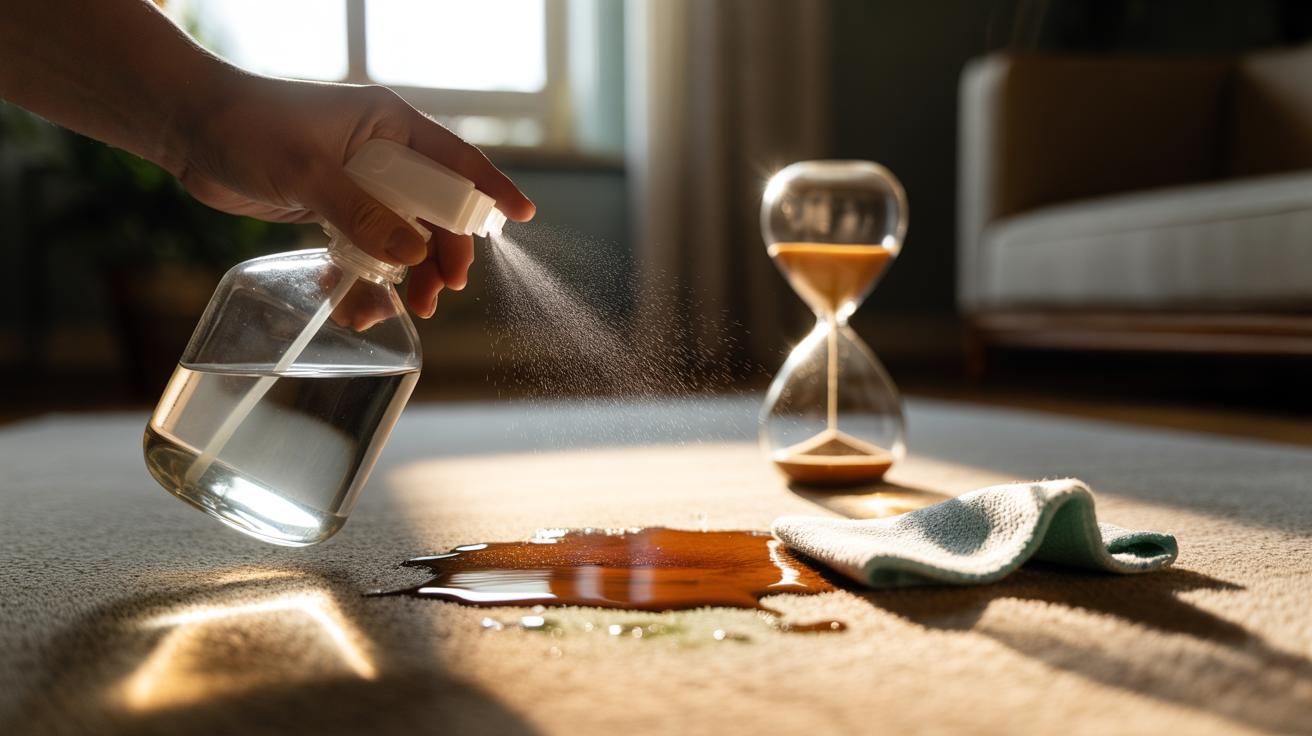
Speed is your ally. Pause only to grab supplies: white vinegar, clean white cloths or paper towels, a small bowl, lukewarm water, and a spray bottle if you have one. First, lift any solids with a spoon edge. Blot, don’t rub. Press down with a dry cloth to remove as much liquid as possible—stack cloths and use body weight for a few seconds. Mix a 1:1 solution of vinegar and lukewarm water. Apply lightly: a fine mist or a dampened cloth is better than a puddle that sinks into underlay.
Now the clock starts. Give the vinegar mix up to two minutes to work. You’ll often see the stain halo soften almost immediately. Blot again with a fresh white cloth, rotating to a clean area after each press. For tea or coffee, a second light application may finish the job. Rinse by dabbing with plain water to remove residual acid. Blot dry. Stand the fibres up with your fingers; airflow helps. For lingering odour, sprinkle a teaspoon of bicarbonate of soda once the patch is merely damp, then vacuum when dry. Never mix vinegar with bleach—dangerous fumes can form. If colour lifts onto the cloth beyond the stain, stop and seek specialist advice.
What Works, What Doesn’t: Quick Reference Table
Not all stains behave alike. Some are acid-friendly; others shrug at vinegar and demand solvent or enzyme action. Use this quick guide to decide when the two-minute trick is your best move and when to change tack. You’ll save time, protect fibres, and avoid setting a stain by using the wrong product. When in doubt, test and go gently. Remember that age matters: a fresh spill responds faster than a stain baked in by a week of foot traffic or a hot radiator.
For everyday British mishaps—tea, mud, juice, pet accidents—vinegar shines. Protein-based stains like milk or blood prefer cold water first, then careful acid application. Grease wants detergent, not vinegar. And rust or printer toner? That’s a job for specialist formulas. Keep this table handy and adapt the ratio if you’re working on delicate fibres, especially wool, where a lighter touch minimises risk.
| Stain Type | Vinegar Mix | Dwell Time | Extra Tip | Avoid On |
|---|---|---|---|---|
| Tea/Coffee (no cream) | 1:1 vinegar:water | Up to 2 minutes | Blot fast; repeat once | Unsealed wool/silk |
| Fruit Juice/Wine | 1:1 vinegar:water | 2 minutes | Follow with water rinse | Non-colourfast dyes |
| Mud/Soil | 1:2 vinegar:water | 1–2 minutes | Let mud dry, vacuum first | — |
| Pet Urine (fresh) | 1:1 vinegar:water | 2 minutes | Bicarbonate after blotting | Wool blends (test) |
| Grease/Oil | Not ideal | — | Use mild detergent first | — |
| Blood (fresh) | 1:2 vinegar:cold water | 1 minute | Cold water pre-blot | Heated areas |
Care, Safety, and Carpet-Specific Caveats
Carpets vary wildly. Nylon and polypropylene are hardy; wool and silk are not. On delicate fibres, dilute to 1:2 or even 1:3 with water and shorten the dwell time. Always do a patch test behind a sofa or in a corner, pressing a damp white cloth for 30 seconds to check for dye transfer. Keep vinegar off natural stone thresholds and metal carpet trims; it can etch or dull finishes. If your carpet has a latex backing, avoid soaking, which can weaken the bond and cause rippling. Ventilate the room; the tang dissipates quickly, but fresh air speeds it along.
Don’t use vinegar on rust stains, printer toner, nail varnish, oil paint, or tar; you’ll waste time and may set the mark. Choose an enzyme cleaner for dairy-heavy coffee, chocolate, or vomit after the initial water blot—then a light vinegar rinse to finish odours. Never combine vinegar with bleach or products containing chlorine. For older stains, accept that two minutes might become a short cycle: apply, wait, blot, repeat once, then stop to prevent over-wetting. When a patch resists or colour bleeds, call a professional cleaner and share exactly what you’ve tried; it helps them choose the safest treatment.
There’s a quiet satisfaction in rescuing a carpet with a pantry staple and a couple of clean cloths. The method is simple, the cost tiny, and the result—when the chemistry agrees—remarkably quick. The key is restraint: small amounts, short dwell, diligent blotting. Once you’ve tried it on a fresh tea ring and seen the fibres bounce back, it’s hard to go back to complicated sprays. What’s your next test case at home—and which stubborn stain are you most curious to challenge with a two-minute vinegar rescue?
Did you like it?4.6/5 (28)