In a nutshell
- 🌼 Eggshells supply calcium carbonate as a slow-release calcium source, strengthening cell walls for sturdier blooms; finer grinding boosts surface area and plant availability.
- 🥚 Prep and apply: rinse, heat-dry at 120°C for 10–15 minutes to sanitise, then grind to a fine powder; mix 1–2 tbsp per litre in potting media or 30–60 g around driplines, and add to compost for mineral buffering.
- 🌱 Plant targets: roses, tomatoes, peppers, aubergines, and brassicas benefit from steady calcium; avoid use around ericaceous crops (blueberries, rhododendrons) that prefer acidic soils.
- ⚠️ Myths debunked: shells don’t stop slugs and won’t “cure” blossom end rot; consistent watering and healthy roots matter more—use ground shells, not big shards, for real integration.
- 🇬🇧 UK-specific guidance: on lime-rich clays, prioritise containers and compost; on acidic peat or sand, use small, regular doses; let soil tests and plant performance guide adjustments.
Crack an egg, feed a garden. It sounds like a cottage myth, yet there’s hard chemistry behind it. Eggshells are mostly calcium carbonate, the same mineral found in limestone and chalk, and when handled correctly they deliver a slow, steady trickle of calcium to hungry plants. In a British garden, where soils range from acid moorland to calcareous clays, that can mean sturdier cell walls, fewer physiological hiccups, and richer blossoms. It’s simple. And thrifty. Used with a bit of knowledge, broken shells can become a reliable, low-waste amendment that quietly improves structure, resilience, and flowering over time. Here’s how to turn breakfast leftovers into bloom-boosting grit.
Why Eggshells Matter: The Science of Calcium Carbonate
At heart, an eggshell is about 95% calcium carbonate (CaCO3) bound with proteins and trace minerals. Plants don’t absorb chunks; they take up dissolved calcium as Ca2+ ions. That means availability depends on the shell’s surface area and the soil’s chemistry. Finely ground shells, worked into slightly acidic or biologically active soil, dissolve faster as roots and microbes create micro-acidic zones that nudge the carbonate into solution. Coarse shards? They can persist for years, contributing texture more than nutrition.
Calcium is a structural element. It reinforces cell walls and membranes, supporting firm petals, crisp leaves, and steadier water regulation. Don’t treat shells as a quick fix for “blossom end rot” in tomatoes—irregular watering and poor translocation are usually to blame, even in calcium-rich soils. In the UK, many gardens sit on alkaline or chalky ground already. Here, shells act as a slow-release top-up rather than a liming hammer, making them safer for borders and pots than scatterings of powdered lime. In acidic beds, they’ll nudge pH upward very gradually, helping roses and brassicas without shocking the ecosystem.
Preparing and Applying Eggshells: From Kitchen to Bed
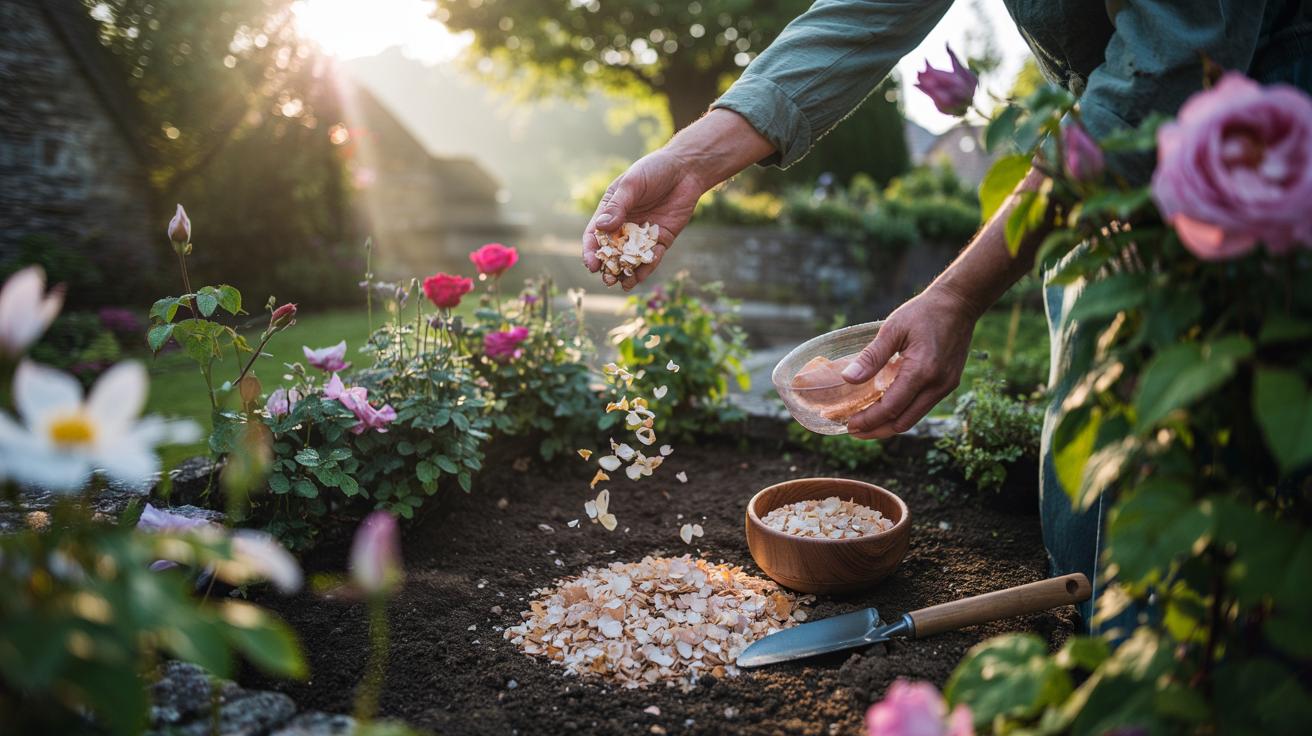
Start clean. Rinse shells, then oven-dry at 120°C for 10–15 minutes; this sanitises and makes them brittle. Pulse in a grinder to sand-like grit or, better, to powder. The finer the grind, the faster the calcium becomes plant-available. For containers, blend 1–2 tablespoons of powder per litre of peat-free compost. For beds, scratch 30–60 g around the dripline of established plants and mulch over. It’s measured, not magic. Think of shells as a slow, background supply—top up little and often, rather than dumping a year’s worth in one go.
Compost is your ally. Add crushed shells to the heap to buffer acidity and enrich the final compost with minerals. Seedlings? A dusting of powder in sowing mixes can reduce “tip burn” risk during rapid growth. Avoid “eggshell tea” made by soaking in plain water; it releases negligible calcium. If you experiment with vinegar-reacted solutions (forming calcium acetate), use extreme caution—incorrect dilution can swing pH and scorch roots. For most home growers, ground shells in soil or compost are safer, steadier, and just as effective across the season.
| Form | Release Speed | Best Use | Notes |
|---|---|---|---|
| Coarse pieces | Very slow (years) | Soil texture, compost | Minimal near-term calcium; adds drainage grit |
| Crushed grit | Slow (months) | Bed dressing, rose borders | Good general maintenance |
| Fine powder | Moderate (weeks–months) | Potting mixes, seedlings | Most effective for nutrition |
What Plants Benefit (and What to Avoid)
Flowering stalwarts—roses, clematis, pelargoniums—respond well to steady calcium availability, showing firmer petals and fewer split buds in stressful swings of heat and rain. Tomatoes, peppers, and aubergines profit in containers where media can acidify; powdered shells help keep the reservoir topped up through fruiting. Brassicas such as cabbage and broccoli use substantial calcium for rapid cell division, making shells a logical, low-cost addition at planting. If you grow cut flowers, consistent calcium can mean straighter stems, tighter calyxes, and better vase life.
Not every plant will thank you. Blueberries, rhododendrons, camellias, and heathers demand acidic conditions; repeated shell use can creep pH upward and stunt them. Test your soil if you garden on chalk or limestone—many UK plots already carry ample calcium. In that case, direct your shells to pots, vegetable beds, or the compost heap instead. Lawns? They rarely need extra calcium unless tests say otherwise. And if you’re battling nutrient lockout in highly alkaline soils, skip shells entirely and focus on organic matter, sulphur, or targeted feeds to restore balance.
Common Myths, Pitfalls, and UK-Specific Tips
The slug-deterrent tale refuses to die. Sharp shells do little in wet weather, and slugs glide over them once edges soften. Focus on traps, barriers, and habitat tweaks. Another myth: “Shells cure blossom end rot.” They don’t—consistent moisture and even growth do. Calcium only helps if the plant can move it; drought, heat spikes, and root damage all block the pipeline. A frequent pitfall is applying shells in big, shiny pieces that never integrate; grind them and mix with organic matter for real results.
For UK conditions, match strategy to soil. On heavy, lime-rich clays, choose the compost route or target containers, where powdered shells stabilize media and offset fertiliser acidity. On peaty or sandy acidic soils, regular small doses can both buffer pH and support flowers through summer surges. Always rinse and heat-dry to avoid pests and odours. Record what you add, then watch foliage, blossom density, and fruit set across a season. Evidence beats habit—let plant performance guide the next handful.
Eggshells won’t replace a balanced feed, but they can elevate it—quietly fortifying cell walls, smoothing growth under stress, and helping blooms hold form when weather turns fickle. Use them clean, fine, and in moderation, and you’ll convert kitchen waste into resilient colour. It’s low cost. And low risk. The key is matching form to soil and crop, then observing the results with a journalist’s eye for detail. How will you test eggshells in your own beds—powder in the potting mix, a compost top-up, or a targeted trial with your best-performing roses?
Did you like it?4.5/5 (21)