In a nutshell
- 🧽 A dryer sheet outperforms feather dusters and cloths by neutralising static, trapping particles instead of spreading them, and reducing allergens while keeping shelves cleaner for longer.
- 📝 Follow a quick method: use a used dryer sheet, fold for structure, wipe top-to-bottom and back-to-front, pinch along book spines, then buff edges; stash the sheet nearby for rapid refreshes.
- 🛡️ Mind surfaces and safety: choose unscented if sensitive, avoid unfinished wood and high-gloss lacquer, never on electronics screens; spot-test first and use light pressure on acrylics.
- 🧠 Keep it cleaner longer: vacuum floors, front-align books to cut dust ledges, corral small items, factor in humidity, and reuse the sheet on skirting boards, TV units, and window sills.
- 🌟 The payoff is clear: instant sheen, slower dust build-up, less airborne irritation, and big speed and savings—one sheet can restore a full bookcase in minutes.
Household dust can make pristine shelves look dull within days. You could reach for a feather duster or a microfibre cloth, but there’s a faster, cheaper hack hiding in most laundry cupboards: the humble dryer sheet. Thanks to its anti-static properties, a single sheet wipes away fluff and helps stop it returning. The result is a soft sheen and less sneezing. A dryer sheet works in minutes and keeps shelves cleaner for longer. Whether you’re tackling a bookcase, floating shelves, or a TV unit, this small square of magic simplifies maintenance and cuts cleaning time dramatically.
Why Dryer Sheets Beat Traditional Dusters
Feather dusters look romantic, but they mostly flick debris into the air. Microfibre is excellent at trapping particles, yet it doesn’t address the root cause: static. Dryer sheets contain cationic surfactants that neutralise static charge on surfaces. That means dust isn’t magnetically attracted back to your shelves. The sheet doesn’t just remove dust; it changes the surface so dust resettles far more slowly. The finish feels silky, not greasy, and the effect lasts days, sometimes a week, depending on airflow and footfall.
There’s also the convenience factor. One sheet is easy to grip, slides around ornaments, and reaches tight corners where typical cloths snag. It’s disposable, so no washing up. Used sheets still carry enough anti-static residue to be effective, which makes the trick both economical and low-waste. In small flats or busy family homes, speed matters. One dryer sheet can clear a full bookcase in five minutes. The difference is visible immediately: fewer clumps, fewer stray fibres, and a gentle, low-lustre shine.
Then there’s allergy management. Because the sheet holds dust, less ends up airborne. That reduces irritation while you clean. It’s a pragmatic, everyday win.
Step-By-Step: Dusting Shelves With One Sheet
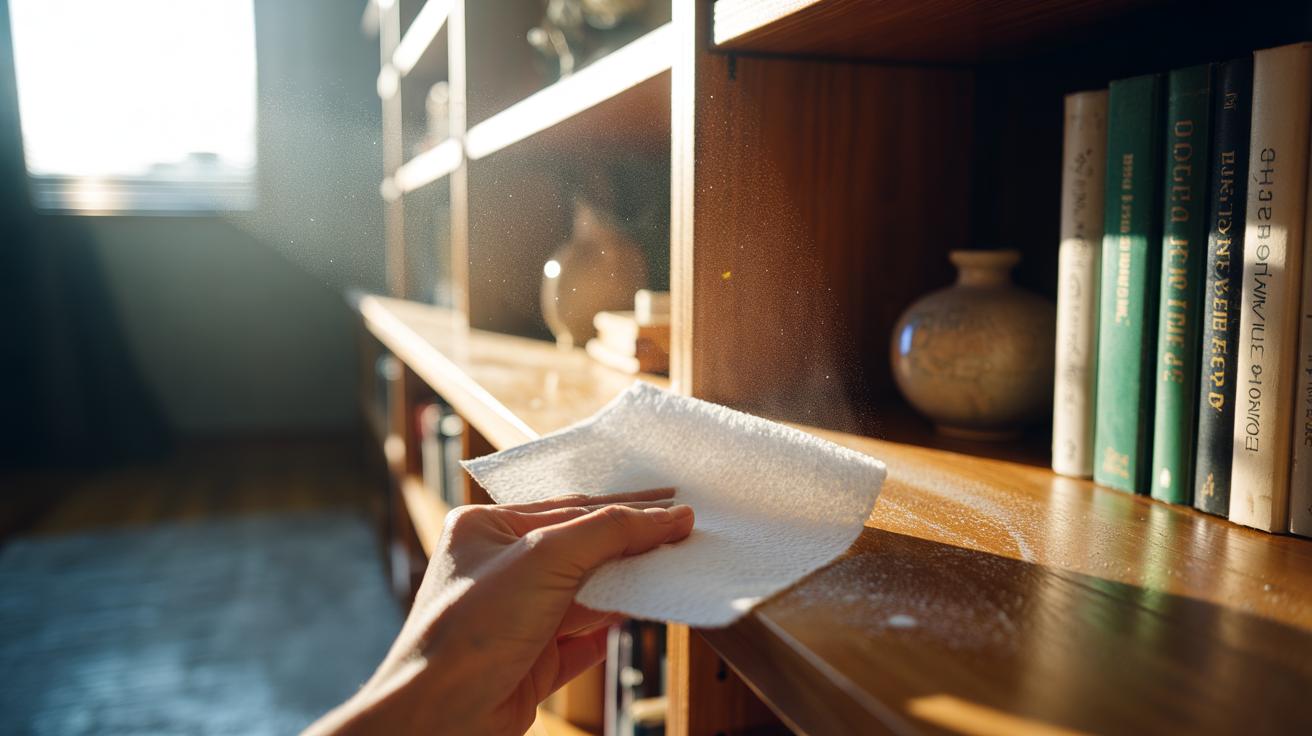
Start by clearing obvious clutter. You don’t need to empty the shelf, but move fragile items aside. Take a used dryer sheet if possible; it’s slightly softer and leaves less fragrance. Fold it in half for structure. Always work from the top shelf to the bottom; gravity is on your side, so you’re not re-dusting surfaces you’ve already cleaned.
Wipe the shelf from back to front in long, slow passes, then run the folded edge along the back lip and the sides. Pay attention to vertical supports and under-shelf lips where dust gathers. For spines and edges of books, pinch the sheet and sweep lightly to avoid scuffing. If you meet sticky spots, switch to a damp microfibre, dry the area, and resume with the sheet. The dryer sheet is for dust, not spills.
Finish by buffing high-touch areas—front edges, handles, and brackets—for a uniform look. Shake the sheet outdoors once mid-task if it’s heavily loaded, or swap to a second sheet for a large unit. The anti-static finish you leave behind slows dust build-up, so your next clean will be quicker. Store a partly used sheet in a clip or jar near the bookcase for a spontaneous midweek refresh.
Choosing the Right Sheet and Staying Safe
Fragrance can be divisive. If you’re sensitive to scent, pick unscented or “free & clear” sheets. A new sheet delivers maximum static control but may leave a stronger smell; a used one is usually ample for routine dusting. Test in an inconspicuous corner first. Never use dryer sheets on raw, unfinished wood or on high-gloss piano lacquer without a spot test, as residues can affect sheen. For screens and camera glass, stick to a designated lens cloth; dryer sheets can smear.
Consider the surface. Varnished timber, painted MDF, and metal frames respond beautifully. Acrylic and certain soft plastics can scratch, so use ultra-light pressure. Around electronics, the anti-static benefit is a plus, but avoid pushing dust into vents; tackle those with a vacuum brush. If you keep pets, choose low-lint sheets to reduce stray fibres. Below is a quick guide to help you decide:
| Surface | Use Dryer Sheet? | Notes |
|---|---|---|
| Varnished wood | Yes | Light pressure; leaves smooth, low-sheen finish. |
| Painted shelves (MDF) | Yes | Great for edges and supports. |
| Unfinished wood | No | Residue can stain fibres and raise grain. |
| Acrylic/gloss plastic | With care | Use gentle strokes to avoid micro-scratches. |
| Electronics screens | No | Use a screen-safe cloth; avoid smears. |
When in doubt, spot-test and keep pressure light. That simple caution preserves finishes while delivering the anti-static edge.
Smart Extras: Keep Shelves Sparkling for Longer
Prevention beats reaction. Vacuum floors and soft furnishings weekly to reduce airborne fluff that resettles on shelves. Arrange books flush with the front edge to minimise the dust ledge. Consider keeping decorative bowls or boxes to corral small items; fewer nooks means fewer dusty corners. A 60-second swipe with a stored dryer sheet midweek keeps the weekend clean simple. For glass shelves, follow the dryer sheet with a spritz of glass cleaner on a microfibre to lift any faint haze.
Humidity matters. Drier rooms shed more static, so the sheet’s effect lasts longer; in damp spaces, dust clumps, so repeat little-and-often. Rotate ornaments occasionally and wipe their bases with the same sheet to reduce circular marks. If you’re sustainability-minded, extend the sheet’s life: use it on skirting boards, TV units, and window sills before discarding. The anti-static finish accumulates dividends across multiple surfaces.
Store a small stash in a labelled envelope near your cleaning kit. Choose unscented varieties if you host guests with allergies. Consistency, not intensity, keeps shelves showroom-bright: a brief pass every few days outperforms a monthly deep dust by miles.
In a world of complex gadgets and pricey sprays, the dryer sheet stands out as a surprisingly elegant solution for stubborn dust. It neutralises static, lifts particles cleanly, and leaves a finish that slows build-up—a three-in-one gift to busy homes. Keep one within reach of your bookcase and watch your cleaning time shrink. Simple tools often work hardest when used smartly. Will you try a single sheet on your dustiest shelf this week, or do you have another low-effort trick that keeps your displays looking newly styled?
Did you like it?4.6/5 (26)