In a nutshell
- 🧪 The shine comes from tannins, polyphenols, and mild acidity in black tea, which tighten grain, mask micro-scratches, and leave a subtle, natural-looking sheen.
- 🧰 Method: brew strong black tea, cool completely, apply with a barely damp microfibre cloth, then immediately buff dry—always patch test first and avoid pooling along seams.
- ⚠️ Suitability: safe on many polyurethane-sealed floors; be cautious on oiled wood; avoid waxed or unsealed boards; prevent iron–tannate stains by using non-reactive tools.
- 💷 Value and eco: costs pennies versus commercial sprays, creates minimal waste, and favours plastic‑free tea bags for a low-impact routine.
- ✨ Results and upkeep: delivers instant warmth and cleaner-looking grain; it’s a maintenance polish, not a stripper—use monthly, with quick dry buffing to refresh dull spots.
British households have a secret up their sleeves, and it isn’t tucked in a cupboard of chemical sprays. It’s in the tea caddy. The humble tea bag, brewed strong and cooled, can give tired timber an instant, camera-ready gleam. Not a gimmick, a clever bit of chemistry. Tannins tighten the grain, a faint tint masks micro-scratches, and a quick buff leaves floors looking newly dressed. The result feels old-school and modern at once: thrifty, low-waste, and effective. Used correctly, a tea rinse is gentle on finishes and dazzling on the eye. Here’s why it works, how to do it, and when to resist the ritual.
The Science of Tea-Polished Floors
In black tea you’ll find tannins, polyphenols, and a mild natural acidity (typically pH 5–6). These compounds tighten and smooth the appearance of wood grain, subtly evening out high-traffic scuffs. Tannins behave like an astringent: they bind trace oils and grime, which helps a damp cloth lift residue cleanly. There’s also a whisper of color—think honeyed warmth—that softens pale abrasions without repainting the floor, so the effect is instant. The trick lies in leaving a micro-thin film that you immediately buff dry, not in soaking the boards. Because the brew is mostly water, evaporation is fast; keeping the cloth barely damp prevents swelling at edges and seams. The chemistry is simple, the payoff is elegant. No silicones. No wax bloom. Just a subtle, natural-looking sheen that doesn’t scream “freshly mopped.”
| Tea Component | Action on Wood | Visible Effect |
|---|---|---|
| Tannins | Astringent; binds oils and fine dust | Cleaner surface, tighter-looking grain |
| Polyphenols | Mild antioxidant film | Softer micro-scratches, warmer tone |
| Mild acidity | Balances light alkalinity from grime | Brighter, non-greasy shine |
How to Use Tea Bags on Wooden Floors
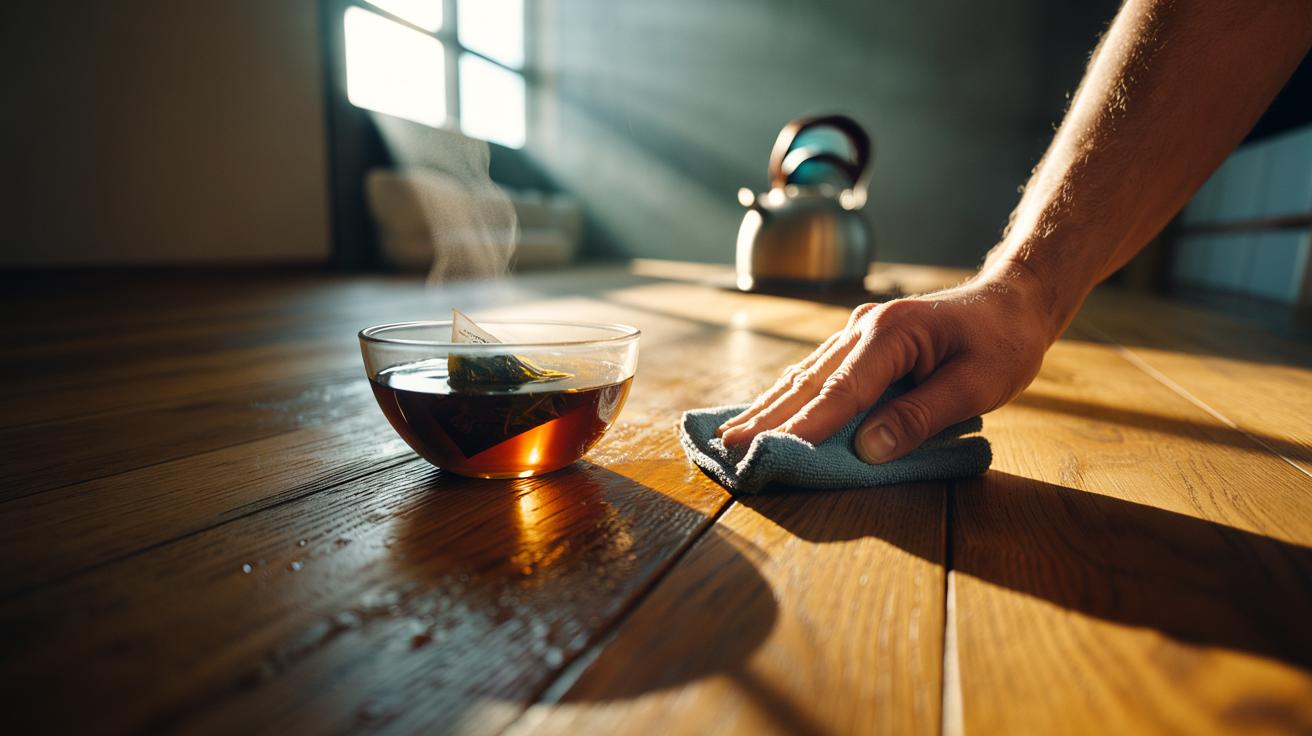
Start with two to six black tea bags—Assam or English Breakfast are reliable—steeped in a litre of freshly boiled water for 5–10 minutes. Strength matters: darker brew for timeworn oak, lighter for pale maple. Let it cool completely. Always perform a patch test in a hidden corner and check in daylight. Decant into a bowl, not a bucket; you’ll use less liquid and control dampness better. Dip a clean microfibre cloth, then twist hard. The cloth should be just shy of dry.
Work in small sections, following the grain. Wipe once to lay the film, then immediately buff with a second, dry cloth to lift excess and coax the sheen. Edges first, then open areas. Refresh the tea if it looks murky; you’re cleaning, not painting. For stubborn heel marks, hold the damp cloth on the spot for ten seconds, then buff. Wring the cloth until it’s barely damp—never let liquid pool along board seams. Finish by ventilating the room; air movement locks in that clean, quick glow.
Safety, Suitability, and Stain Risks
Not every floor loves tea. Modern polyurethane-sealed boards usually respond beautifully to a light tea wipe and swift buff. Oiled floors are more nuanced: the tint can enrich colour, yet too much moisture risks lifting oil near unsealed edges. Avoid tea entirely on waxed or unsealed wood; water can streak or raise grain. If your finish is unknown, assume caution and keep the cloth almost dry. Very pale timbers—maple, ash, some pines—can warm by half a tone; lovely in many homes, less so if you prize a cool, Scandi lightness.
Tannin chemistry has quirks. Tea plus iron equals iron-tannate—those unexpected blackish halos you sometimes see around old nail heads. Brew in a stainless pan, stir with non-reactive utensils, and keep steel-wool pads far from the process. Skip flavoured or citrusy blends; oils and acids complicate the finish. If pets lick floors, tea residue is minimal, but buff thoroughly and keep them off while drying. When in doubt, patch-test twice—once right away, once after 24 hours. Your future self will thank you.
Cost, Sustainability, and Real-World Results
Price first. A strong litre costs pennies: three to five tea bags versus several pounds for a premium floor spray. You’re also dodging silicones that build up and demand stripping later. Used leaves are compostable, and many UK brands now offer plastic‑free bags—seek them out to avoid polypropylene mesh. The footprint is tiny: boiling a kettle, one cloth wash, zero packaging waste from a new bottle. That thrift pairs with control; you customise brew strength to the timber under your feet and the mood you want in the room.
Results? On mid-toned oak, the change is immediate: a clearer grain, less visible scuffing, a gentle, non-gloss glow. On dark walnut, the look is refined rather than brighter—edges read tidier, traffic lanes soften. It won’t dissolve grease mats or wax buildup; that’s a job for a proper cleaner or a re-oil. Tea is a maintenance polish, not a miracle stripper. Use monthly for a glow-up, weekly on entryways if dirt is light. If shine fades unevenly, rebuff the dull area with a dry cloth—no fresh tea required.
There’s joy in this ritual. A kettle, a cloth, ten quiet minutes, and a floor that looks proudly cared for rather than lacquered to within an inch. The chemistry is gentle. The cost negligible. The finish convincingly natural. Use a light hand and quick buffing, and tea will flatter rather than mask your timber. And when the job’s done, you’ve still got a brew to enjoy. Will you try a tea shine on your own floor, and if so, which room feels like the perfect testing ground?
Did you like it?4.5/5 (21)