In a nutshell
- 🍋 Doesn’t boost heat output: a lemon behind a radiator adds no extra watts; it only changes scent and ambience.
- 🧠 Perceived warmth rises via cross-modal cues—citrus aromas and warmer lighting can make rooms feel cosier without raising the thermostat.
- 💧 Slight humidity helps comfort: moisture from peel can ease dry winter air, improving comfort at the same temperature.
- 🛡️ Safety first: avoid blocking convection, keep juice off paint and valves, use dishes/sachets, and note pet sensitivities to citrus/essential oils.
- 🛠️ Real efficiency comes from fixes: bleed and balance radiators, add reflector panels/shelves, seal draughts, and set TRVs; use citrus only as a fragrant ally.
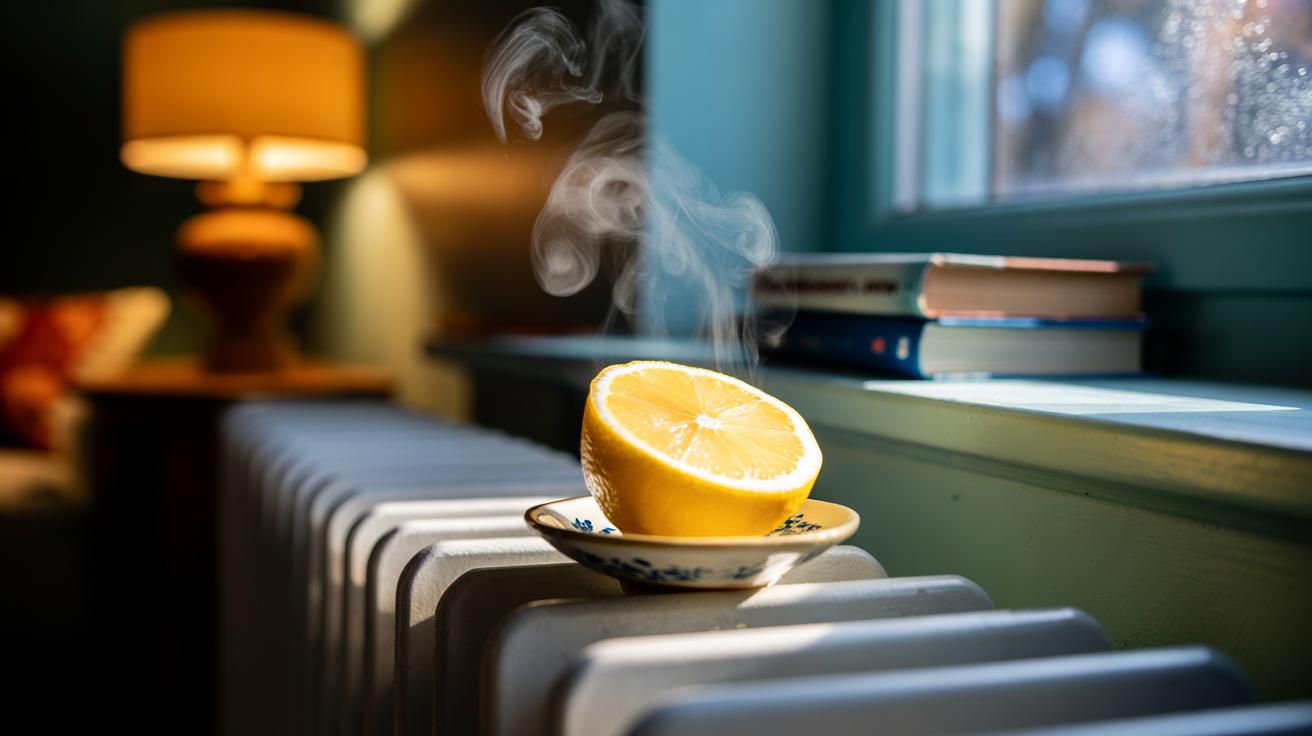
It sounds delightfully thrifty: tuck half a lemon behind a radiator and your room feels warmer while smelling like a Sicilian kitchen at noon. Social media loves a hack, and the citrus trick has gone viral because it’s simple, cheap and sensory. Heat, scent, mood, all in one move. But does a lemon genuinely “boost” heat, or does it merely trick us into feeling cosier? The answer sits at the junction of physics and psychology, with a detour through humidity and household safety. The smell cannot create energy. Yet the experience of warmth isn’t only numerical. It’s also narrative. Here’s what really changes when you warm citrus, and what never will.
The Viral Lemon Trick: What People Claim
The usual advice is basic: slice a lemon, position it behind or atop a warm radiator, and let the volatile oils diffuse. Fans say rooms smell cleaner, feel less stale, and somehow seem warmer. The claim is less about kilowatts and more about comfort. Citrus wakes the senses. It signals sunshine, kitchens, summer holidays. Those associations matter. Our brains often equate a brighter aroma with a brighter, warmer room. In a dreary January flat, that counts.
There are also practical whispers. Dampness from the cut fruit adds a touch of humidity, easing parched winter air. Some suggest the acidity “cuts through” radiator odours, which is partly true: the peel’s limonene and aldehydes can mask stale smells. Others go further, insisting the lemon “boosts” heat itself. That leap is where myth takes hold. The fruit changes the atmosphere, not the boiler maths. The distinction is small in conversation, but crucial in practice.
What Physics Says About Heat Output
Radiators deliver heat according to a plain rule: temperature difference, surface area, and airflow. Add a lemon and you don’t appreciably change any of those variables. A lemon does not increase a radiator’s power in watts. It can marginally affect convection if you block vents, usually for the worse. The wet surface might nudge room humidity upward, which can make air feel less scratchy at the same thermostat setting, improving perceived comfort. That’s not extra heat. It’s better heat perception.
Another misconception is “exothermic scent release”. While terpenes like limonene oxidise in air, the reaction is slow and negligible for heating. The warm smell reaches your nose. The joules don’t move your meter. Do consider paint and metal: acidic juice on a radiator’s finish can degrade coatings over time. Keep citrus away from valves and electrics. Comfort wins are worth nothing if they introduce damage or hazard.
| Claim | What Actually Happens | Risk | Smarter Tweak |
|---|---|---|---|
| Lemon boosts heat | No extra watts; scent and slight humidity improve comfort | Paint etching; sticky residue; blocked airflow | Use a dish on the sill; keep clear of vents |
| Warm scent equals warmth | Perceptual “warmth” via cross-sensory cues | Over-reliance, ignoring real heat loss | Draught-proofing, reflector panels, bleed radiators |
| Essential oils are safer | Potent; diffuse sparingly | Irritation; pet sensitivity; flammability | Dilute; keep from hot elements and flames |
Scent, Perception, and the Psychology of Warmth
Why does lemon feel warm when it smells “fresh”? Blame, or thank, the brain. We map aromas to places and seasons. Citrus often codes for light, cleanliness, summer. That cross-talk between olfaction and thermosensory judgment nudges how we rate a room’s temperature. Researchers call it cross-modal perception. It’s the same reason a golden bulb makes a lounge feel cosier than a cold white LED at the same lumen count. Perceived warmth adjusts behaviour—fewer layers, longer sits, less fidgeting—which can reduce the urge to turn the dial.
Humidity plays a cameo. Dry air robs moisture from skin and airways, making us feel chilled even when the numbers say 19°C. A tiny lift in relative humidity—from a damp peel or a small bowl of water—can soften that edge. Not tropical, just comfortable. Crucially, none of this creates energy. It reframes it. Scent shapes mood; mood shapes comfort; comfort shapes thermostat habits. A subtle chain, but economically meaningful.
Practical Use: Safe Ways to Harness Citrus
If you like the idea, do it sensibly. Place lemon slices or peels in a shallow dish on a radiator shelf or nearby sill, not wedged behind fins where they can block convection or drip into mechanisms. Keep juice off painted surfaces and valves. Swap halves every 24–48 hours to prevent mould. Dried peel works, too, releasing gentler notes with less mess. A cloth sachet with zest is tidy and effective.
Essential oils? Use sparingly, well away from open flames and very hot elements. Pets, especially cats, can be sensitive to citrus compounds; ventilate and observe behaviour. For real heat gains, fix the fundamentals: bleed radiators, balance the system, add reflective panels behind exterior-wall rads, install a shelf to push warm air into the room, seal draughts, and set room-by-room TRVs. Consider a small bowl of water for steady humidity. It’s the unglamorous mix that saves pounds, not just perfumed promises.
So, does half a lemon behind a radiator “boost heat”? Not in the strict sense. The citrus elevates perception, tidies odours, and may nudge humidity, making a room feel kinder at the same thermostat setting. The wattage stays put, while your senses feel soothed. In a winter of rising bills, that psychological edge can matter—but it’s an accessory, not a substitute for proper heating tweaks. Try it as a small, fragrant ally alongside real efficiency measures. What blend of scent, light and simple fixes will you experiment with to make your home feel warmer without touching the thermostat?
Did you like it?4.5/5 (28)