In a nutshell
- 💡 Use layered lighting—ambient, task, and accent—with warm 2700K–3000K bulbs and dimmers to control mood, flatter colours, and correct proportions through smart placement and scale.
- 🧵 Deploy textiles as soft power: larger rugs to define zones, full-length curtains for height and hush, a tight palette (two tones + one accent), and texture layering to add depth without clutter.
- 🖼️ Choose bold art to set the room’s voice; hang one large piece at eye level (centre 145–150 cm) for a unifying focal point, or use grids/salon walls when scale or budget is tight.
- 🪞 Position mirrors to reflect light or views (not clutter); select shapes and frames to tune the mood, and embrace negative space so two commanding pieces outshine ten timid ones.
- 💷 Follow the three-accessory method—light, textiles, art/mirrors—to achieve high impact without renovation, supported by indicative UK costs (£80–£2,000+) that make planning and prioritising straightforward.
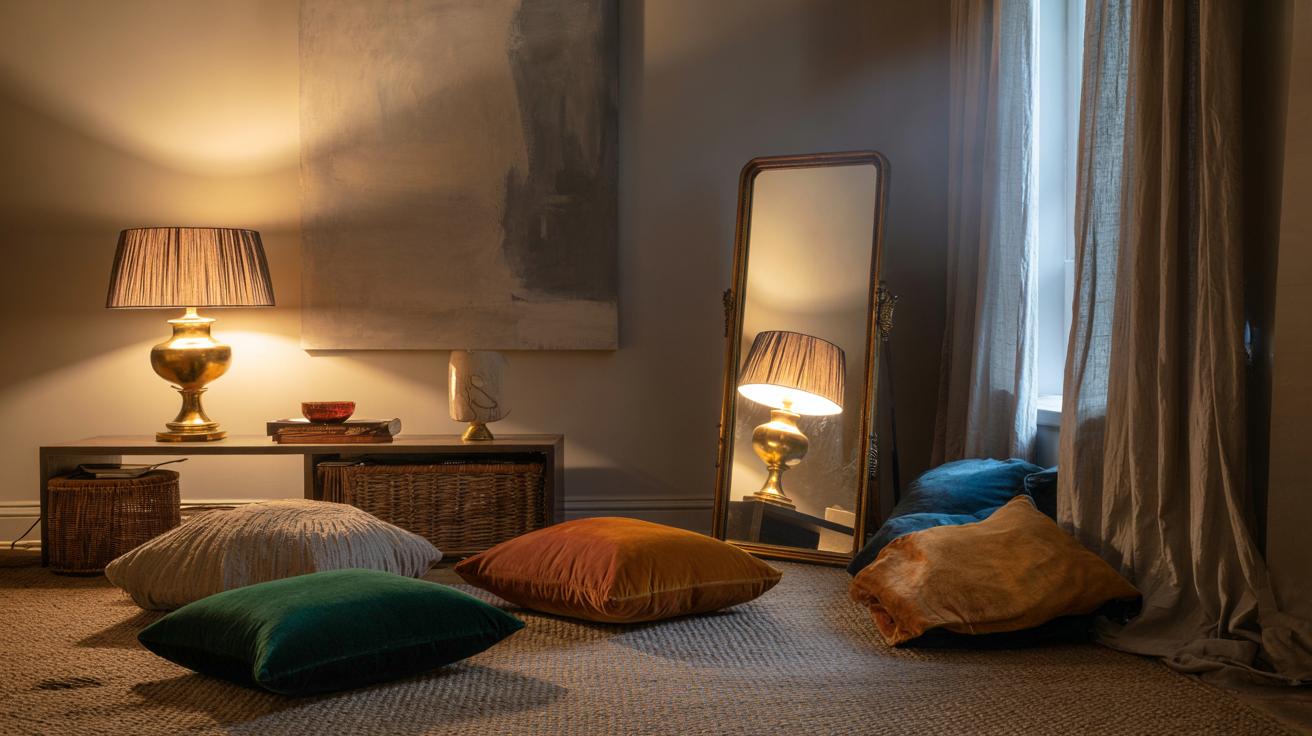
What separates brilliant interiors from forgettable ones? It isn’t a shopping spree or a gut renovation. It’s disciplined choices, made quickly, with intent. Talk to London’s busiest decorators and they whisper the same secret: three accessories, deployed with precision, do the heavy lifting. Lighting that layers and flatters. Textiles that add depth, comfort, and colour discipline. Art and mirrors that set the room’s voice and manipulate perception. The alchemy happens fast. Change these three, and everything else feels redesigned. Here’s how the top designers use them to reshape a room’s narrative, shift proportions, and coax character from even the plainest of spaces—without touching a single wall.
Lighting: The Fastest Way to Reset a Room
Designers start with layered lighting because it alters both function and feeling in an instant. Ambient light sets the canvas, task light sketches the detail, and accent light paints the drama. Swap an overhead glare for a triad: a dimmable ceiling source, a focused table or floor lamp, and a directional accent—perhaps a picture light. Surfaces soften, shadows deepen, and colour reads truer. Shape the light, and you shape the space. Even rental-friendly, wireless lamps can rebalance a scheme without drilling a hole.
Colour temperature matters. A warm 2700K LED flatters skin and timber; 3000K keeps kitchens crisp. Pair with dimmers to tune mood hour by hour. Scale and placement are equally ruthless: pendants should sit low enough to ground a dining table; sconces flanking art should wash, not dazzle. Cords? Hide them along skirting or behind curtains. A single statement shade—pleated silk, rattan, even parchment—adds silhouette and throws a gentler glow. Good lighting makes budget materials look expensive; bad lighting makes the best materials look cheap.
Textiles: Soft Power That Shapes Mood
Once the light is right, designers reach for textiles to build warmth, rhythm, and restraint. Rugs define territory and correct proportion; a larger rug underpins furniture, making rooms feel generous. Cushions and throws manage tempo with pattern and texture—chunky bouclé against crisp linen, velvet against seagrass. Curtains matter more than paint: lined, full-length drapery adds height, hush, and theatre. Soft furnishings are the quickest way to make a room feel finished.
Colour strategy is surgical. Pick a tight palette—two dominant tones, one accent—and repeat it across weaves and scales. Designers love a stripe for order and a botanical for movement. Choose durability where hands land: washable cottons on sofas, indulgent mohair reserved for an occasional chair. Edges make the difference; contrast piping or a hand-stitched hem reads bespoke. Don’t forget tactile balance: if the rug is plush, keep cushions airier; if the sofa is linen-light, add a denser throw. Texture layering is how small rooms feel rich rather than cluttered.
| Accessory | Primary Effect | Instant Action | Indicative Cost (UK) |
|---|---|---|---|
| Lighting | Controls mood, colour, proportion | Add two lamps + dimmers | £80–£600 per point |
| Textiles | Adds warmth, acoustics, cohesion | Upsize rug; swap cushion covers | £150–£1,200 per area |
| Art/Mirrors | Sets personality; manipulates space | Hang one large piece at eye level | £100–£2,000+ |
Art and Mirrors: Personality, Scale, and Visual Tricks
After light and fabric, top designers crown the scheme with art and mirrors to fix identity and recalibrate space. One oversized artwork can unify clashing elements and create a focal point that stops the eye. Hang it lower than you think—centre around 145–150 cm from the floor—to connect it with the furniture story. Big art in small rooms reads confident, not crowded. If a large piece isn’t practical, a tight grid of frames delivers order while a salon wall delivers narrative.
Mirrors do the quiet magic. Place them to reflect light or a view, never clutter. Antiqued glass softens reflections; bevelled edges add sparkle. A tall pier mirror elongates ceilings; a wide mirror expands a narrow hallway. Think about shape language: round mirrors relax a rectilinear room, while architectural rectangles sharpen a soft scheme. Frames matter—black for graphic punch, brass for warmth, timber for calm. And edit ruthlessly: two commanding pieces beat ten timid ones. Negative space is part of the composition, giving statement pieces room to breathe.
Strip a room to its bones and rebuild with just these three levers—light, textile, art—and you’ll feel the change before you measure it. The palette steadies. Sightlines improve. Everyday rituals become easier and nicer to live with. It’s a method, not a splurge. Plan the lighting, layer the fabrics, place the personality. Then stop. The restraint is the point, and it’s what makes the result look intentional rather than busy. If you could only change one of the three first in your home, which would you choose—and why?
Did you like it?4.5/5 (26)