In a nutshell
- 🧹 Audit and Purge: Remove everything, sort by category, keep guest-worthy items; aim for two bedding sets per bed and two towels per person + one spare; recycle or donate the rest.
- 📏 Zone and Measure: Measure shelves (height, depth, width), assign zones for everyday, guest, and seasonal items; allow finger clearance and manage humidity.
- 🧺 Kit Your Closet: Use breathable baskets, shelf dividers, vacuum bags for seasonal duvets; store duvet sets inside a pillowcase; add labels, a returns bin, and a motion light.
- 🗂️ Fold, File, and Maintain: Standardise folds, file hand towels vertically, roll beach towels; rotate stock and do a 5-minute weekly reset to preserve order.
- 🧾 Clarity and Control: Label shelves, keep an inventory card on the door with locations and wash dates; launder unused guest sets every few months for a fresh, hotel-level finish.
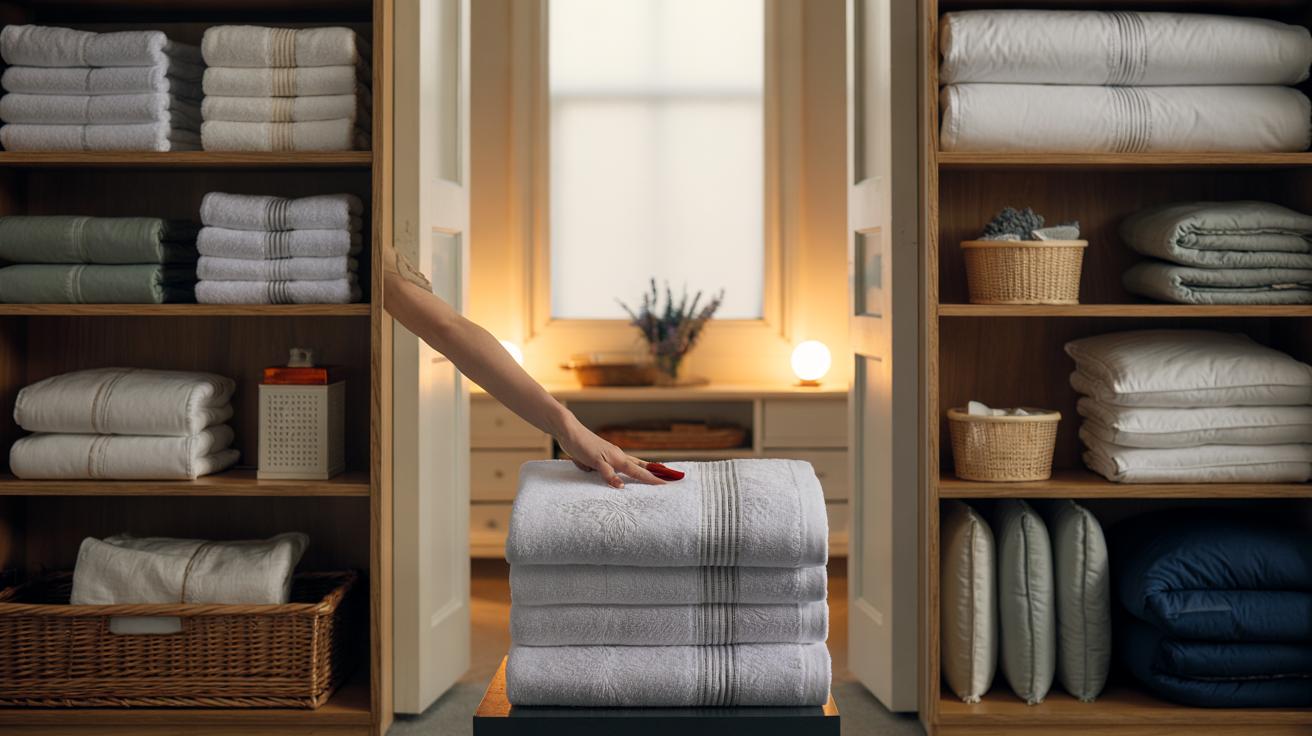
Your linen closet should feel like a small luxury, not a jumble of crumpled towels and orphaned pillowcases. Interior designers swear by a four-step method that brings hotel-level order to even the humblest airing cupboard. It’s practical, fast, and surprisingly satisfying. You’ll declutter with confidence, design storage that actually fits, add smart kit, and keep it pristine with almost no effort. The result: a calm, scented stash that makes bed-changing and bath time blissfully simple. If you’ve ever wrestled a fitted sheet or spent ten minutes hunting for matching pillowcases, this method will change your week—and your space—without spending a fortune.
Step 1: Audit and Purge
Start with a full audit. Pull every item out and sort by category: bath towels, hand towels, flannels, sheets, duvet sets, protectors, table linens, and spares. Now be ruthless. If a towel feels thin, if a sheet is yellowed, or if elastic is shot, it goes. Keep only what you’d happily offer a guest. Designers use a simple rule of thumb: two complete sets per bed plus one guest set, and two towels per person plus one spare. Anything beyond that is clutter masquerading as preparedness.
Check for duplicates and singletons. If a pillowcase has lost its partner, repurpose it as a laundry bag for delicates or let it go. Stained items can become cleaning rags; threadbare pieces should head to textile recycling. Bag donations immediately and put them by the front door. Decision fatigue kills tidy projects, so decide once and move on. Finally, give the cupboard a quick clean and air it out; dry storage prevents musty odours and protects fibres.
Step 2: Zone and Measure
Next, design your space. Measure shelves—height, depth, width—before you buy a single basket. Shallow shelves suit sheets; deeper ones swallow bulky duvets. Create zones by use: everyday towels at chest height, guest sets top or bottom, table linens where they won’t snag. Allow finger clearance above stacks so you can lift without disturbing the pile. Leave one quick-grab shelf for the weekly rota—today’s towels and the next bed change. If humidity is a worry, add breathable storage and a discreet moisture absorber. Think circulation, not over-stuffing.
Use this planning grid as a guide.
| Shelf | Category | Ideal Height | Max Depth | Quantity Guide |
|---|---|---|---|---|
| Eye level | Everyday towels | 120–140 cm | 30–35 cm | 2 per person +1 spare |
| Above eye | Guest sets | 150–170 cm | 30–40 cm | 1 full set per bed |
| Waist | Bedding in sets | 90–110 cm | 35–40 cm | 2 sets per bed |
| Lowest | Duvets/blankets | 40–70 cm | 40–50 cm | Seasonal swap |
Label zones now, even if it feels premature. Clarity stops drift and keeps everyone honest.
Step 3: Kit Your Closet
Hardware is the quiet hero. Choose breathable baskets or cotton bins for sheets, and shelf dividers to stop towel stacks slumping. Clear, lidded boxes are fine for table linens you use rarely, but avoid trapping moisture. One game-changer: keep each duvet set inside one of its pillowcases, folded and filed vertically. It saves minutes and looks satisfying. Add slim vacuum bags for out-of-season duvets; label them with size and tog.
Invest in a simple labelling system—printed tags or a label maker. Keep a narrow tray for smalls: flannels, spare pillow protectors, lavender sachets. A battery puck light or motion sensor elevates the whole experience, especially in deep cupboards. Consider a cedar block or linen spray to keep fibres fresh. Finally, place a shallow “returns” bin on the bottom shelf for items awaiting mending or stain treatment. If it needs attention, it doesn’t go back into circulation. That one boundary preserves the entire system.
Step 4: Fold, File, and Maintain
Folding finishes the transformation. Use consistent fold formats sized to your shelves: tri-fold bath towels stacked with the bound edge forward; hand towels filed vertically like documents to prevent avalanches. For fitted sheets, tuck corners into corners, smooth, then fold into a neat rectangle. Always store complete sets together to eliminate rummaging. Roll beach towels (they’re bulky), but keep bath sheets flat for stability.
Maintenance is mercifully light. Rotate stock: place fresh sets at the back, move used sets to the front. Adopt a five-minute Sunday reset—realign stacks, refill sachets, bin threadbare flannels. Seasonal duvets swap in and out with a quick vacuum-bag turnover. Keep a small inventory card on the inside door: what you own, where it lives, and the last wash of guest sets. If a guest set isn’t used within three months, launder it anyway for that crisp feel. Consistency, not perfection, keeps the cupboard looking editorial.
A well-planned linen closet saves time, protects textiles, and adds a quiet note of luxury to everyday life. You’ll stop overbuying, simplify laundry day, and be ready for guests without a scramble. The four-step method—purge, zone, kit, maintain—turns a chaotic cupboard into a calm, tactile archive you’ll actually enjoy opening. Start small, finish strong. Fold three towels, label one shelf, and let momentum build. What’s the first change you’ll make this week to create a linen closet that works as beautifully as it looks?
Did you like it?4.6/5 (25)