In a nutshell
- ⚡ Quick win: crumpled aluminium foil plus water lifts light rust in seconds, creating an oxide slurry that polishes rather than scratches.
- 🧪 Why it works: a mix of mild abrasion and galvanic action (aluminium is sacrificial) cleans rust while preserving chrome and polished steel.
- 🛠️ How-to: wipe grit, wet the metal (add washing-up liquid or white vinegar), rub with overlapping strokes, wipe clean, dry thoroughly, then seal with light oil.
- 💷 Kit and comparisons: cheap household items outperform many harsher removers for surface oxidation; deep pitting may require electrolysis or wet-and-dry paper.
- 🛡️ Safety and aftercare: wear basic PPE, avoid painted/blued finishes, test thin chrome, and always dry, oil, and store tools to block future corrosion.
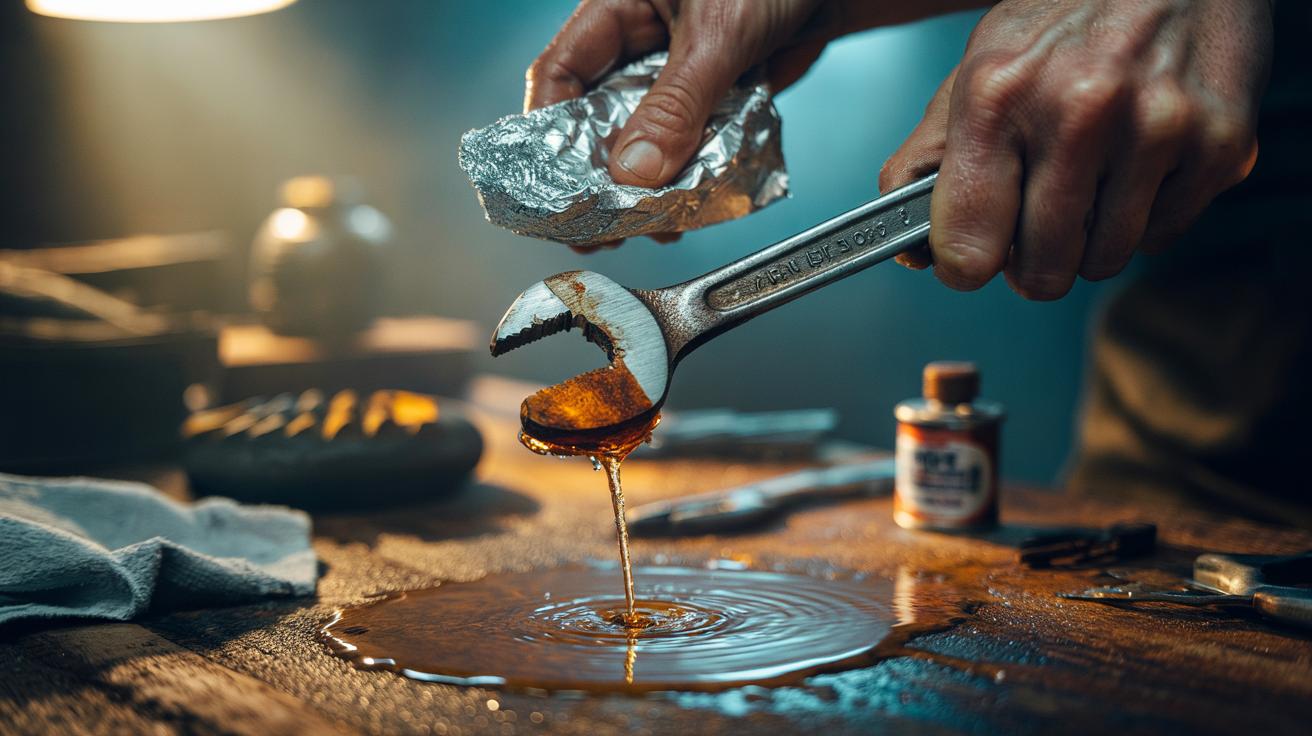
Rust sneaks up quietly. You leave a favourite spanner on a damp bench, and by morning a brown bloom has claimed the steel. Here’s the twist: you don’t need chemicals, power tools, or a weekend. A crumpled sheet of kitchen foil and a splash of water can strip that surface oxidation with surprising speed. It’s low cost, oddly satisfying, and safe for most everyday tools. The trick works in seconds on light rust, and with a little persistence on heavier spots. Below, we test the science, the method, and the pitfalls, so your DIY arsenal looks sharp again and performs as it should.
Why Foil Beats Rust So Fast
Aluminium foil isn’t magic. It’s clever chemistry and gentle abrasion rolled into one. Steel rusts when iron reacts with oxygen and moisture to create iron oxide. Foil steps in as a mild abrasive that burnishes away that oxide without gouging the base metal. Add water or a dash of mild washing-up liquid as a lubricant, and the foil glides, producing an ultra-fine paste of oxides that polishes rather than scratches.
There’s also a nudge from galvanic action. Aluminium sits lower on the electrochemical series than iron, so when moisture bridges them, the foil becomes the sacrificial player, aiding reduction of the rusted surface. The result? A swift, controllable clean that’s kinder than wire wheels. On chrome-plated spanners, foil can lift rust blooms while preserving the shine. You’ll see tea-coloured residue on the foil, not fresh scoring on your tool. Speed meets subtlety, and that’s why it feels like a hack—because it is.
A Rapid Method You Can Do in the Shed
Work clean. Wipe off grit so you’re not rubbing hard particles into the finish. Tear a hand-sized piece of aluminium foil, crumple it lightly into a soft pad, and wet the work area. Water works; a few drops of washing-up liquid help. For stubborn patches, a splash of white vinegar adds bite by dissolving oxide bonds.
Rub with light, overlapping strokes. Short passes, then longer ones. Pause, wipe, inspect. Repeat only where rust remains. You’ll feel friction fade as the oxide slurry forms; that’s your polishing cue. Corners and knurling? Fold the foil into a crisp edge to reach crevices. Most light rust disappears in under a minute. Once clean, rinse, dry thoroughly, then mist the metal with a thin film of light oil to block moisture. Store tools off concrete floors, and if your shed sweats in spring, consider a small desiccant pack in the toolbox to keep humidity down.
What You’ll Need and How It Compares
The beauty lies in simplicity. Everything you need is likely in the kitchen or under the sink. Here’s a quick reference to keep your kit lean and effective, plus how foil stacks up against common alternatives in cost and care.
| Item | Purpose | Cost (UK) | Notes |
|---|---|---|---|
| Aluminium foil | Mild abrasive, galvanic assist | Pennies per sheet | Gentle on chrome and polished steel |
| Water/soapy water | Lubricant, slurry formation | Negligible | Reduces scratching dramatically |
| White vinegar | Oxide loosener | £0.40–£1 per bottle | Use sparingly; rinse well |
| Microfibre cloth | Wipe residue, final polish | £1–£3 | Leaves a cleaner finish than paper |
| Light machine oil | Corrosion barrier | £3–£6 | Essential for long-term protection |
Compared with harsh rust removers, foil is fast, controllable, and cheap. It won’t stink up a flat, and it spares delicate edges that wire brushes can round over. For deep pitting, chemical gels or electrolytic baths still win, but for everyday spots on spanners, plane soles, and garden shears, foil is the nimble first responder.
Safety, Limitations, and Smart Aftercare
Wear gloves if you’re using vinegar; it’s mild, yet drying. Protect eyes from flecks when you’re scrubbing around tight hinges. Avoid foil on painted or blued finishes you want to preserve; it will polish them away. Nickel and thin chrome can be cleaned with a light touch, but test on an inconspicuous patch. If the plating is flaking, stop—foil can catch an edge and lift it further.
Know when to escalate. If rust has bitten deep, leaving pitting and a matte cratered look, switch to wet-and-dry paper on a flat block, or consider electrolysis for minimal metal loss. Always finish with an oil or wax coat. A thin smear of camellia oil on woodworking tools keeps moisture at bay without staining timber. The job isn’t done until you’ve dried, oiled, and stored the tool. Routine matters: a quick wipe after use is faster than any rescue mission, and it keeps the bright, low-friction feel that makes hand tools a joy.
There’s satisfaction in turning back time on a battered pair of pliers with nothing more than foil, water, and a few minutes’ care. It respects the metal, your money, and the environment—no harsh solvents, minimal waste. Keep a small roll by the bench and you’ll reach for it as often as a screwdriver. Start with the tool you thought was too far gone. Watch the brown haze vanish, the shine return, and the action loosen. What neglected bit in your toolbox deserves a second life today, and which method will you try first to bring it back?
Did you like it?4.5/5 (22)