In a nutshell
- ⚡ Instant relief: baking soda neutralises odours within seconds via mild alkalinity and surface adsorption, cutting volatility fast.
- 🛠️ Smart application: use a thin, even dusting over fresh waste, add a lid lip and base primer, and apply a quick paste for spills; avoid mixing with vinegar at the same time.
- 🧪 Proven chemistry: targets volatile fatty acids, amines, ammonia, and sulfur compounds, buffering (pH ~8.3) to form less volatile salts.
- 💷 Eco and budget wins: pennies per week, non-toxic, no aerosols or fragrances, and safe for most plastics with simple handling advice.
- 📈 Best results: maximise coverage, use slight moisture to speed contact, and pair with cleaning and ventilation for stubborn, protein-rich smells.
Smelly kitchen and wheelie bins are the stealth saboteurs of a tidy home. You open the lid, and a wave of sour air says dinner’s scraps are staging a comeback. The fix is disarmingly simple: scatter a spoonful of baking soda and wait. Not minutes. Seconds. This common cupboard staple, also known as sodium bicarbonate or “bicarb,” doesn’t mask smells; it disarms them at the source. No perfumes, no propellants—just reliable chemistry at work. Used correctly, it turns a rank bin into a neutral, barely-there background. Here’s how and why this quick deodoriser wins the fight against odours so fast.
Why Baking Soda Works So Fast
Baking soda is a mild alkaline powder with a high surface area. That’s important. Bin odours typically come from volatile fatty acids, sulfurous compounds, and amines produced as food breaks down. The moment bicarb touches those acidic molecules, it begins to neutralise them, shifting their chemistry so they’re far less volatile. Less volatility means fewer molecules escaping into the air and fewer smells meeting your nose.
Speed is the headline. In a slightly damp bin—condensation from a liner, a splash of tea, vegetable moisture—the powder hydrates at the surface. That moisture acts like a conveyor belt, pulling odour molecules into contact with bicarb granules quickly. This is why results are often noticeable within seconds of application. There’s also a second effect: adsorption. Tiny crevices on each particle temporarily trap odorous compounds, reducing their escape while neutralisation proceeds.
Because the reaction happens at the surface, distribution matters more than depth. A thin, even dusting is more effective than a heavy clump. Stir the contents? Not necessary. Air circulation inside the bin lid moves odour molecules to the powder. Fine particles, broad coverage, swift impact—that’s the formula for instant relief.
How to Apply for Instant Results
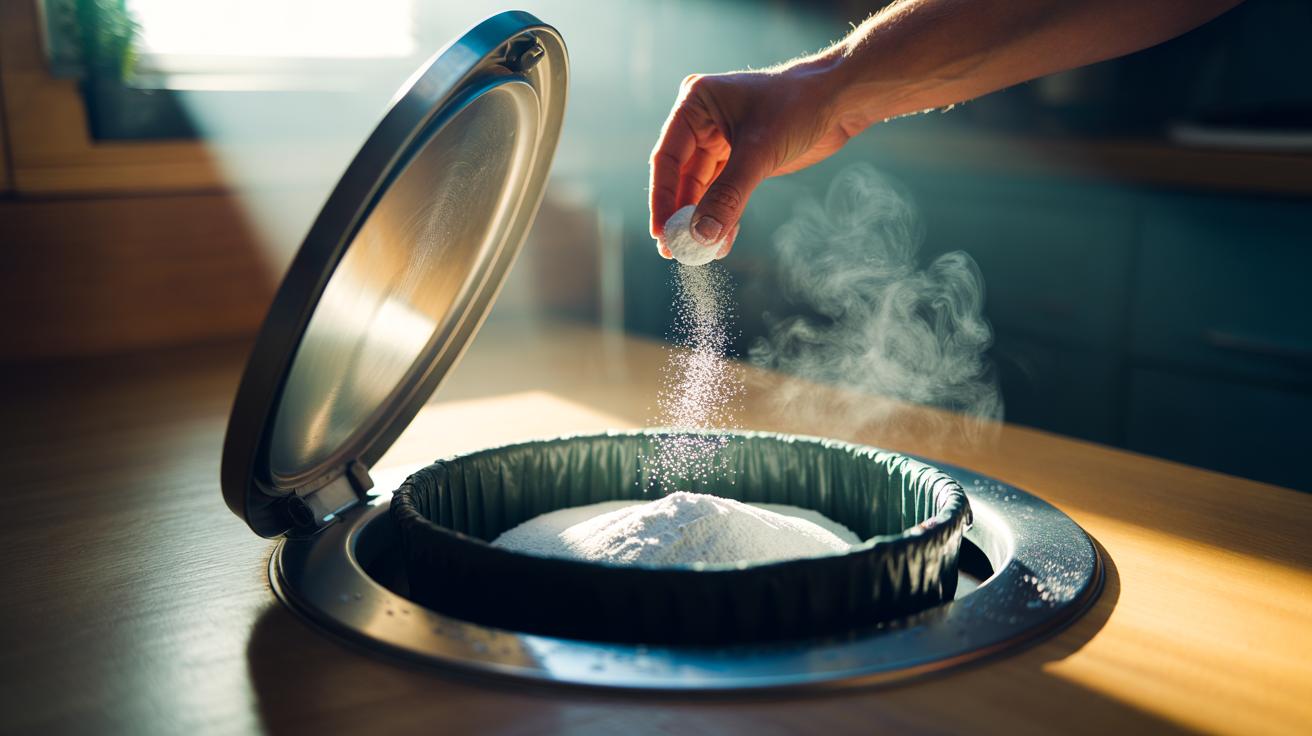
Act fast, keep it simple. Lift the lid and sprinkle 1–2 teaspoons of baking soda directly over the freshest layer of rubbish. For food-heavy bins, dust the inner lip and the base before replacing the liner; that creates two interception points—one where smells rise, one where liquids settle. If there’s a spill on plastic, make a quick paste (bicarb plus a splash of water) and smear it thinly on the stain for 5–10 minutes before wiping. Contact is king.
Top-ups beat big dumps. Add a pinch after adding fish skins, onion trimmings, or spent coffee grounds—the usual suspects. If you’re washing the bin, rinse, then shake in a teaspoon while it’s still faintly damp to “prime” the surface. Avoid adding bicarb at the same time as acidic cleaners like vinegar; you’ll waste both in fizz. Do them separately: clean first, deodorise second. Sequence preserves potency.
| Bin Issue | Method | Typical Neutralising Time |
|---|---|---|
| General sour odour | Even dusting over top layer | 10–30 seconds |
| Fishy smell | Heavier dusting + lid lip dust | 30–90 seconds |
| Liquid spill on plastic | Thin paste, sit, wipe | 2–5 minutes |
| Compost caddy | Pinch after each addition | Seconds to a minute |
The Science of Odour Neutralisation in Bins
Household bin odours are a cocktail. There are volatile fatty acids (acetic, butyric) from fermenting leftovers, amines from decomposing proteins, ammonia from urea breakdown, and sulfur compounds from alliums and seafood. Baking soda, with a pH around 8.3 in solution, acts as a buffer against acids, converting them into non-volatile salts. Translation: fewer molecules evaporate into your kitchen air. Neutral molecules stay put; smelly ones lose their wings.
The powder’s crystal lattice adds an extra layer of defence. Porous surfaces can adsorb odour molecules temporarily, reducing their concentration at the air interface while neutralisation continues. Meanwhile, moisture in the bin facilitates ion exchange—the chemical handshake that turns a sharp, tangy waft into nothing much at all. This is why bicarb can outperform perfume sprays, which only overlay fragrance. It changes the chemistry rather than fighting it with scent.
There are limits. Strong amines and sulfur species aren’t fully eliminated by mild alkali alone, but their intensity drops noticeably with coverage. For stubborn cases, pair bicarb with mechanical cleaning and, later, a ventilated bin position. Think layers of defence: neutralise, then reduce generation, then limit build-up.
Cost, Safety, and Eco Advantages
In the UK, a 500 g tub of baking soda typically costs £1–£2. Used by the teaspoon, that’s pennies per week, cheaper than scented bin liners or aerosols. It’s non-toxic in normal household use, safe around pets when kept out of reach, and won’t corrode most plastics. No propellants, no synthetic fragrances, minimal packaging. For many homes, it’s the most cost-effective deodoriser you can buy.
Safety notes are simple. Don’t inhale the powder; sprinkle low to avoid dusting your face. Avoid mixing with acidic cleaners during application or you’ll get fizz and diminished effect. If you use bleach separately for cleaning, rinse well before reapplying bicarb to keep its buffering action consistent. When spent, you can tip the contents into your rubbish as usual; small amounts can go down the sink to help with mild grease, but don’t overdo it. Replenish weekly, or immediately after especially pungent additions.
Eco-wise, fewer aerosols and perfumed liners mean less waste and lower fragrance exposure indoors. And because bicarb targets the chemistry of odours, you use less, less often. Small scoop, big impact.
In practice, the method is starkly simple: sprinkle, wait, breathe easier. Baking soda works within seconds because it meets odour molecules at the surface and neutralises their volatility before they reach your nose. It’s cheap, safe, and quietly effective, whether in a kitchen caddy or a wheelie bin after collection day. Next time your bin kicks up, don’t reach for a spray—reach for the tub. What tweaks will you try first: a lid lip dusting, a base primer under the liner, or a quick paste on those stubborn plastic stains?
Did you like it?4.6/5 (23)