In a nutshell
- ⏱️ A two-minute hob refresh: use a damp surface and a dryer sheet to loosen baked-on grease fast—start with a cool, switched-off hob for a safe, scratch-free clean.
- 🧪 The science: cationic surfactants reduce surface tension and soften oxidised oils, while the fibrous sheet delivers chemistry gently—less scrubbing, fewer scratches, quicker lift.
- 🧰 Quick method: wipe crumbs, lightly dampen, lay the sheet for 60–90 seconds, glide it to lift residue, then rinse and buff—follow the grain on stainless steel and dry ceramic glass for a streak-free finish.
- 🧭 Suitability: works brilliantly on ceramic glass, stainless steel and enamelled steel; limited on cast-iron grates; avoid or spot-test unsealed aluminium/copper; keep moisture away from electronics.
- 🌿 Safety and eco: choose unscented/plant-based sheets, ventilate, wear gloves, and never mix with bleach; reuse spent sheets to cut waste or opt for microfibre plus washing-up liquid.
There’s a gleefully simple hack that rescues a greasy hob after a lively stir-fry: the humble dryer sheet. In two calm minutes, it can loosen caramelised splatters and stubborn film without heavy scrubbing or harsh fumes. The secret lies in the sheet’s blend of surfactants and softening agents, which slip beneath grime, break surface tension and help residue release. Add a splash of warm water and you have a fast-acting, low-effort clean-up that feels almost like cheating. Always start with a cool, switched-off hob and disconnected appliances. Used wisely, this trick spares your wrists, your patience and the sleek finish of stainless steel or enamel, restoring a respectable shine before the kettle has boiled.
Why Dryer Sheets Lift Grease So Fast
Dryer sheets are engineered to tackle cling and static in the tumble dryer, but their chemistry is just as capable on a greasy hob. They contain cationic surfactants—positively charged molecules that are drawn to negatively charged soil. These surfactants spread through a thin film of water, wedge themselves between the grime and the surface, and reduce the energy needed to lift it. Many sheets also carry emollients and light fabric softener compounds, which behave like mild solvents, softening oxidised oils that have baked onto metal and ceramic.
Because the sheet is fibrous, it acts as a gentle carrier: not a scourer, but a pad that keeps fresh solution at the surface while you work. Think of it as a soft micro-spreader that floods residue with chemistry rather than brute force. This is why a two-minute dwell often beats ten minutes of aggressive scrubbing. Antistatic agents help too; they curb the cling that keeps fine particles bonded to the hob. Result: quicker lift, less elbow grease, fewer scratches, and a finish that looks professionally refreshed.
Two-Minute Method: Step-By-Step
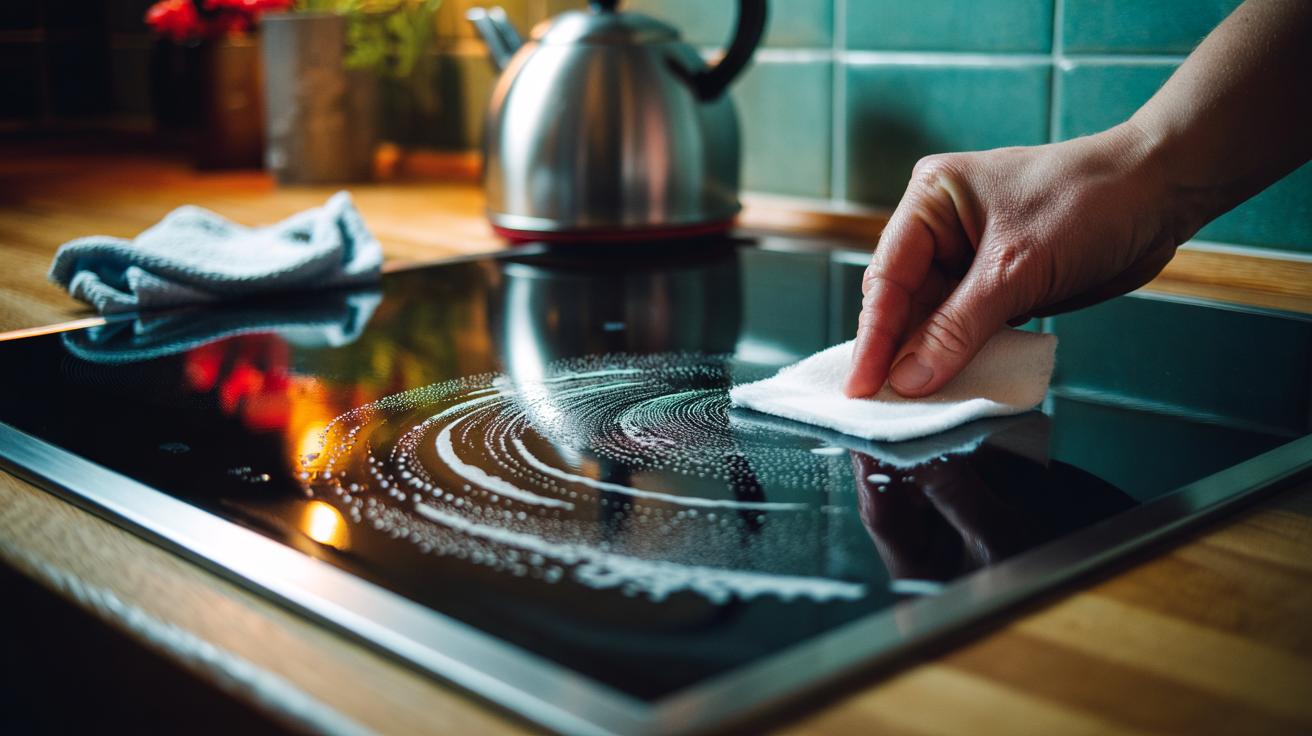
1) Wipe away loose crumbs with a dry cloth. 2) Dampen the hob lightly with warm water—just enough to form a thin film. 3) Lay a dryer sheet flat over the worst splatters. If you’ve a large range, overlap two sheets. Let it sit for 60–90 seconds to soften baked-on grease.
After the brief soak, glide the sheet across the surface in smooth, steady strokes. You’re not scrubbing; you’re coaxing. The fibres shuttle surfactants under the residue and lift it away. For rings and rims, fold the sheet into a small pad and run it along the edges. Re-wet lightly if it drags. Keep the sheet away from open gas ports and any still-warm elements.
Finish with a clean microfibre cloth and hot water to remove remaining film and any fragrance. On stainless steel, follow the grain for a streak-free sheen; on ceramic glass, a final buff with a dry cloth gives that showroom gleam. If patches persist, repeat the 60-second laydown. It’s usually enough to win the day without chemicals that sting the eyes or dull a polished finish.
Where It Works, Where It Doesn’t
This shortcut performs best on ceramic glass, stainless steel and enamelled steel hobs. It will also loosen residue on removable cast-iron grates, though you’ll still want a separate rinse and dry to prevent rust. Unsealed aluminium and decorative copper can be fussy; test discreetly, as soft metals mark easily. Stone splashbacks, matte lacquered fascias and raw timber shouldn’t meet surfactants at all—use a product made for those finishes.
Fragrance oils can linger if you don’t rinse well, so always follow with hot water and a neutral wipe. Avoid getting the sheet into ignition slots, indicator lights or electronic touchpads; moisture migration is not your friend there. When in doubt, spot-test and keep electricals dry. The golden rule is simple: soft pad, short dwell, thorough rinse. Below is a quick guide to help you decide at a glance.
| Surface | Works? | Notes | Typical Dwell |
|---|---|---|---|
| Ceramic glass hob | Yes | Rinse and buff dry to avoid smears | 60–90 seconds |
| Stainless steel | Yes | Wipe with the grain; dry thoroughly | 60–120 seconds |
| Enameled steel | Yes | Safe, but rinse to remove fragrance | 60–90 seconds |
| Cast-iron grates | Limited | Loosens grime; still scrub lightly, dry well | 90–120 seconds |
| Unsealed aluminium/copper | No/Test | May mark or dull; avoid where possible | — |
Eco And Safety Considerations
Dryer sheets are convenient, but they’re not angels. Many contain quaternary ammonium compounds (quats) and fragrance allergens. If you’ve pets or sensitive skin, choose an unscented, plant-based sheet, wear gloves, and ventilate while you work. Never combine this method with bleach or oven cleaner—keep chemistries simple and separate. After use, rinse the hob well so no residue remains on surfaces that heat up or touch food.
There is an environmental angle. You can squeeze more value from a sheet by adopting a “double duty” habit: use a spent laundry sheet for the hob while it’s still active, then bin it. That reduces single-use waste versus a separate degreasing wipe. If sustainability tops your list, a reusable microfibre with a drop of washing-up liquid achieves similar results—just not quite as quickly. The dryer-sheet method’s virtue is speed and gentleness, cutting the temptation to reach for harsher sprays that burden indoor air quality and your budget.
The charm of this trick is its immediacy: two minutes, a little water, and a dryer sheet that outperforms elbow grease. It won’t replace deep cleans, but it buys you time, preserves finishes and makes weeknight maintenance almost enjoyable. Used with care, it’s a smart, low-stress way to keep the hob guest-ready. Will you try the quick lay-and-lift on your next splatter crisis, or do you have a secret, speedier method that deserves a place in the nation’s cleaning arsenal?
Did you like it?4.7/5 (26)