In a nutshell
- 🍋 Lemon halves can lift chopping board stains in ~30 seconds, neutralising odours and brightening surfaces quickly and affordably.
- ⚗️ The power lies in citric acid: it disrupts pigment bonding, acts as a chelating agent for metal ions, and loosens residue in knife grooves.
- 🧽 Quick method: scrub with the lemon itself, add coarse salt for traction or bicarbonate for a fizzing paste; then rinse and dry upright.
- 🪵 Wood vs plastic: hardwood responds well with light abrasion and food-grade mineral oil aftercare; HDPE plastic benefits from salt/bicarb to clear micro-cuts.
- ⚠️ Pro tips: use warmth to help, avoid soaking bamboo, never mix lemon with bleach, and keep acids off marble or limestone to prevent etching.
Stained chopping boards don’t just look tired; they whisper tales of beetroot salads, turmeric curries, and garlicky marinades. A halved lemon can reset that narrative in a flash. In as little as 30 seconds, the cut side of a lemon can lift ingrained marks, neutralise lingering smells, and leave boards looking newly scrubbed. The secret is simple chemistry: citric acid breaks bonds that keep pigments clinging to wood and plastic, while a light abrasive—think coarse salt—helps lift oxidised grime. It’s low-cost, eco-friendly, and genuinely fast. And because it’s food-safe when rinsed, it’s an ideal fix when company’s on the doorstep and your board needs sprucing.
Why Lemon Works: The Chemistry of Citric Acid
Citric acid is a mild, naturally occurring acid with a talent for cleaning. It sheds protons readily, lowering pH at the surface of your board. That shift matters. Many plant pigments and food residues anchor themselves with weak bonds to cellulose in wood or to the microscopic texture of plastic. Acid disrupts those interactions, loosening the grip of stains so they can be swept away by scrubbing and rinsing. Think release, not brute force: citric acid helps unstick colour molecules rather than grinding them into submission.
There’s more at play. Citric acid is an excellent chelating agent, meaning it binds metal ions. If discoloration is encouraged by trace iron or copper—common culprits in water marks and some fruit stains—chelating removes the stabilisers that deepen staining. On plastic, lemon also helps slough away a thin oxidised film, brightening the surface without harsh abrasives. Partner it with coarse salt for extra friction, or a dash of bicarbonate of soda to create a gently fizzing slurry that penetrates knife marks. Used correctly, lemon is safe for food-contact surfaces, but always rinse thoroughly and dry fast.
The 30-Second Scrub: A Practical Step-by-Step Guide
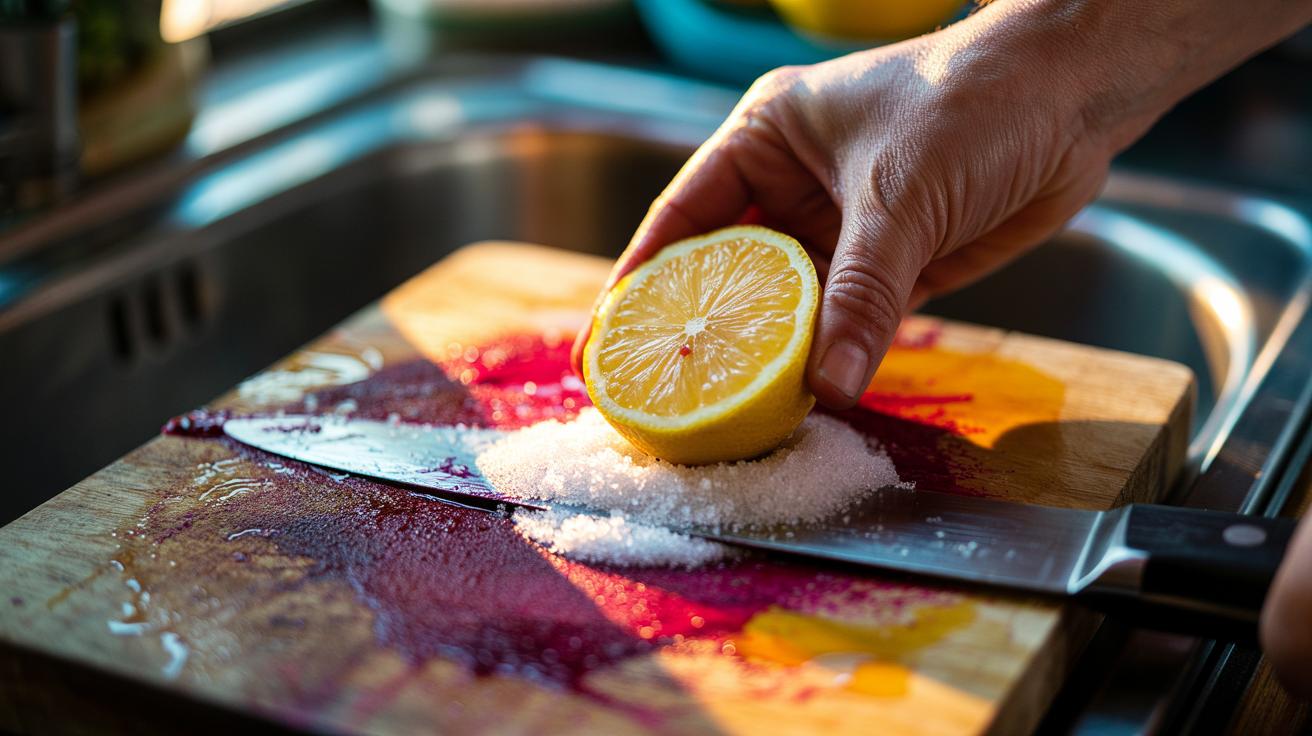
Start clean-ish. Knock off crumbs and quickly rinse the board with warm water. A clear surface means the acid hits stains, not debris. Slice a lemon in half and grasp it like a handle, cut side facing down. Use the lemon itself as the scrubber—no cloth, no brush, just citrus. For extra bite, scatter a teaspoon of coarse salt over the worst marks.
Press the lemon to the board and scrub in tight circles. Work quickly and deliberately. Spend 10–15 seconds on the broad face, then 10–15 seconds tracing along knife grooves where pigments lodge. If the surface dries, squeeze for a fresh burst of juice. In many cases, that’s your full 30-second reset. For stubborn splotches—turmeric, beetroot—let the juice sit another minute to deepen the chemical action before a final swipe.
Rinse with warm water and wipe dry immediately with a clean towel. Stand the board upright so air can circulate; moisture is the enemy of good wood. If odours linger, repeat once, or switch to a lemon-and-bicarbonate paste for a second pass. Never use lemon on marble, limestone, or concrete worktops—acid can etch stone in seconds. Keep the citrus to boards, not counters, and you’ll be golden.
Wood vs. Plastic: Stain Types, Safety, and Aftercare
Not all boards behave the same. Hardwood boards (maple, beech) are naturally resilient and self-healing, but they’re porous. Lemon excels at lifting colour from those pores while leaving the grain intact. Bamboo, technically a grass, is more brittle and often glued; use lighter pressure and avoid soaking. Plastic (HDPE) boards are non-porous yet riddled with knife scars that trap pigments. Lemon loosens residue in those micro-cuts, and a brief scrub with salt helps sweep it out. Acid isn’t a substitute for washing: clean with hot, soapy water first, then use lemon to remove stains and odours.
For hygiene, think sequence. Wash, de-stain, rinse, then dry thoroughly. Wood benefits from periodic oiling with food-grade mineral oil after cleaning; it seals the grain so future stains can’t dive as deep. Plastic tolerates a slightly firmer scrub and occasional bicarbonate slurries to buff away haze. If raw meat was involved, disinfect separately according to your kitchen routine, then use lemon for cosmetic refresh. Drying is non-negotiable—park the board upright and let air do the rest.
| Board Type | Typical Stains | Lemon Effectiveness | Contact Time | Aftercare |
|---|---|---|---|---|
| Hardwood (Maple/Beech) | Berry, wine, herb chlorophyll | High with salt scrub | 30–90 seconds | Rinse, dry, oil monthly |
| Bamboo | Turmeric, garlic, soy streaks | Moderate; use light pressure | 30–60 seconds | Rinse, dry, avoid soaking |
| Plastic (HDPE) | Beetroot, curry, tomato oils | High with salt or bicarb | 30–120 seconds | Rinse, towel-dry, occasional buff |
When Lemon Isn’t Enough: Pairings, Precautions, and Pro Tips
Sometimes stains dig in. Pair lemon with salt for gritty traction, or make a paste: lemon juice plus bicarbonate. The fizz signals carbon dioxide releasing as acid meets alkali, pushing bubbles into crevices and helping lift grime. For plastic haze, a second pass with bicarbonate alone can smooth scuffs before a final lemon gloss. Never mix lemon with bleach—combining acids and chlorine can produce dangerous gases.
For wood, warmth helps. A brief rinse with warm water opens the grain; then the lemon gets to work faster. Don’t soak, and don’t let juice pool along end grain. Keep a leftover lemon half in the fridge in a small jar of salt; it doubles as a ready-made scrubber and stays fresh for days. Prefer vinegar? It’s effective, but lemon’s oils add a fresher scent and a slightly tackier grip that aids scrubbing. If colour persists after two rounds, accept a patient approach: repeat briefly over a week rather than attacking the surface in one go.
Lemon is quick, tactile, and oddly satisfying—proof that a humble fruit can outsmart tough kitchen stains without chemical overkill. The citric acid breaks bonds, salt adds muscle, and good drying locks in the win. Used alongside ordinary washing, it keeps boards photo-ready and dinner-ready alike. From turmeric ghosts to beetroot halos, 30 seconds of citrus often does the trick. If a board could talk, it would ask for oil now and then, and a little patience with the hardest marks. What stains are haunting your board today, and which lemon method will you test first?
Did you like it?4.6/5 (26)