In a nutshell
- 🍋 Citric acid in lemon juice acts as a fast contact herbicide, dropping leaf-surface pH, disrupting membranes, and stripping cuticles; immediate hits on young weeds amplify damage.
- ⏱️ Target seedlings (two–four leaves) on dry, sunny days for rapid scorch; expect quick top kill, but deep-rooted perennials can regrow and require repeat spot treatments.
- 🧪 The mode of action includes chelation of calcium and magnesium, undermining cell walls and chlorophyll; effects are topical, with soil buffering acidity—ideal for hard surfaces, not soil drenches.
- 🛠️ Apply undiluted or at a 1:1 dilution, use precise spraying or brushing, shield ornamentals, and note potential etching of limestone/mortar; wear gloves and eye protection.
- 🇬🇧 UK context: only authorised pesticides can be marketed; lemon juice isn’t licensed—use privately, keep out of drains, time to avoid pollinators, and pair with preventive path maintenance.
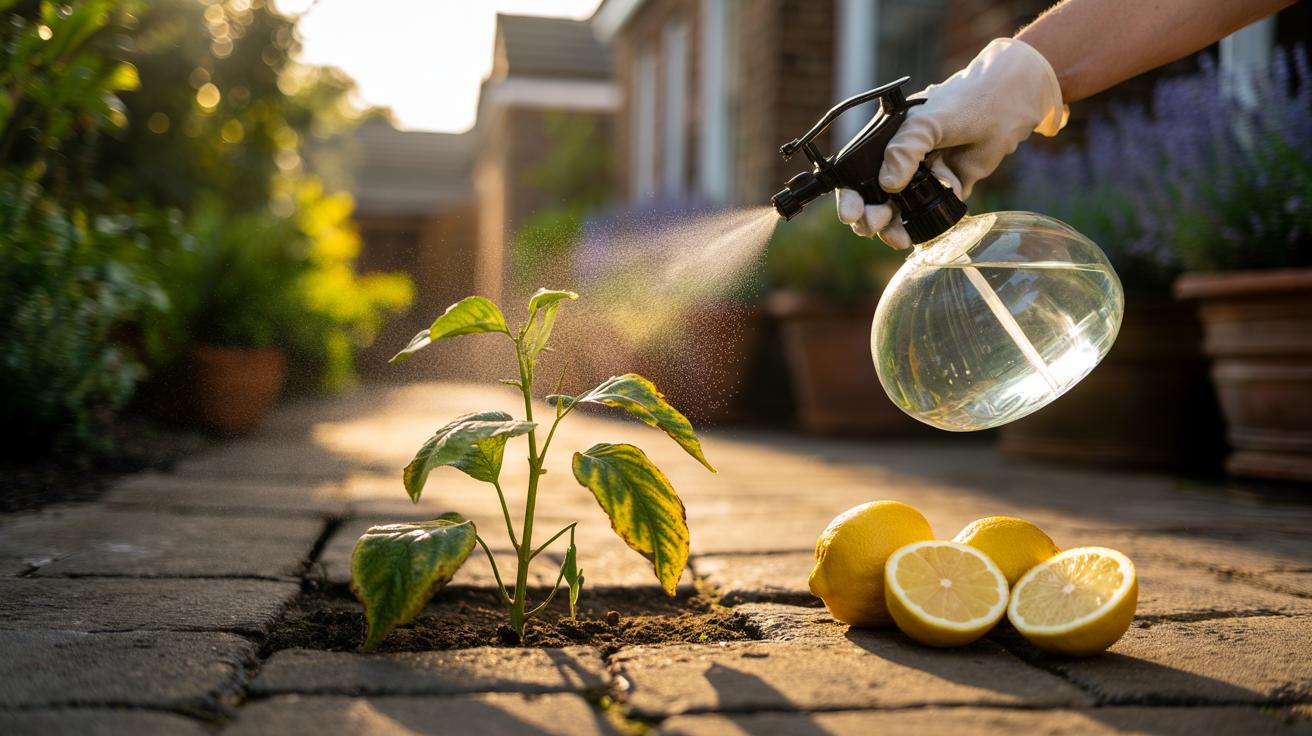
Gardeners love a quick fix for gnarly path weeds. Lemon juice, rich in citric acid, offers a sharp, natural punch that can scorch young growth before it takes hold. It behaves like a contact herbicide: fast, surface-level, and unforgiving if applied at the right moment. Why does it work so rapidly when applied immediately? Because the acid meets soft tissues before plants can harden defences, disrupting membranes and stripping protective waxes. It’s simple, cheap, and, used carefully, effective on paving cracks and gravel. Apply thoughtfully, avoid splash on ornamentals, and expect repeat spot treatments. Here’s how and why this sour squeeze can keep your paths clear.
Why Citric Acid Knocks Back Weeds Fast
Citrus may sound gentle. It isn’t. Citric acid drives leaf-surface pH down to levels that denature proteins, disrupt lipid membranes, and perforate the plant’s waxy cuticle. The result is rapid loss of cellular integrity, leakage of sap, and visible collapse. On tender tissues—new seedlings and freshly emerged shoots—the effect is dramatic. Immediate application matters because juvenile cells have thinner cuticles and fewer reserves, so damage outruns repair. In bright, dry weather, evaporation accelerates desiccation, compounding the injury. Think of it as a “contact scorch” rather than a systemic kill.
The chemistry has a second twist. Citric acid chelates calcium and magnesium, ions vital for cell walls and membrane stability. Remove them and the wall slackens; membranes lose structure. That’s why you often see a dark, water-soaked look within minutes, followed by whitening and crisping. Yet this is non-selective. Spray a lawn edge and grass suffers too. Roots generally survive in established perennials, so regrowth is common. For paths and paving gaps, however, where weeds anchor shallowly, a quick, concentrated hit is often enough to keep surfaces weed-free between routine sweeps.
From Kitchen Lemon to Pathway Treatment
Aim for practicality. Squeeze fresh lemons or use bottled lemon juice with known acidity; many products sit around 5–7% citric acid equivalents. Apply undiluted for stubborn weeds, especially in tight cracks. For light flushes, a 1:1 dilution with water extends coverage. A trigger sprayer or small pump sprayer gives control; a paintbrush is precise along stone edges. Do not spray desirable plants, and shield low leaves from drift with a piece of cardboard. Choose a dry, sunny slot. Rain within an hour softens the punch and can spread acidity where you don’t want it.
Timing is tactical. Target young annual weeds when they have two to four leaves. These succumb quickly. Older perennials brown on top but may rebound; reapply when green returns. Clear debris after two days to expose any survivors. Avoid sugary citrus blends that include sweeteners—sticky residues attract ants and dust. Protect calcareous stone and vulnerable metals; citric acid can etch or tarnish with repetition. Treat edges first, then work inward to keep footprints clean. Finally, label your spray bottle clearly. Household acids demand the same respect as any garden chemical: gloves, eye protection, and careful storage.
The Science in Short: pH, Chelation, and Cell Damage
At leaf level, citric acid collapses the plant’s micro-environment. High acidity disrupts enzyme function, slows photosynthesis, and destabilises proton gradients across membranes. The chelating action binds calcium, undermining pectin cross-links in cell walls, and sequesters magnesium, an essential element in chlorophyll. Cells leak, plasmolysis follows, and leaves bleach. Because the action is topical, roots in cool, shaded substrate are less exposed; soil buffers acidity quickly. That’s why citric acid works best as a spot spray on hard surfaces, not as a soil drench. Repeated use on the same paving can slightly lower surface pH and, over time, nibble at lime-rich mortar.
How does it compare with other quick fixes? Here’s a snapshot for path use:
| Treatment | Mode | Visible Effect | Risks on Hard Surfaces |
|---|---|---|---|
| Citric acid (lemon juice) | Contact scorch; chelation; low pH | Minutes to hours on young weeds | May etch limestone/mortar with repeats |
| Acetic acid (vinegar) | Contact scorch; low pH | Fast; often similar to citric | Corrosion risk for metals; strong smell |
| Salt solutions | Osmotic stress | Moderate; lingering residues | Soil salinity buildup; runoff concerns |
| Systemic herbicides | Translocated to roots | Slower; deeper kill | Use only as labelled; regulatory controls |
For paths, citric acid earns points for speed and control, at the cost of repeat applications. Pair it with good hygiene: brush gravel, scrape joints, and reduce seed catchment to cut regrowth.
Safety, Law, and Sustainability in the UK Garden
Home remedies live in a grey space. In the UK, only authorised plant protection products can be marketed and used as pesticides, with strict labels governing where and how they’re applied. Lemon juice is a food, not a licensed herbicide. Do not use homemade sprays on public or professional land, and never discharge into drains or watercourses. For private paths at home, treat citric acid like any corrosive household cleaner: eye protection, gloves, and child-proof storage. Avoid windy days to protect pollinator plants; early morning or late evening reduces bee contact and improves adhesion.
Think surfaces. Repeated acidic treatments can dull limestone flags and nibble mortar; test a hidden corner first. Keep metals—gate furniture, tool heads—out of the spray cone. Rinse equipment with water and a pinch of bicarbonate to neutralise residues. Environmentally, citric acid degrades readily, and soil organisms cope well with small, localised doses; the main risk is concentrated runoff. Balance speed with prevention: dense jointing sand, geotextile layers under gravel, and regular brushing starve weeds of footholds. Combining these with citrus spot sprays delivers a practical, low-impact pathway regime.
Lemon juice won’t end weeds forever, but it gives you a rapid, targeted strike that fits neatly into a tidy-up routine. Understand the chemistry, respect the surfaces, and time your sprays while weeds are small and the sun is on your side. Keep expectations realistic—contact scorch beats seedlings, not deep roots—and plan for light repeats through the season. With a broom, a scraper, and a bottle of citrus, most paths stay crisp. Will you choose a swift citric scorch, or invest in longer-term surface tweaks to keep your paving pristine without repeat sprays?
Did you like it?4.4/5 (21)