In a nutshell
- 🧪 The duo’s power comes from citric acid (lemon) chelating minerals and acetic acid (vinegar) dissolving films, delivering rapid limescale and soap scum removal with a fresh scent—effective for domestic grime, not a hospital-grade disinfectant.
- 🧼 Best uses: kitchens and bathrooms—shine glass and chrome, cut grease on hobs and cupboards, freshen bins, and clear shower screens; always rinse food-contact surfaces and patch test if unsure.
- 🥤 Mixing & method: combine 1:1 lemon juice and white vinegar (5%); optionally infuse peels for extra citrus oils, allow short dwell times, wipe with microfibre, then buff dry; refrigerate small batches and label infusions.
- ⚠️ Safety first: Never mix with bleach, ammonia, or hydrogen peroxide (risk of dangerous gases/peracetic acid) and avoid pairing with castile soap; wear gloves if sensitive and ventilate small spaces.
- 🚫 No-go surfaces: keep acids off natural stone (marble, limestone, terrazzo), aluminium, cast iron, and unsealed grout; choose pH‑neutral cleaners for stone and use bicarbonate of soda separately for baked-on grime.
There’s a reason so many British households swear by a splash of vinegar and a squeeze of lemon. This low-cost pairing behaves like a professional cleaner without the harsh fumes or long ingredient lists. The science is elegant, the results immediate. Acids dissolve mineral films, lift greasy residues, and leave glass streak-free. Citrus brightens, vinegar cuts. It’s the definition of tidy synergy. Two natural ingredients, one unstoppable clean. Below, I unpack why this duo works, where it excels, and how to use it safely so you can rescue taps, tiles, and worktops with confidence—and a bit of zest.
The Chemistry Behind Lemon and Vinegar
At the heart of this pairing are two gentle but effective acids: citric acid in lemon and acetic acid in white distilled vinegar. They team up to tackle grime from different angles. Citric acid is a brilliant chelating agent, grabbing hold of calcium and magnesium ions that form stubborn limescale. Acetic acid lowers the pH enough to break down mineral films and soften soap scum. Two mild acids attack grime via different mechanisms, multiplying their impact. That’s why taps sparkle and shower glass clears fast.
The duo also tamps down odours while offering a light, natural fragrance that dissipates quickly. Acetic acid’s volatility helps surfaces dry cleanly, without ghosting or streaks on glass. Meanwhile, citrus oils in the peel—if you infuse them—add light degreasing power and help loosen sticky residues. It isn’t a hospital-grade disinfectant, but for domestic grime it’s a nimble, everyday performer.
| Component | Key Compound | Approx. pH | Strengths | Avoid |
|---|---|---|---|---|
| Lemon | Citric acid | ~2.0 | Descaling, odour control, brightening | Natural stone, raw steel |
| White vinegar (5%) | Acetic acid | ~2.4 | Soap scum, glass shine, mineral film | Aluminium, stone, some rubber seals |
Where This Cleaner Shines in the Home
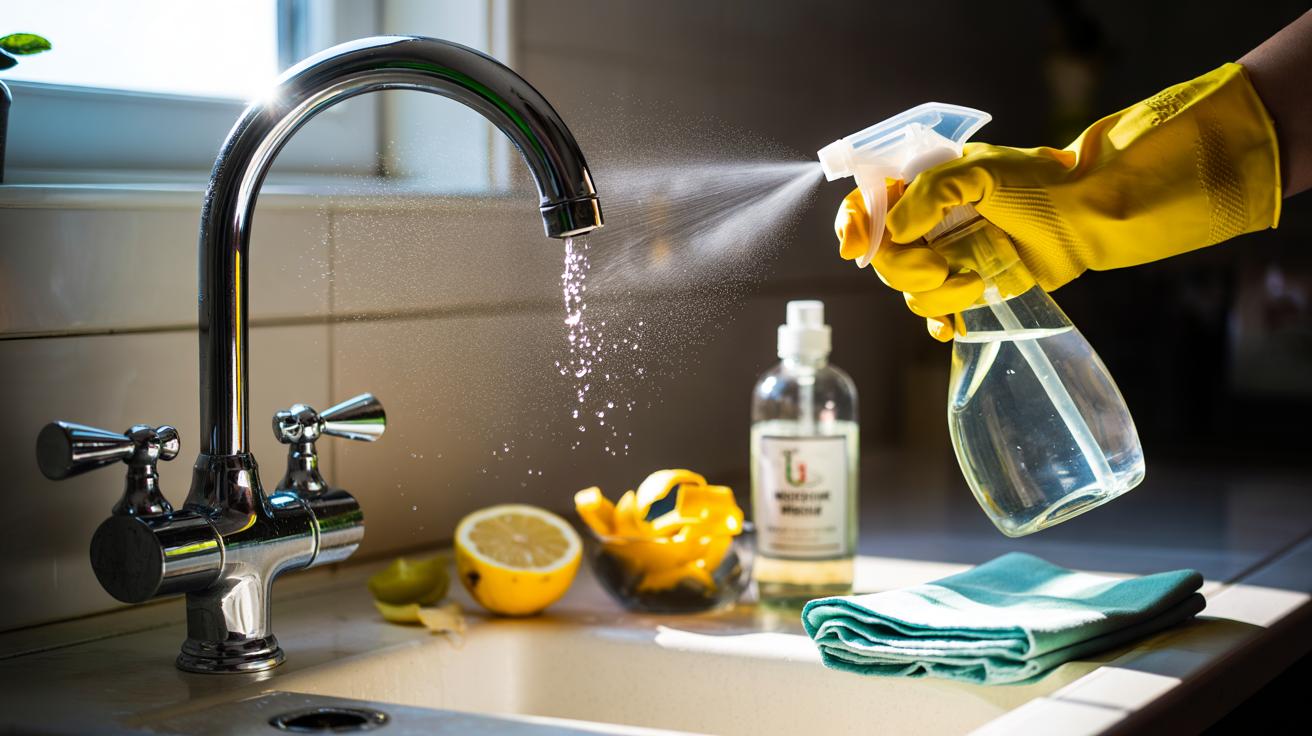
Think kitchens first. The blend powers through grease on hobs, splashbacks, and extractor hoods; it loosens sticky fingerprints on cupboard doors; it neutralises lingering bin odours. For fridges and worktops, spray lightly, leave 3–5 minutes, then wipe with a damp microfibre. Always rinse food-contact surfaces. On stainless-steel sinks and chrome taps, you’ll see water spots melt away after a short dwell time, followed by a buff with a dry cloth.
In bathrooms, it’s a star on shower screens, tiles, and chrome. The citric–acetic combination softens limescale, lifts soap scum, and clears streaks. Grout often brightens too; apply with a soft brush, then rinse well. Windows and mirrors benefit from vinegar’s fast evaporation, especially when followed by a dry polish with newspaper or a lint-free cloth. It also makes quick work of tea splashes on mugs, sticky labels on jars, and the dull film on reusable bottles. Just avoid porous or acid-sensitive materials. If in doubt, patch test on an unseen spot.
How to Mix, Store, and Use Safely
For a general spray, combine 1 part lemon juice with 1 part white distilled vinegar (5%). For extra citrus oils, pack a jar with lemon peels, cover with vinegar, and infuse 7–14 days; strain, then dilute 1:1 with water for a spritz with added degreasing. Apply to cool surfaces. Leave 5–10 minutes on limescale, two minutes on light grease, then wipe and rinse. Microfibre does the heavy lifting; a dry buff finishes the shine.
Storage matters. Fresh lemon juice shortens shelf life, so refrigerate small batches and use within a fortnight. Peel-infused vinegar (undiluted) can last several months in a sealed, labelled bottle away from sunlight. Never mix this cleaner with bleach, ammonia, or hydrogen peroxide—dangerous gases or peracetic acid can form. Skip castile soap too; acids break it, leaving a gummy film. Wear gloves if you have sensitive skin, ventilate small bathrooms, and keep the solution off natural stone and soft metals.
When Not to Use Lemon–Vinegar Cleaners
Acids are powerful allies, but they have limits. Avoid use on marble, limestone, travertine, terrazzo, concrete, and unsealed grout—they can etch or crumble. Keep it away from aluminium, cast iron, and certain rubber seals that may degrade with repeated exposure. Wood floors and furniture finishes can dull; electronics screens and coated lenses may cloud. On natural stone, etching can occur within minutes.
Safer alternatives exist. For stone, choose a pH-neutral cleaner or a small drop of washing-up liquid in warm water, then dry thoroughly to prevent marks. For baked-on pans, use bicarbonate of soda as a separate paste (never mixed with vinegar in the bottle), letting the fizz happen on the surface if you choose to follow with a vinegar rinse. For metals, reach for mild detergent and water, drying immediately. When you must tackle heavy limescale—kettles, showerheads—use vinegar alone, controlled, then rinse generously.
Used thoughtfully, lemon and vinegar bring smart chemistry to everyday cleaning: fast descaling, gentle degreasing, brighter glass, fresher air. The cost is tiny, the environmental load lower than many fragranced sprays, and the method wonderfully simple. Respect the no-go surfaces, give the solution time to work, and buff to finish for that newsroom-worthy shine. As you look around your home, which task do you want this natural duo to conquer first, and where might a careful patch test give you the confidence to try it today?
Did you like it?4.5/5 (26)