In a nutshell
- 🧵 A packed dryer sheet cuts static and friction, letting thread unspool smoothly and reducing mid-sew knots by leveraging cationic surfactants for cleaner, steadier stitches.
- ⚙️ Quick setup: place a fragrance-free sheet between spool and cap, or a thin wrap on the spool; test on scrap and tweak tension balance slightly to account for added lubricity.
- 🧪 Science at work: quats/esterquats neutralise charge (positive heads) while fatty tails lubricate; biggest gains on polyester, rayon, and silk, modest on cotton, light touch for woolly nylon.
- 🧼 Know the limits: avoid residue build-up by cleaning guides, be cautious with treated performance fabrics and scents, and remember this won’t fix badly wound spools.
- 🌿 Smarter options: try eco-friendly alternatives like anti-static microfibre, silicone thread conditioner, beeswax for hand sewing, a small humidifier, or reusable anti-static cloths.
Thread that loops, snarls, and knots can turn a simple hem into a slow-motion crisis. A surprisingly effective fix comes from the laundry aisle: a packed dryer sheet tucked beside your thread spool to de-tangle quickly and quietly. The trick works because softening agents blanket fibres, cut static, and tame friction, so the thread feeds cleanly through guides and tension discs. It sounds folksy, but there is real chemistry behind it. In the time it takes to re-thread a needle, you can set this up and keep stitching. Less charge, less drag, fewer sudden knots mid-sew: that is the promise and, for many sewists, the outcome.
Why Dryer Sheets Tame Static on Spools
At the heart of the hack is a clash of materials. Plastic spools, synthetic threads, nylon guides and dry indoor air create a perfect storm for static cling. As thread unspools at speed, fibres rub, charge builds, and micro-loops cling to the spool flange or the neighbouring windings. Those loops escalate into knots the moment the take-up lever yanks the line under tension. Dryer sheets carry cationic surfactants — often quaternary ammonium compounds and modern esterquats — that migrate onto fibres with a whisper-thin film. The positively charged heads neutralise negative build-up while the fatty tails act as a lubricant.
This dual action is what matters: charge suppression and lower friction mean the thread stops grabbing itself and starts running true. You feel it instantly. The feed turns smooth, stitches settle, and the characteristic “ping” of static dissipating disappears. On polyester and rayon, the effect is dramatic because those fibres charge readily; cotton benefits too, especially when humidity drops. It is everyday chemistry applied to a very particular craft problem, and it earns its place in any sewing room.
Step-By-Step: The Packed Dryer Sheet Trick
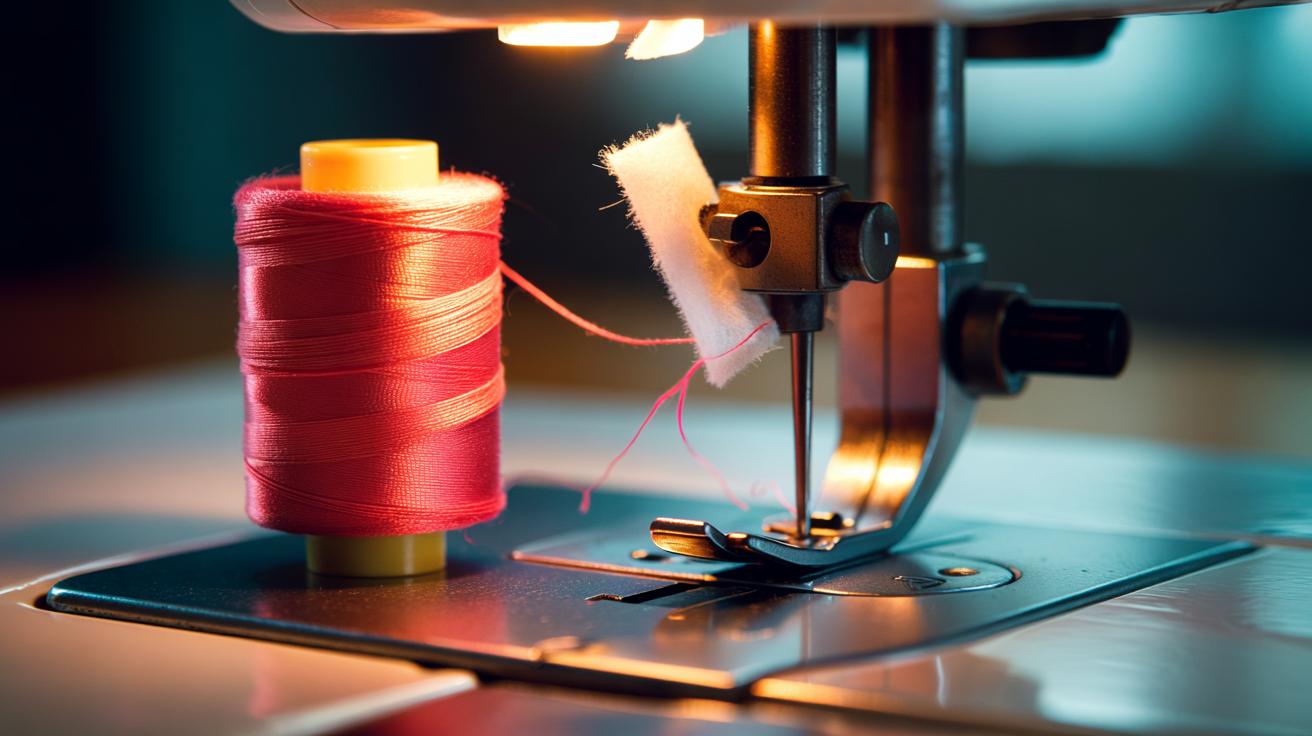
Cut a strip from a fragrance-free dryer sheet — new or gently used. Fold it into a small cushion, then slide it between the spool and its pin cap so the sheet touches the edge of the wound thread. The goal is contact, not constriction. If your machine has a vertical pin, wrap a thin band around the spool’s waist and secure the overlap with a tiny sliver of low-tack tape, keeping the tape away from the thread path. For bobbins, place a postage-stamp square in the case well, beneath the bobbin but away from moving parts, and test hand-turning before sewing.
| Position | Method | Benefit |
|---|---|---|
| Spool pin | Pad between spool and cap | Static reduction at source |
| Spool body | Thin wrap band | Smoother unwinding |
| Bobbin area | Small square under bobbin | Quiets birds’ nests |
Run a 10–15 cm test seam on scrap. If tension is off, reduce upper tension by a notch; the extra lubricity can slightly change balance. Replace the sheet every few hours of sewing, and avoid overdosing. Use the lightest touch that calms the thread. Keep sheets clear of the needle bar and feed dogs, and wipe guides with a microfibre cloth after long sessions to avoid residue.
Thread, Tension, and Lubricity: What Changes Mid-Sew
When softeners coat the thread, three things shift at once: friction at the spool flange, friction at contact points, and electrostatic behaviour across the line. The coefficient of friction drops, so the thread stops snatching at abrupt angle changes. The tension balance you dialled in previously may sit a fraction low because the system demands less pull to maintain stitch formation. That is why a brief re-test matters. On overlockers and coverstitch machines, where multiple cones feed in parallel, the effect scales: fewer micro-pauses equal steadier loopers and neater edges.
Material choice matters. Polyester, rayon, and silk show the biggest improvement because they are slick and charge easily; mercerised cotton improves modestly, while fluffy woolly nylon behaves best with only a light touch. Too much surfactant can over-lubricate and cause slippage on small tension springs, so moderation protects consistency. You will also notice a reduction in “memory” curls on threads that have sat tightly wound; the sheet eases those coils so they release without snapping back. The net result mid-sew is predictable flow, fewer mid-line loops, and a calmer needle thread path that keeps the stitch locked where it should be: inside the fabric layers.
Limits, Risks, and Eco Alternatives
Dryer sheets are not magic blankets. Softening agents can leave a faint film on guides and discs if you pack the area, which invites lint to clump. Wipe down metal surfaces after long runs and keep the needle clean. If you sew performance fabrics with finishes — water-repellent coats, outdoor kit, children’s pyjamas with flame resistance — err on the cautious side, avoiding any transfer. Those sensitive to perfumes should choose unscented sheets or avoid them entirely. The trick is also a stopgap on badly wound spools: if the thread nests because of crossed layers, rewind or discard.
Prefer greener routes? Try anti-static microfibre squares around the spool, a dab of dedicated silicone thread conditioner on a felt pad, or a beeswax pass for hand sewing. A small desktop humidifier reduces charge dramatically in winter. Reusable anti-static cloths offer the same cationic effect with fewer chemicals per use. The principle is constant: reduce charge, reduce drag, restore control. Pick the lightest method that gets you from start to seam without interruption.
Every sewist knows the rhythm of a good stitch line, and how one bad snarl can break the flow. A packed dryer sheet is a quick, inexpensive tool to keep thread unspooling smoothly, especially on tricky synthetics and dry days. Understand the chemistry, apply it sparingly, and guard your machine with simple cleaning habits. Small changes, big calm. Now the question is yours: will you slip a sheet beside your next spool, or will you test an alternative anti-static fix and compare the results on your own machine?
Did you like it?4.4/5 (23)