In a nutshell
- ⚡ A dryer sheet uses static cling and the triboelectric effect to attract toilet roll micro‑fibres instantly, while its cationic surfactants leave a thin film that slows re‑soiling.
- 🧻 Toilet paper sheds fines at perforations; airflow spreads them, and charged plastic dispensers trap them — hotspots include the holder gap and the paper’s leading edge.
- 🛠️ The 30‑second method: keep the sheet dry, lightly crumpled, use short overlapping strokes on lid, spindle, tiles, and the first two sheets; avoid water and pick unscented if sensitive.
- 🧪 Materials and humidity matter: plastics skew negative, paper often positive; the effect peaks in dry winter air (~35% RH) and fades as humidity rises; ceramic shows dust but holds little charge.
- 🌿 Use sparingly and spot‑test on plastics; alternatives like a barely damp microfibre or reusable antistatic cloths reduce waste but offer less dramatic instant grab.
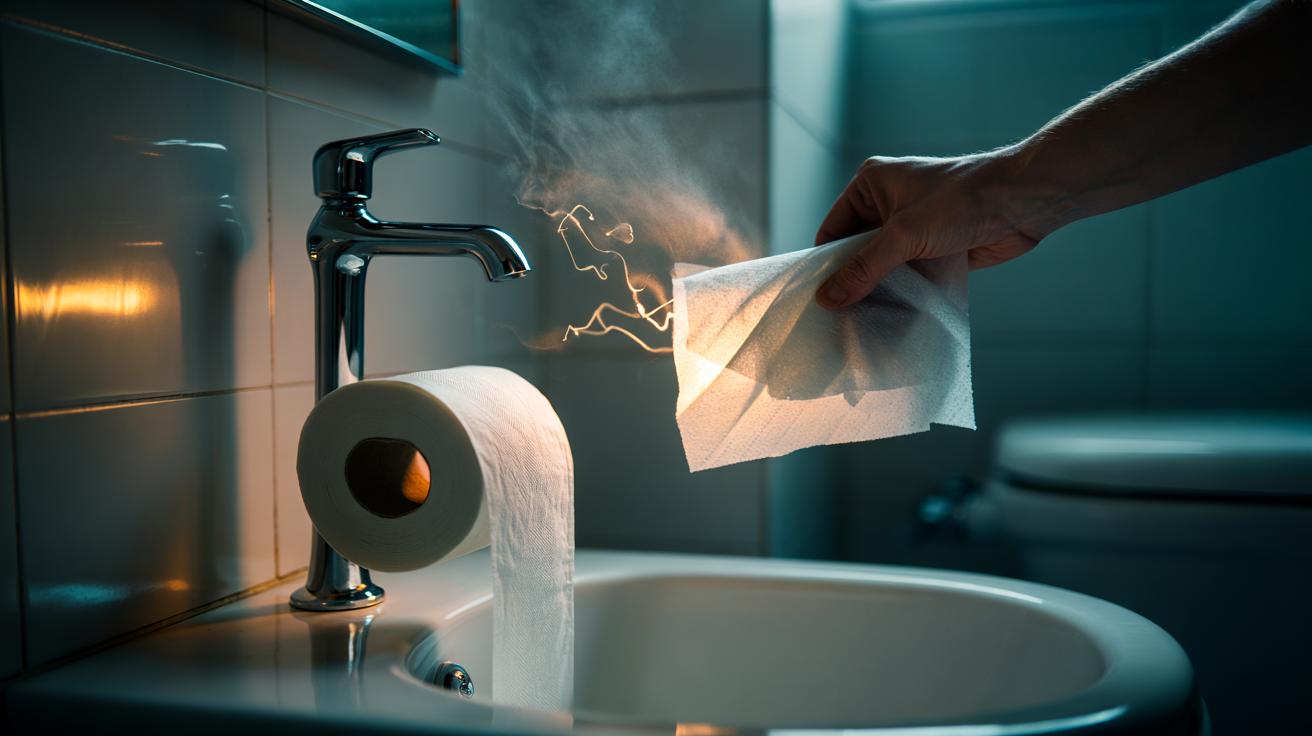
Reach for a dryer sheet and you can see the magic happen: a quick sweep over the loo roll holder or lid and the fine, grey toilet roll dust vanishes. Householders swear by it, cleaners keep a stash under the sink, and social media videos demonstrate the trick in seconds. What looks like sorcery is really smart surface physics at work. The sheet builds a small static charge and carries softening agents that help fibres cling. In dry bathrooms, the effect is instant and oddly satisfying. Here’s why static cling captures tiny particles so fast — and how to use it safely, effectively, and with a scientist’s confidence.
How Static Cling Nabs Microscopic Lint
Paper breaks down into micro‑fibres during manufacturing, perforation, and tearing. Those fragments are so light they float and settle on ceramic lids, plastic dispensers, chrome taps. A dryer sheet sorts them out because of the triboelectric effect — when two materials touch and separate, electrons are traded, leaving one surface slightly positive and the other negative. The sheet’s base (often polyester) and coatings pick up charge with a quick rub, turning the wipe into a gentle particle magnet. Opposite charges pull; neutral fibres polarise and follow.
There’s more. Dryer sheets are impregnated with cationic surfactants and waxy softeners. They leave a microscopic film that reduces future static on the surface, so fewer fibres cling after you’ve wiped. That’s why the result seems to last. In very dry rooms, the static attraction dominates. In humid bathrooms, the surfactant layer does more of the heavy lifting, taming flyaway dust by mild adhesion rather than crackling charge. Either way, the interaction is swift, gentle, and highly selective for the feather‑light debris you can’t catch with a regular tissue.
Why Toilet Roll Sheds Dust, And Where It Hides
Even premium rolls shed. During slitting and embossing, paper is abraded, creating fines — tiny flecks of cellulose that lodge in the perforations and edges. The first few spins on a fresh roll loosen them. Air currents from flushing and hand‑drying waft fibres onto nearby surfaces. Plastics like polypropylene dispensers and ABS lids exacerbate the problem by accumulating charge; they tug at those particles and hold them fast. That’s why some spots seem dusty minutes after you’ve cleaned them.
Chrome and glazed ceramic don’t build as much residual static, but they’re smooth, so dust is starkly visible. The gap between the roll and wall is a hotspot: low airflow, persistent charges, lots of fibre fallout. Pull direction matters, too. A downward tug throws more debris than a sideways pull. Over time, fragrance oils and humidity bind fibres into a faint grime ring on holders and hinges. Viewed under light, you’ll notice a tell‑tale halo. A charged dryer sheet disrupts that halo quickly, lifting loose material before it compacts into harder‑to‑shift residue.
Step-by-Step: The 30-Second Dryer Sheet Method
Start dry. Static rules when the sheet isn’t damp. Crumple it lightly to create contact points, then wipe the roll cover, spindle, nearby tiles, and the leading edge of the paper itself. Short, overlapping strokes work best. For a fresh roll, give the first two sheets a gentle pass to catch perforation dust; discard them if you’re fastidious. Always test on obscure plastic first — some scented sheets can leave a faint sheen.
For stubborn specks on chrome, a second pass with the same sheet usually does it. Avoid adding water: moisture dissipates charge and reduces the cling. If you’re odour‑sensitive, choose unscented sheets. On matt black fixtures, finish with a clean microfibre buff to remove any trace film. A single sheet can tackle the loo, the skirting behind it, and the door handle, then retire to the bin. Use it no more than once daily; you’re preventing build‑up, not polishing a car bonnet. Done right, the method is quick, quiet, and leaves no visible residue.
Science Snapshot: Triboelectric Series and Home Materials
The triboelectric series ranks materials by their tendency to gain or lose electrons when rubbed. Knowing where common bathroom surfaces sit explains the dryer sheet’s edge. Plastics often charge negative; paper leans positive. The sheet’s fibres and coatings bridge this gap, delivering attraction without spark drama. Humidity shifts behaviour: at 60% RH, charges leak away quickly, but at 35% RH — common in heated UK homes in winter — the effect is pronounced. That’s when a single wipe looks miraculous.
| Material | Likely Charge | What It Attracts | Notes |
|---|---|---|---|
| Polyester dryer sheet | Slight ± (easy to charge) | Paper fibres, lint | Coated with cationic softeners |
| Toilet paper (cellulose) | Often positive | Negatively charged dust | Sheds fines at perforations |
| Polypropylene/PVC dispenser | Often negative | Positive fibres | Charge builds with wiping |
| Ceramic/glazed tile | Low residual charge | Loose dust (polarised) | Shows dust starkly |
| Microfibre cloth | Variable | General dust | Best slightly damp, not for static |
The sweet spot is simple: dry sheet, dry surface, light pressure. For those wary of chemicals, an alternative is a barely damp microfibre followed by a dry buff, which removes residue but lacks that instant static grab. If you prefer reusables, look for antistatic cloths made from conductive fibres; they mimic the charge-balancing trick with less waste, though the performance is less dramatic on plastics.
A dryer sheet is an inexpensive, clever fix for toilet roll dust, backed by robust physics rather than cleaning folklore. The trick combines static attraction with a whisper‑thin film that slows re‑soiling, giving you that just‑cleaned look for longer without sprays or scrubbing. Use it sparingly, keep it dry, and target the hotspots where fibres settle and charges lurk. As winter heating dries the air, the effect becomes even snappier and more reliable. Is it time you added a single sheet to your bathroom routine — or will you test alternatives to see which captures those tiny particles fastest in your own home?
Did you like it?4.6/5 (25)