In a nutshell
- 🍋 Lemon juice dissolves rust in as little as two minutes, with citric acid chelating iron oxide; a pinch of salt adds gentle abrasion and speeds the reaction.
- ⏱️ Follow the two-minute method: apply (dilute for delicate surfaces), wait 60–120 seconds, agitate lightly, then rinse, neutralise with bicarbonate solution, and dry thoroughly.
- ⚠️ Use on non-porous surfaces (stainless, enamel, glazed tile, white cotton); avoid natural stone and be cautious with aluminium and dyed fabrics; never mix with bleach.
- 🧰 For tools and fabrics: remove loose rust, apply lemon, agitate or blot from the back, rinse well, repeat short passes if needed, then oil tools to prevent flash rust.
- 🌿 Prevent recurrence: keep areas dry, apply protective films (oil, wax), and consider alternatives like white vinegar, bicarbonate of soda paste, or stone-safe rust removers when lemons aren’t suitable.
Rust creeps in quietly. On your favourite kitchen sink, on garden shears, even on the hem of a white shirt. The good news: a splash of lemon juice can lift those stubborn orange-brown marks in as little as two minutes. Quick, cheap, planet-friendly. This isn’t a folk myth but a pocket chemistry lesson you can run at the tap. Still, speed matters. So does surface type. In the guide below I explain why lemons work, the exact method that gets results fast, and where to be careful. Follow the timings and test first, and you’ll watch rust dissolve before your eyes.
Why Lemon Juice Works So Fast
At the heart of the trick is citric acid, the naturally occurring acid that gives lemons their bite. Rust is iron oxide, a flaky, brittle compound that forms when iron reacts with oxygen and moisture. Citric acid attacks iron oxide on two fronts: it dissolves the oxide layer and forms soluble complexes (chelates) with iron ions, helping lift the stain away. Fresh lemon juice sits around pH 2, strong enough to be effective yet gentle compared with harsh industrial cleaners.
Add a pinch of salt and you boost the action: the grains provide mild abrasion, and chloride ions speed complexation. Warmth helps too. A quick rub warms the surface and nudges the reaction along. That’s why the two-minute window is real for light to moderate stains on non-porous surfaces. Heavier, deeper stains may need a second pass, but not much more.
There are limits. Porous stone such as marble or limestone will etch because acid reacts with calcium carbonate. Aluminium can darken. Delicate dyes may shift. Never mix acids with bleach; it releases toxic chlorine gas. Use lemon first, then neutralise and rinse thoroughly to stop the reaction once the stain is gone.
The Two-Minute Method, Step by Step
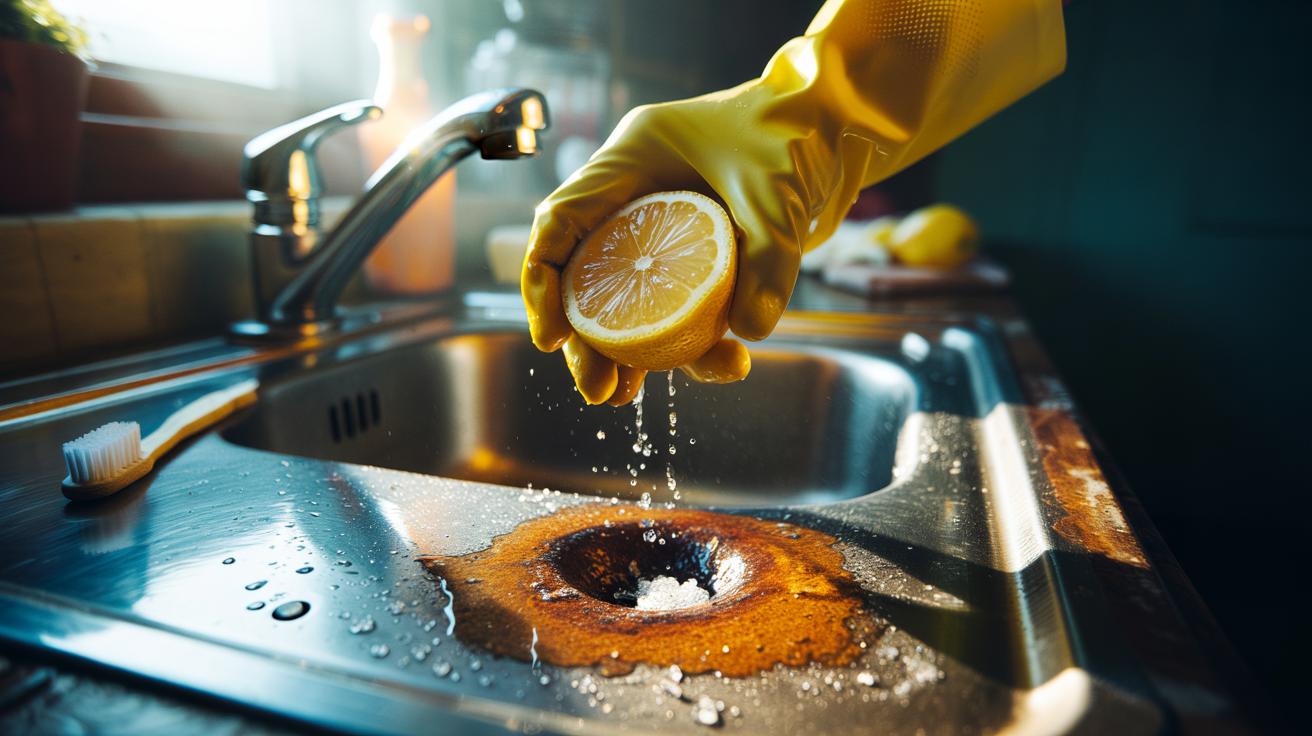
Start with clean, dry access to the stain. For hard surfaces (stainless sinks, tiles, enamel), squeeze enough lemon juice to wet the mark. For delicate finishes, dilute 1:1 with water. Sprinkle a little salt if abrasion is safe. Wait 60 to 120 seconds. Work the surface with a soft pad or an old toothbrush in small circles. Rinse well. Dry immediately. Do not exceed two minutes on sensitive finishes to avoid etching or dulling.
On washable fabrics, blot from the back of the stain with lemon juice using a cotton bud or cloth. Let it sit for up to two minutes, then flush with cold water from the back to push the iron complexes out of the fibres. If needed, repeat once. Neutralise with a teaspoon of bicarbonate of soda in a cup of water, rinse again, then launder as usual.
For hand tools, wipe off loose rust, dab on lemon juice, agitate with a nylon brush, then rinse and dry until bone dry. Add a drop of light oil to prevent flash rust. Wear gloves and eye protection—citric acid can sting. If the stain persists, do short, repeated passes rather than one long soak. Patience beats damage.
| Surface | Dilution | Dwell Time | Agitation | Notes |
|---|---|---|---|---|
| Stainless sink/taps | Neat | 60–120 sec | Soft pad | Rinse and dry to prevent water spots |
| Ceramic tile/grout | Neat | 90–120 sec | Toothbrush | Test coloured grout for dye fastness |
| Cotton/linen fabric | Neat or 1:1 | Up to 120 sec | Blot only | Flush from the back, then launder |
| Natural stone (marble/limestone) | None | 0 sec | — | Do not use—risk of etching |
Where It Shines—and Where It Doesn’t
Lemon excels on non-porous surfaces: stainless steel sinks and draining boards, glazed ceramics, enamelled baths, chrome fittings, plastic shower caddies, and most white cottons or linens. It’s also effective for garden tools and spanners if the rust is superficial rather than structural. Quick action and thorough rinsing are the twin secrets. If you dry and protect the surface afterwards, you often halt recurrence for weeks.
Be cautious with coloured fabrics, especially if the dye is not fast. Try a hidden seam first. On anodised aluminium, bare aluminium, and cast iron cookware, acid can darken the metal or strip seasoning. For bicycles and prams with mixed materials, mask off painted sections to avoid streaks. Avoid unsealed concrete; it can stain unevenly and crumble with acid exposure.
Never use lemon juice on natural stone such as marble, limestone, or travertine. The acid doesn’t just remove rust—it reacts with the stone itself, leaving permanent dull spots. For those surfaces, use a stone-safe rust poultice formulated with non-acid chemistry. Wood with iron-tannin stains (oak benches) is another special case; oxalic acid is usually better, but test carefully. When in doubt, patch test and keep the timing short.
Prevention Tips and Smart Alternatives
Rust needs moisture and time. Break that cycle and stains rarely return. After cleaning, dry the area and apply a light protective film: a dab of mineral oil on tools, a smear of carnauba wax on chrome, a spritz of water-repellent on shower fittings. Keep soap trays and dish racks lifted so water can drain. For laundry, remove wet clothes from machines promptly and avoid leaving metal-rich items (paperclips, pins) in pockets that can bleed onto fabric.
If lemon juice isn’t appropriate, try white vinegar for longer soaks on metals, or a paste of bicarbonate of soda and water to gently scrub non-acid-safe surfaces (it won’t dissolve rust but can lift residues). For deep-set stains in fabric, a commercial rust remover based on oxalic or thioglycolic acid can work quickly—check care labels and ventilate well. For natural stone, use only products labelled stone-safe, or consult a professional restorer.
Lemon remains a first responder: cheap, available, and effective in minutes for light oxidation. Keep a couple of fresh lemons or bottled, unsweetened juice under the sink. Rinse within two minutes, neutralise, and dry—that simple rhythm preserves finishes and delivers bright results. The greener win is that you often avoid harsher chemicals, packaging, and fumes.
Armed with a lemon and a timer, you can erase rust stains before kettle boils. The method is fast, tactile, oddly satisfying. A little science, a little restraint, and your sink, shirt, or spade looks new again. Remember the golden rules: test first, keep contact short, rinse and dry. Two minutes truly can be enough. What surface in your home or garden will you try this on today, and what tweaks do you plan to make for your specific stain?
Did you like it?4.5/5 (22)