In a nutshell
- 🌿 The rice humidity hack uses saturated rice in shallow trays to raise local relative humidity, creating a gentle microclimate that eases leaf water loss via the still-air boundary layer and open stomata.
- 🛠️ Setup: choose white rice, soak with boiling water, spread 1–2 cm deep in a wide tray, keep a visible sheen, and place 10–30 cm from foliage; refresh every 3–5 days for strict hygiene and consistent results.
- 📈 Physics: high surface area and capillary wicking drive steady evaporation, trimming vapour pressure deficit (VPD); warm air and gentle airflow help, while strong drafts dilute the effect.
- ⚠️ Limitations: avoid for succulents and cacti, damp or mould-prone rooms, and unmanaged night-time stillness for orchids; neglect can lead to mould, fermentation, and fungus gnats.
- 🔁 Alternatives: use pebble trays, reusable LECA, a smart-plug ultrasonic humidifier, or enclosed terrariums—yet rice remains a quick, low-cost fix with measurable gains.
British homes are often painfully dry in winter. Radiators roar, windows stay shut, and houseplants sulk. A quietly ingenious fix is making the rounds: the rice humidity hack. By keeping rice saturated with water in shallow dishes near foliage, you create a steady source of evaporation that boosts local relative humidity without fogging up the entire room. It’s cheap, quick, and surprisingly effective for ferns, calatheas, and orchids that crave moisture. A small, stable bubble of higher humidity around foliage reduces water stress without soaking the whole space. Here’s why it works, how to set it up safely, and when to choose alternatives that better suit your plants and your home.
How a Bowl of Rice Changes the Air
The secret isn’t mystical. It’s physics you can see. Rice is full of microscopic cavities. When those pores are saturated, water clings to an enormous internal surface area. That surface evaporates slowly and continuously, nudging the air’s vapour pressure upwards right where your plant breathes. Leaves sit inside a thin boundary layer, a sheath of still air hugging the surface. If that layer holds more moisture thanks to evaporating rice nearby, the plant loses less water through its open stomata. Stress drops. Turgor returns. Growth resumes.
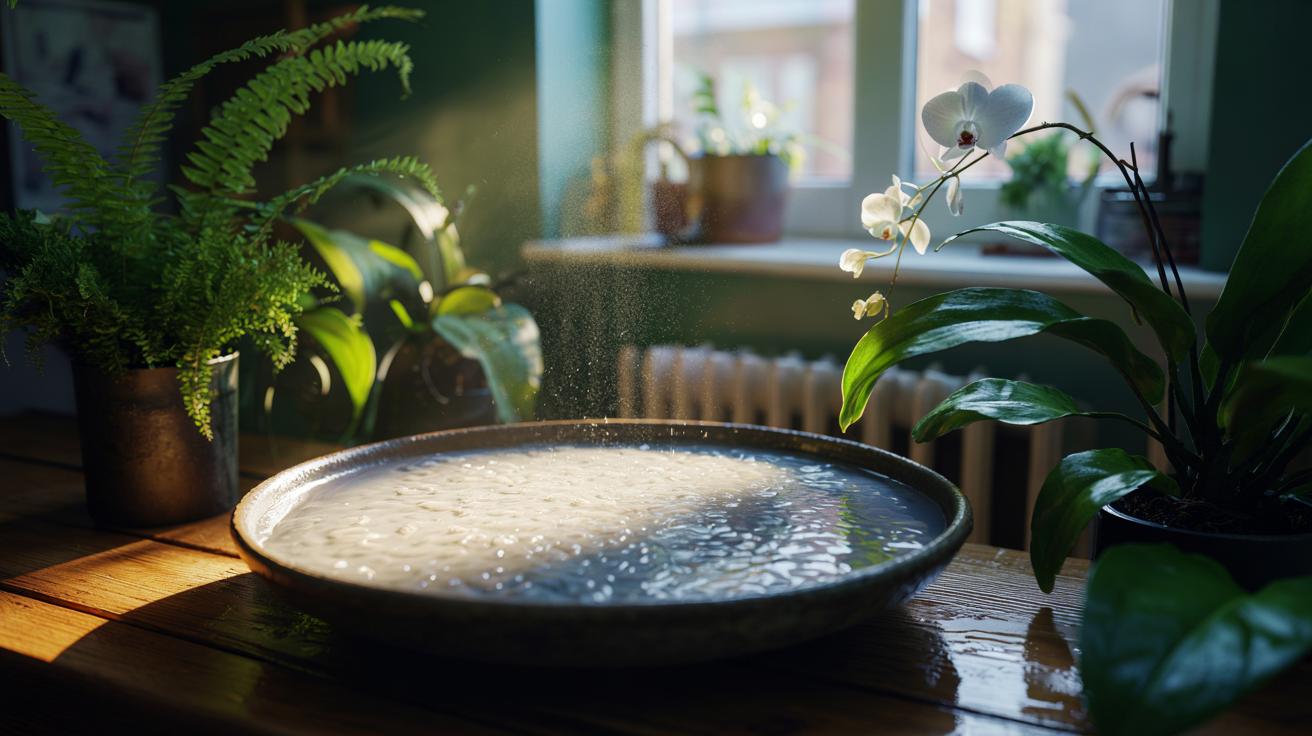
Crucially, dry rice does the opposite; it absorbs moisture and dehumidifies. You need saturation to push water into the air, not pull it out. Place the hydrated grains in a wide, shallow tray to maximise evaporation. The wider the tray, the greater the surface exchange. A small desktop digital hygrometer will show the effect clearly: 5–10 percentage points higher relative humidity within 20–40 cm of the tray, especially in still air. Stirring the rice once a day briefly renews the wet surface, maintaining a gentle “humidity halo” without resorting to power-hungry gadgets.
Setting Up the Rice Humidity Hack Safely
Start with plain white rice; its smooth grains are less likely to harbour spores than brown rice. Pour boiling water over the rice, cover for 10 minutes, then drain off any excess. You want plump, saturated grains that glisten, not a soupy porridge. Spread the rice 1–2 cm deep in a ceramic saucer or terracotta drip tray. Add a few teaspoons of clean water so the top stays visibly moist. Position the tray 10–30 cm from foliage, not under leaves where splashes can linger. Keep the rice wet to the point of sheen; once it dries, it stops helping and can invite dust and pests.
Hygiene matters. Rinse the tray every 3–5 days with hot soapy water, then rinse thoroughly. A pinch of ground cinnamon can help suppress mould, but avoid fragranced oils around sensitive species. If you spot fuzz or smell sourness, discard and refresh immediately. Households with children or pets should use lidded vented containers to prevent snacking. For flats with chronic condensation, run a small fan at low speed to prevent stagnant corners and leaf spots. The aim is a targeted microclimate, not a damp room.
| Plant Type | Target RH | Tray Size | Typical Distance |
|---|---|---|---|
| Ferns, Calathea | 60–70% | Wide saucer (18–22 cm) | 10–20 cm |
| Orchids (Phalaenopsis) | 50–60% | Medium saucer (15–18 cm) | 15–30 cm |
| Succulents | 30–40% | None recommended | Keep away |
Why Saturation Works: Physics in Plain English
Evaporation is the escape of water molecules from a surface. The faster it happens, the wetter the air becomes nearby. Saturated rice offers two advantages. First, it multiplies the effective surface area exposed to air. Every grain is a tiny platform where water can change state. Second, the porous matrix wicks up liquid from below, keeping that surface constantly renewed. The result is a steady, low-level flux of moisture that raises local relative humidity and trims the vapour pressure deficit—the difference between how much water the air can hold and how much it actually contains.
Plants feel VPD keenly. High VPD sucks moisture out of leaves, forcing stomata to close. Photosynthesis stalls. By reducing VPD around the foliage—just a notch—rice trays help plants keep stomata open, balancing gas exchange and water loss. Temperature and airflow shape this outcome: warmer air and gentle movement enhance evaporation, but strong draughts disperse the microclimate too quickly. Think “teacup weather system,” not “steam room.” Keep the rice warmish, the air calm, and the tray broad—those three levers optimise the microclimate without drenching your home.
When Not to Use It and Better Alternatives
Not every plant wants extra humidity. Succulents and cacti prefer it dry; so do many Mediterranean herbs. Rooms with chronic mould issues are a poor fit as well. Rice can ferment or develop mildew if neglected, attracting fungus gnats. If you suffer from allergies or asthma, monitor closely or skip this method. For orchids prone to botrytis, avoid damp still air at night; a whisper of airflow is essential. In very small rooms, multiple trays can overdo it, fogging windows and feeding condensation on cold walls.
There are cleaner options. Pebble trays filled with water keep evaporation high and organic matter low. Expanded clay (LECA) works similarly and is reusable. A quiet ultrasonic humidifier on a smart plug gives precision: 55–60% RH for humidity lovers, timed off overnight to limit condensation. Terrariums or cloches create a contained microclimate with minimal energy. Yet the rice hack shines for its thrift and immediacy, especially amid UK energy costs. It’s the quick cup-of-tea solution: simple materials, gentle effect, measurable results—provided you refresh regularly and keep eyes on hygiene.
Used thoughtfully, the rice humidity hack is a neat, low-cost way to cushion plants from the parched air of heated British homes. It leverages basic physics to create a localised, plant-friendly bubble while avoiding the expense—and noise—of constant humidifier use. The trick is saturation, surface area, and cleanliness, plus an honest look at what each species actually prefers. With a tray, a kettle, and ten minutes, you can change the weather at leaf level. Which plants on your windowsill are crying out for a kinder microclimate—and how will you tailor the setup to suit them?
Did you like it?4.5/5 (24)