In a nutshell
- 🧪 Uses adsorption on rice’s micro‑porous, starchy surfaces to trap VOCs, with cooler night air and a subtle moisture gradient helping odours settle while you sleep.
- 🌾 Best results with white long‑grain or basmati (lower surface oils); avoid brown for strong smells. Pre‑dry grains in a low oven for extra capacity and don’t cook odour rice afterwards.
- 🫙 Method: wash and fully dry the jar, add 2–3 tbsp rice (more for larger jars), leave the lid loose, shake to expose fresh facets, and refresh or repeat overnight. Boost with bicarbonate of soda; be cautious with coffee grounds’ added scent.
- ⚠️ Limits: heavy sulphur, smoke tars, and soaked plastics may resist; high humidity slows uptake. Upgrade to activated charcoal, replace perished seals, and improve ventilation for stubborn cases.
- ♻️ Benefits: cheap, reusable, and compostable solution that avoids perfumes. Maintain a simple routine—scrub, dry, rice overnight, regenerate monthly—and remember it reduces odours, not neutralises toxins.
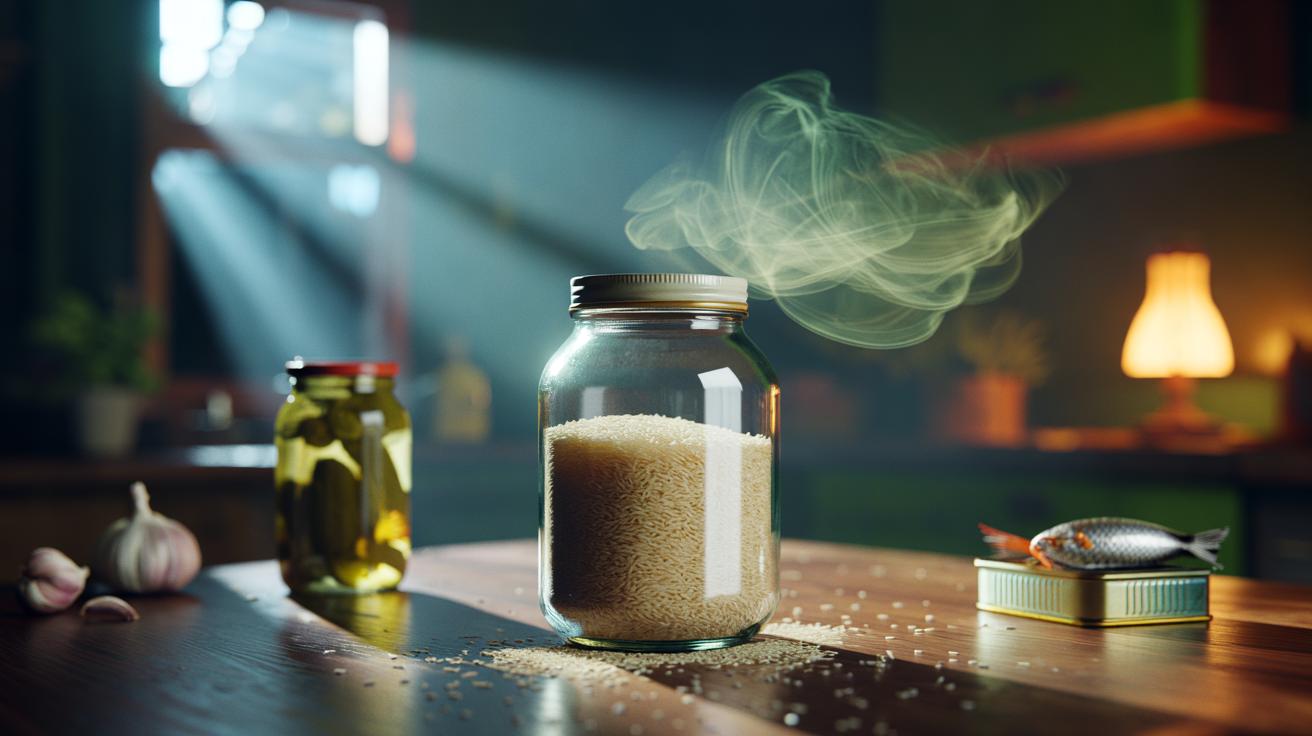
It sounds like a folk remedy, yet it wins on the nose: put a handful of dry rice in a smelly jar at night and wake to a neutral, fresher vessel. The trick isn’t magic, it’s materials science hiding in your cupboard. Rice granules are tiny reservoirs of pores and starch-rich surfaces that interact with airborne molecules. As the house cools, odours slow and settle; the grains quietly go to work. Overnight, the balance tips from pong to peace. For renters battling old pickle jars, cooks decanting spice pastes, or anyone living small, this is a low-cost, low-effort fix that feels surprisingly professional.
Why Dry Rice Works Overnight
Start with the grain. A kernel of white rice is mostly starch—amylose and amylopectin—wrapped in a matrix with natural micro-porosity. Those micro-gaps create a modest but meaningful surface area where volatile organic compounds (VOCs) can sit and weakly bind. The interaction isn’t chemical neutralisation; it’s mainly adsorption (molecules clinging to a surface) and a touch of capillary action in the spaces between grains. At night, indoor temperatures fall a notch and humidity often stabilises. That encourages odour molecules to leave the air phase, dive into crevices, and linger on the grain’s surface. Cooler, calmer air gives rice the advantage.
Moisture matters too. Dry rice has a low water content—typically around 12–14% in the pack—which sets a gradient. Smells borne by water vapour drift into the jar, then towards the drier granules. The starch’s hydrophilic sites host polar compounds; its organic surface accommodates some non-polar ones. Not perfectly, but enough for many kitchen and cupboard culprits: garlic, vinegar ghosts, stale oil notes. Because the process is passive, you don’t need a fan or fancy lid, just patience and a loosely lidded jar to permit air exchange. Left undisturbed, rice quietly sifts the air while you sleep, balancing the equation without perfumes or propellants.
From Pantry Staple to Odour Sponge
Not all rice behaves equally. White long‑grain or basmati tends to outperform brown rice for odour capture because polished grains carry fewer surface oils. Oils can mask active sites and even add their own faint, nutty scent. Short‑grain types such as arborio are plumper and less porous by comparison; they’ll still help, just not as efficiently per gram. If you want a boost, pre‑dry your batch: spread rice on a tray and warm it in a very low oven (80–90°C) for 20 minutes to drive off residual moisture, then cool in a dry container. Drier grains mean more headroom for smells. Keep a dedicated pot of “odour rice,” and don’t cook with it afterwards.
Cost and sustainability count. Rice is cheap, reusable for weeks, and compostable at the end of its life, unlike many perfumed gel beads. It also plays nicely with allies: a pinch of bicarbonate of soda mixed through the grains can widen the net for acidic vapours, while a few coffee grounds add speed (but bring their own aroma). If the smell is especially stubborn—old fish jars, strong cheeses—use more rice, shake the jar to expose fresh surfaces, and give it a second night. The approach scales effortlessly from baby-food jars to big storage canisters.
| Rice Type | Grain Character | Typical Moisture | Odour Uptake (Relative) | Best Use |
|---|---|---|---|---|
| White Long‑Grain | Slender, porous enough | 12–14% | High | General jar deodorising |
| Basmati | Aromatic, dry finish | 12–13% | High | Cooking jars, spice tubs |
| Jasmine | Fragrant, slightly oily | 12–14% | Medium | Short overnight refresh |
| Brown Rice | Bran layer, more oils | 12–14% | Low–Medium | Temporary use only |
| Arborio | Plump, starchy coat | 12–14% | Medium | Larger jars, second night |
How to Use Rice in Smelly Jars
Step one is simple: clean, then dry. Wash the jar with hot soapy water, rinse, and most importantly, air‑dry completely. Residual moisture slows the process. Add 2–3 tablespoons of dry rice to a standard jam jar; double for a litre container. Leave the lid slightly ajar or loosely fitted so air can circulate. Give the jar a gentle shake to settle the grains and expose fresh facets. Park it on the counter overnight. In the morning, tip the rice out onto a saucer, sniff the jar, and repeat if necessary. For very pungent residues, refresh the rice and grant a second night.
Customise your mix when needed. A teaspoon of bicarbonate of soda dispersed through the rice enhances capture of acidic notes; a strip of newspaper under the lid adds extra surface without adding scent. Keep the rice dry between uses by storing it in an airtight tub with a silica sachet, and regenerate tired grains by warming them gently in the oven. Do not cook or eat rice that has been used for odour control. Think of it as a reusable filter, not an ingredient. If the jar will store food again, give it a quick rinse and dry after deodorising to remove any fine rice dust.
When Rice Isn’t Enough: Science and Limits
Rice handles everyday kitchen ghosts, but there are boundaries. Strong sulphur compounds from long‑stored seafood, smoke tars, or mouldy residues can cling fiercely to glass and plastic, sometimes penetrating seals and lids. In high humidity, rice saturates faster; it may even draw in ambient damp rather than odours. If you live by the coast or keep the heating low, expect slower results. When smells are baked in, rice is a first aid, not surgery. Switch to activated charcoal for heavy lifting, or replace perished seals that keep re‑seeding the pong. Ventilation matters, too: let jars air outside before the overnight treatment.
Safety points are straightforward. Rice will not remove toxic gases or render unsafe foods safe; it simply reduces lingering smells. Fragrance layering—sprays, oils—can mask problems without solving them, so deep clean first. If plastic has absorbed curry oils beyond salvation, retire it to non‑food duty. For recurrent odours, examine causes: rancid lids, damp cupboards, or residues in knurled threads. A simple routine works wonders: scrub, dry, rice overnight, repeat weekly until stable. Regenerate your odour rice monthly and compost it when it loses snap. Used wisely, this humble grain delivers reliable, quiet gains for pennies, and it does so without adding another scent to fight.
Rice in jars is a kitchen hack that stands up to scrutiny, playing to physics and practicality rather than placebo. It’s quick to set, cheap to run, and gentle on the planet; yet it’s honest about its limits and easy to upgrade with charcoal or bicarb when the job demands it. The next time a jar smells of yesterday’s pickles, give the grains the night shift and assess in the morning. What other quiet, low‑tech tricks could help you declutter the air in your home without cluttering your cupboards?
Did you like it?4.6/5 (25)