In a nutshell
- ✨ Use aluminium foil for gentle abrasion that lifts rust without gouging; as you rub, fresh aluminium oxide forms, acting as a built-in polishing compound.
- 🔧 Five-minute method: crumple foil, wet with water or diluted vinegar, rub in short strokes, wipe residue, dry thoroughly, then seal with light oil—most tools brighten in 2–5 minutes.
- 🔬 The science: continual formation of aluminium oxide and a mild galvanic nudge on chrome loosen rust while burnishing the surface, reducing micro-pits that invite future corrosion.
- ⚠️ Know the limits: heavy scale and deep pitting need stronger abrasives or chemical chelators; test on painted finishes and preserve antique patina with a light touch.
- 🛡️ Aftercare matters: neutralise, dry warm, oil moving parts, and store dry with silica gel; remove rust quickly, then block oxygen and moisture to prevent recurrence.
There’s an old workshop trick that feels like cheating: rub aluminium foil over rusty tools and they shine again in minutes. No harsh chemicals. No aggressive sanding. Just a household staple, a splash of water, and a little pressure. The method works because foil delivers gentle abrasion while its surface rapidly oxidises, creating a fine polishing compound that lifts rust without gouging the metal beneath. It’s quick, quiet, oddly satisfying. And crucially, it’s safe for most everyday spanners, pliers, pruning shears, and chromed surfaces that you’d rather revive than replace. For light to moderate rust, this is one of the fastest clean-and-protect fixes you can deploy at home.
How Aluminium Foil Removes Rust Fast
At first glance, scrubbing steel with aluminium foil sounds too soft to matter. Yet that softness is the secret. The foil deforms under your fingers, matching the contours of knurling and bevels, so the pressure spreads evenly. That creates a micro-abrasive action that disrupts the iron oxide layer without cutting ridges into good metal like a wire brush might. Add a film of water, and the slip improves, reducing friction while still letting the foil bite. The rust turns to a fine slurry. Wipe. Repeat. Shine returns shockingly fast.
There’s chemistry at play. Aluminium is highly reactive; it oxidises on contact with air and moisture, forming aluminium oxide—a hard, fine abrasive used in professional polishing media. As you rub, fresh oxide continually forms, so the foil essentially makes its own polishing compound in situ. On chromed tools, a faint galvanic nudge can help loosen rust specks without roughing the chrome. The result is targeted rust removal with minimal loss of healthy metal, which preserves edges, tolerances, and the factory finish.
Another bonus: the mix of water, light pressure, and oxide dust helps burnish surfaces. That smoothness hampers future corrosion because there are fewer micro-pits for moisture to cling to. Finish with a thin coat of oil and you have a tidy, efficient rust reset that feels like new-tool day.
Step-By-Step: The Five-Minute Foil Method
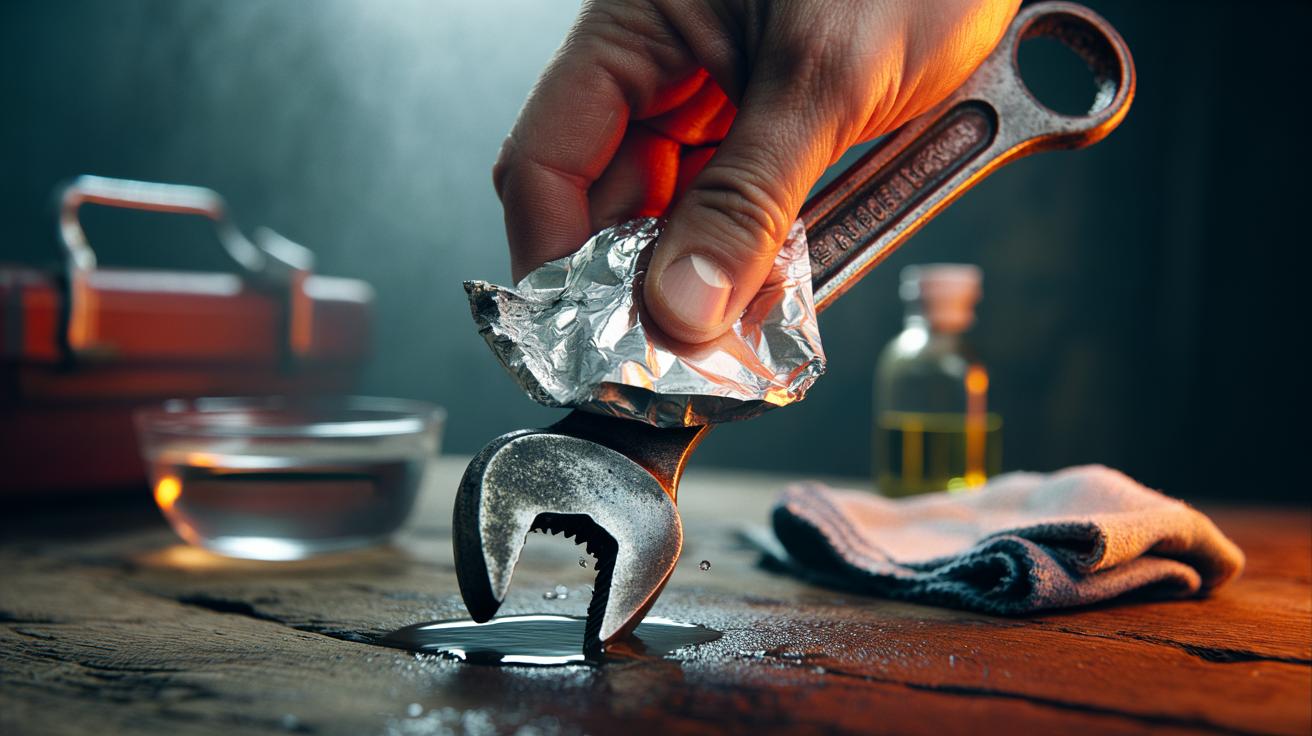
Gather simple kit. A strip of aluminium foil (kitchen grade), a small bowl of water or diluted white vinegar, a clean microfibre cloth, and a few drops of light oil or silicone protectant for the finish. Crumple the foil into a comfortable pad—not too tight. Dip it. Rub the rusty area in short, overlapping strokes, adjusting pressure as the surface brightens. You’ll see a grey-black residue; that’s displaced rust and oxide. Wipe, inspect, repeat. Most light rust clears in two to five minutes per tool.
| Item | Role | Why It Matters |
|---|---|---|
| Aluminium foil | Gentle abrasive, forms polishing oxide | Removes rust without deep scratches |
| Water or weak vinegar | Lubricant and electrolyte | Improves glide; helps oxide formation |
| Microfibre cloth | Residue removal | Keeps checking progress; avoids smearing |
| Light oil | Post-clean protection | Seals metal; slows new rust |
For stubborn patches, switch to vinegar as the wetting agent, let it sit for a minute, then rub again. On chrome or stainless, work with the grain to maintain the finish. On cutting edges, stroke away from the edge to avoid rolling it. When the surface looks uniform and bright, dry thoroughly and apply a whisper-thin oil film. Never leave cleaned steel bare; freshly exposed metal is briefly more reactive and needs protection.
A quick word on technique: keep the foil moving. Don’t drill one spot. Refresh your foil pad if it clogs—new facets bite better. If you hear gritty scraping, add more fluid. The aim is controlled polishing, not grinding.
When It Works Brilliantly—and When It Doesn’t
Foil shines (literally) on light-to-moderate surface rust and peppering on chromed spanners, sockets, bicycle parts, shears, and garden tools. It’s superb for flash rust from storage or sea air, and for tea-staining on stainless steel fixtures. Because the abrasion is modest, it’s kinder to logos, knurling, and satin finishes than steel wool. It also excels as a pre-clean before wax or oil, removing oxide films that would otherwise trap moisture. If the rust is thin, patchy, and recent, expect rapid results with minimal effort.
There are limits. Heavy, flaky scale with deep pitting needs escalation: rust eraser blocks, fine wet-and-dry paper, rotary nylon wheels, or chemical chelators. On painted or coated tools, test discreetly; foil can burnish or thin fragile finishes. For antique patina you wish to keep, proceed lightly or don’t proceed at all—once polished away, original oxidation is gone for good. And while stainless benefits from the method, it still needs post-clean passivation or oil in harsh environments.
Mind safety and longevity. Wear gloves; the black residue is messy. Ventilate if using vinegar. After cleaning, neutralise with water, dry warm, then oil moving parts and threads. Store tools somewhere dry with modest airflow. A silica gel sachet in the box helps. The golden rule: remove rust quickly, then keep oxygen and moisture at bay.
Used thoughtfully, a crumpled sheet of aluminium foil is a pocket-sized rust remedy that blends gentle abrasion with the quick-forming oxidation that polishes while it cleans. The technique is cheap, fast, and surprisingly precise, making it ideal for busy garages and rented flats alike where noisy grinders are a non-starter. Finish with a protective oil and you’ll stretch the life of everyday kit by years. If you’ve got a toolbox riddled with orange freckles, why not try the foil first and see how much shine you can reclaim—then tell me, which tool surprised you most?
Did you like it?4.5/5 (26)