In a nutshell
- 🧪 The science: lemon’s citric acid dissolves alkaline limescale (calcium carbonate) and chelates metal ions, breaking down water marks and soap scum fast.
- 🧽 Method: halve a lemon, rub in circles, allow a 2–5 minute dwell on deposits, then wipe with a damp microfibre cloth, rinse, and dry to prevent new spots.
- ⚠️ Safety: use light abrasion only on robust finishes, avoid natural stone, wear gloves if needed, and never mix acids with bleach; a food-grade citric acid solution works as a precise alternative.
- 🛁 Surfaces: great on chrome and stainless steel; shorter contact on brushed nickel; be cautious with lacquered brass; avoid acids on marble/limestone.
- ♻️ Sustainability: turn leftover lemons into a low-waste cleaner, keep a weekly routine to stop buildup, and consider a water softener or filter to reduce future marks.
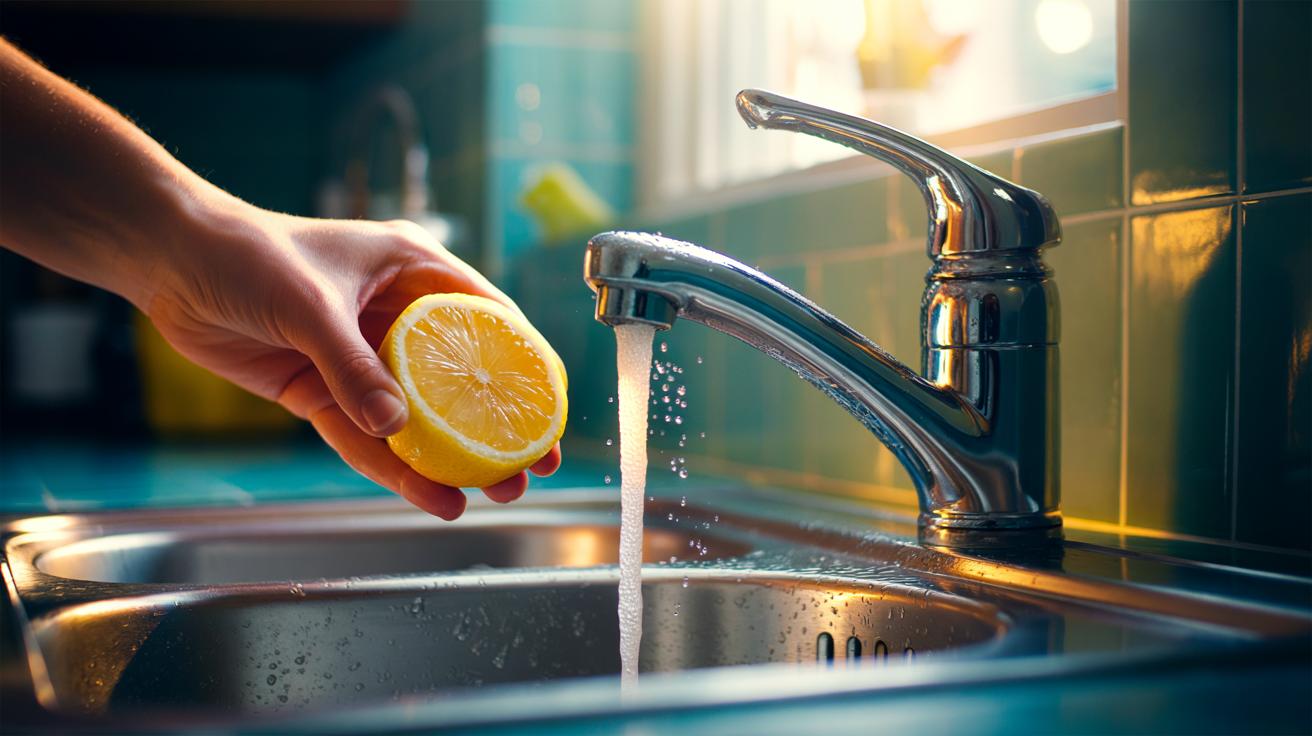
Hard-water splashes on taps are a peculiarly British annoyance. They bloom into chalky halos, dulling even high-end fixtures. You can reach for a harsh descaler. You don’t need to. A halved lemon, pressed and rubbed across the metal, will often erase the marks in minutes, leaving a clean, bright sheen and a kitchen that smells like summer. This isn’t folk magic. It’s chemistry you can see working. When you pair a natural acid with alkaline deposits, the scale yields quickly and safely. There’s thrift here, too: a leftover wedge from last night’s drink becomes today’s eco-friendly cleaner, zero waste and zero fuss.
Why Lemon Works on Water Marks
Water marks and limescale are largely calcium carbonate, an alkaline crust left by hard water. A lemon is loaded with citric acid, typically 5–8% by weight, which lowers pH on contact and kick-starts a simple acid-carbonate reaction that softens and dissolves the crust. At the same time, citric acid behaves as a mild chelator, binding metal ions and lifting them away from the surface. That dual action makes short work of halos and chalky rims without the fumes of industrial cleaners. Acid dissolves alkaline scale; that’s the elegant, visible logic of the lemon rub. The result is more than shine. It’s a surface returned to its true finish, unmasked by residue.
The same slice tackles soap scum, which is a cocktail of minerals and fatty acids. Those stubborn, greasy-feeling streaks? The lemon’s acid and moisture soften them, while a light rub provides just enough abrasion to dislodge the film. You’ll often see tiny fizzing where the scale is thickest; that’s carbon dioxide escaping as the carbonate breaks down. Work slowly, give the acid a little time, then wipe. What remains is a tap that looks newly installed, not merely polished. And because citric acid is biodegradable, your conscience stays as clean as your chrome.
| Residue | What Lemon Does | Typical Contact Time |
|---|---|---|
| Limescale (calcium carbonate) | Dissolves via acid reaction; chelates metal ions | 2–5 minutes before wiping |
| Soap scum | Acid softens fatty salts; light abrasion lifts film | 1–3 minutes, gentle rub |
| Water spots | Breaks mineral ring, restores uniform sheen | Instant to 2 minutes |
Step-by-Step: The Quick Lemon Rub Method
Slice a fresh lemon in half. Warm it in your hand for a moment; warm juice spreads better. Wipe the tap with a dry cloth to remove loose grit. Then press the cut face to the metal and rub in tight circles, paying attention to bases, handles, and the aerator rim where limescale accumulates. Don’t rush. Let the juice sit for two to five minutes on heavy deposits; that dwell time is where the chemistry earns its keep. If the slice looks dry, score it with a knife and squeeze gently to refresh the flow.
For stubborn rings, park the lemon half on the spot like a cap, or soak a square of kitchen paper in fresh juice and drape it over the area to keep it wet. A crystal or two of fine salt can add a whisper of abrasion on robust finishes such as chrome, though skip abrasives on delicate coatings. When the scale slackens, wipe with a soft, damp microfibre cloth, then rinse thoroughly. Dry immediately with a second cloth to prevent a new tide mark. Rinse and dry: that’s the difference between “clean” and “keeps shining”.
Safety matters. Wear gloves if you have cuts. Avoid prolonged contact with natural stone splashbacks. And never, ever mix acids with bleach. Never mix acids and bleach—chlorine gas is dangerous even in small bathrooms. If you’re out of lemons, a teaspoon of food-grade citric acid dissolved in warm water delivers the same science with predictable strength and no seeds.
Beyond the Shine: Surfaces, Safety, and Sustainability
Not all finishes are equal. The lemon rub is dependable on chrome and stainless steel if you rinse and dry. Brushed or matte nickel prefers a lighter touch and shorter contact; acids can haze if left to lounge. Lacquered brass or gold-toned taps need caution—work quickly, rinse promptly, and never scrub with grit. Avoid natural stone surrounds such as marble or limestone; acids etch them. Test on an inconspicuous spot first, then proceed with confidence. Environmentally, the case is compelling. A used lemon half diverted from the bin becomes a cleaner with near-zero packaging and no petrochemical perfume, while cutting your spend on speciality products.
There’s economy in consistency. A weekly quick rub keeps marks from setting hard, which means shorter dwell times and no need for harsh agents. Prefer a neutral scent? Rinse, then finish with a drop of mild washing-up liquid on a damp cloth to neutralise any lingering acidity before the final dry. For households in hard-water regions, decanting tap water with a point-of-use filter or installing a water softener reduces future deposits dramatically. If maintenance slips and scale thickens, circle back to a stronger, but still gentle, approach: a solution of warm water and citric acid powder applied with a cloth, left for five minutes, then wiped and dried. It’s simple, repeatable, and kind to both metal and lungs.
| Surface/Finish | Risk Level | Tip for Use |
|---|---|---|
| Chrome, stainless steel | Low | Rub, 2–5 min dwell, rinse and dry well |
| Brushed nickel | Medium | Short contact, no abrasives, quick rinse |
| Lacquered brass/gold | Medium–High | Spot test, light pressure, immediate dry |
| Marble/limestone surrounds | High | Avoid acid; use pH-neutral cleaner |
Lemon on a tap sounds quaint until you see the shine. The method is quick, quiet, and grounded in sound science. It rescues fixtures dulled by hard water while sparing you the bite of harsh descalers, and it makes practical use of a common kitchen leftover. Small, regular rituals keep scale from taking hold and preserve the finish you paid for. If you try it this week, measure the result in seconds saved on future cleaning as much as the mirror-like gleam today. Where else in your home could a simple slice of citrus replace a bottle of chemicals?
Did you like it?4.7/5 (27)