In a nutshell
- 🔬 Salt’s dual action: gentle abrasion from sharp crystals dislodges pigments in knife grooves, while osmotic action draws stains and odours (beetroot, turmeric, garlic) to the surface.
- 🧂 Choose wisely: use coarse sea/kosher salt for effective scouring; pairings matter—salt + lemon for wood, salt + warm water/soap for grease, and 3% hydrogen peroxide for whitening plastic.
- 🛠️ Zero-effort method: sprinkle coarse salt, let sit 5–10 minutes, scrub lightly (lemon on wood, damp paste on plastic), rinse, dry upright, and finish wood with food-grade mineral oil.
- 🧼 Hygiene first: Clean then sanitise—vinegar or diluted washing-up liquid for wood, brief peroxide on plastic; Never soak wood, and keep boards for raw proteins separate from produce.
- 🌿 Everyday benefits: brighter boards with minimal effort, no harsh bleaches, and lower costs; regular light salt scrubs prevent deep stains and keep surfaces kitchen-ready.
Some kitchen fixes feel like folklore until you try them. Rubbing salt on a stained cutting board is the rare exception that delivers. The method is tactile, quick, and surprisingly satisfying, turning dull, blotchy wood or plastic bright again without heavy chemicals. The secret isn’t magic but mechanics and chemistry: sharp, angular crystals scour while salt draws out pigment and odour. It’s a minimal-effort routine with maximum payoff. Whether you’re battling beetroot rings, turmeric haze, or garlic ghosts, a pinch of pantry staple and a little patience can reset your board’s surface, restore its grain, and revive kitchen confidence.
Why Salt Works on Stains
Salt crystals are tiny tools. Coarse grains act as micro-scrapers, delivering controlled abrasion that dislodges pigments trapped in knife ruts and open pores. Unlike steel wool or harsh scouring pads, salt’s hardness is gentle enough for food surfaces yet gritty enough to lift tannin stains from berries and tea, and the orange cast from chilli and turmeric. There’s chemistry too: salt creates osmotic action, pulling moisture—and with it, colour compounds and odour molecules—towards the surface. This is why a salted, damp board seems to “sweat” stains.
On wooden boards, especially end-grain, capillaries wick liquids down when you chop juicy produce. Salt’s granules park at the mouth of these micro-tubes, scouring as you rub and then drawing out what’s lodged deeper once moisture arrives. On plastic, where knife scores become miniature trenches, salt flows in and abrades the ridge edges, softening hard lines that hold grime. It also boosts any natural acidity you add—think lemon—by roughening the surface so acids touch more stain. Result: less scrubbing, more lifting, faster reset.
Choosing the Right Salt and Board
Reach for coarse sea salt or kosher salt. The chunkier profile increases cutting action without gouging. Fine table salt can help with odours but tends to cake; it’s better as a finisher after the heavy lifting. For boards, species and surface matter: end-grain wood benefits most from coarse salt because the open structure responds well to granular pressure, while plastic (typically polyethylene) tolerates abrasion but may need longer dwell time to bleach out colour. If your board is oiled, salt still works; it just needs a touch more moisture to mobilise.
Pairing matters. Salt plus lemon excels at fresh organic stains and smells; salt plus a splash of warm water and a drop of washing-up liquid targets greasy residues; salt plus hydrogen peroxide 3% (for plastic only, used sparingly) can brighten cloudy whites. The key is to let the granules sit long enough to draw, but not so long that grains dissolve fully before scrubbing. Think texture first, then chemistry.
| Salt Type | Best For | Board Type | Typical Dwell Time |
|---|---|---|---|
| Coarse sea/kosher | Surface abrasion, tannin pigments | Wood & plastic | 5–10 minutes |
| Fine table | Odour control, finishing polish | Wood | 2–5 minutes |
| Salt + lemon | Fresh organic stains, garlic/onion | Wood | 10 minutes |
| Salt + 3% H2O2 | Whitening, dye-heavy stains | Plastic only | 5 minutes |
Step-by-Step: The Zero-Effort Method
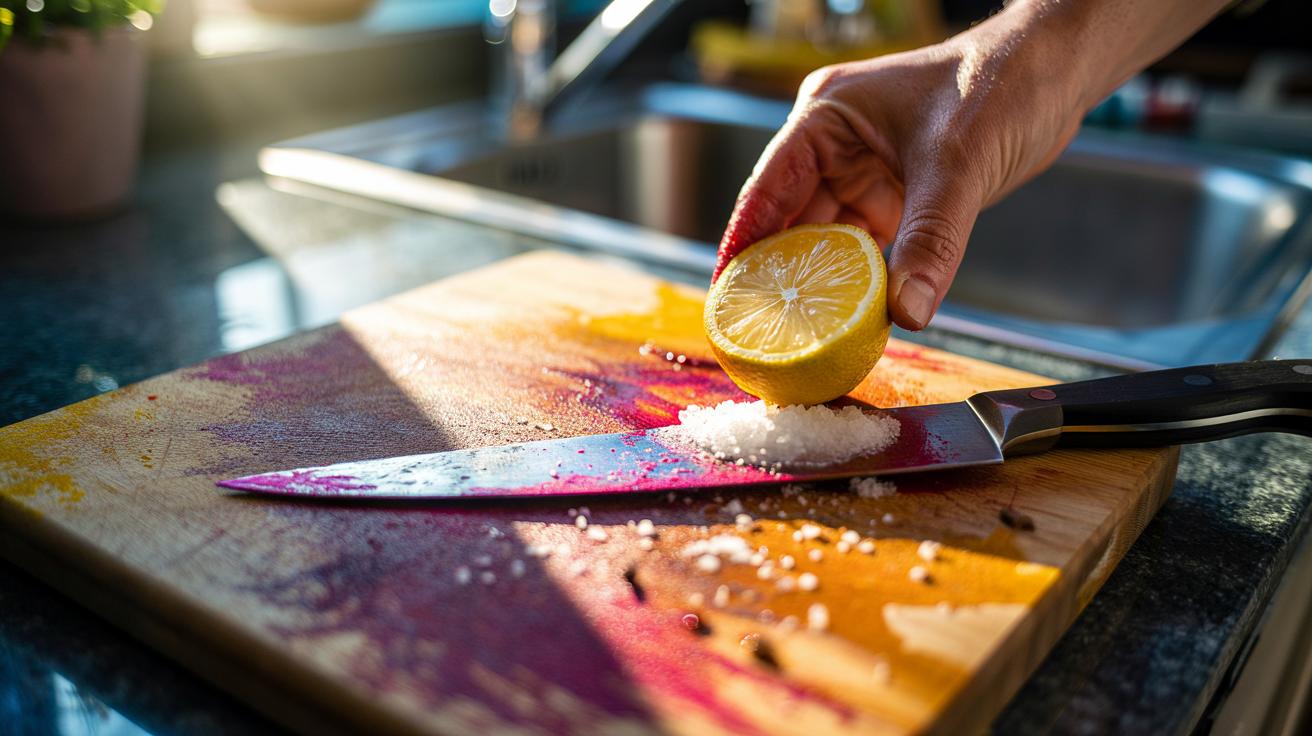
Start dry. Sprinkle a generous layer of coarse salt over the stained area—enough to carpet the surface but not so much it slides off. For wood, halve a lemon and use it as a natural scrubber, cut side down. For plastic, dampen with a few drops of warm water to form a loose paste. Let it sit; the pause is where salt gets to work. Five to ten minutes is ample for most marks, longer for turmeric or beetroot.
Scrub lightly in small circles. You’re guiding the granules, not grinding the board. If the salt liquefies quickly, add a pinch more for grit. Wipe away the coloured slurry with a cloth, then rinse under warm running water. Stubborn streaks? Repeat once; they usually fade fast on the second pass. To finish wood, wash, pat dry, and stand upright to air. When fully dry, condition with a thin film of food-grade mineral oil to seal refreshed grain. This simple ritual keeps boards stain-resistant and silky under the knife.
Safety, Hygiene, and Maintenance
Salt cleans, but hygiene requires a one-two punch: clean then sanitise. After the salt treatment and rinse, spray wood with white vinegar and wipe, or use diluted washing-up liquid if you’ve handled raw meat. For plastic boards, a brief pass with 3% hydrogen peroxide can sanitise and brighten; rinse thoroughly. Never soak wooden boards. Waterlogging warps and cracks, inviting bacteria into splits you can’t scrub.
Set a rhythm. Light salt scrubs weekly for busy boards; a deeper session monthly with lemon for odours. Rotate sides to even wear, and chase out moisture immediately—tea towel first, then air-dry upright. If knife scores get deep, sand with fine paper, wipe clean, then oil; salt will be even more effective on the renewed surface. Keep separate boards—wood for bread and produce, plastic for raw proteins—to simplify cleaning and reduce cross-contamination. Consistency matters more than intensity; small, regular care keeps stains from ever becoming a saga.
There’s pleasure in a quick fix that respects materials, saves money, and looks after your hands. Salt delivers all three. The granules do the heavy lifting while you barely break stride, and your board emerges brighter, less smelly, ready for service. It’s sustainable, too: no harsh bleaches, no mystery sprays, just a cupboard staple used wisely. Once you try it, you’ll wonder why you waited. What stain is haunting your board right now—and which salt pairing will you test first to send it packing?
Did you like it?4.3/5 (26)