In a nutshell
- 🌸 Uses tension and friction to corral stems, reduce torque, and keep bouquets upright—minimising droop and toppling.
- 🧰 Step-by-step: trim stems, add a loose stem band above the waterline, a base band for anti-slip, and an optional figure-of-eight band across the rim to cradle stems.
- 🏺 Right kit matters: fresh, supple bands; match band placement to vase shape (cylinder, bowl, hourglass, bud); choose band width to suit stem thickness.
- 💧 Care for longevity: clean, mildly acidic water; daily re-trims; keep bands out of water; avoid heat and ethylene; prioritise gentle tension over squeeze.
- ✅ Benefits at a glance: fast, reversible, discreet; supports tulips, roses, peonies and mixes; adds stability by lowering effective centre of gravity.
Sometimes the smallest fix has the biggest payoff. Loop a humble rubber band around your vase and the bouquet that kept slumping this morning can stand upright until bedtime. The principle is plain physics: tension, friction, and a lower centre of gravity. The result, pleasingly, is floral poise without florist’s tape, chicken wire or expensive grids. It’s quick, reversible, and invisible at arm’s length. Even better, this trick works with peonies, roses, tulips, those exuberant supermarket mixes—stems that otherwise splay, lean, and topple. Below, the how and why, the smart tweaks, and a few professional caveats that keep your arrangement fresh as well as firm.
Why Tension Works: The Science Behind Upright Stems
Cut flowers wilt for two reasons: physiology and mechanics. Physiologically, stems lose water, turgor pressure drops, heads tilt. Mechanically, tall blooms act like levers, their weight pulling stems outward until the whole bouquet sprawls. A rubber band introduces controlled tension that corrals stems into a narrower column, shortening the lever arm and reducing torque. Around the vase itself, the band boosts friction against shelves and countertops, cutting the risk of sliding and sudden topples. Less splay, less slip, less drama. The water column still hydrates the stems; the band simply gives them a supportive embrace.
There’s also fluid dynamics at play. A compact bundle minimises air gaps, helping reduce cavitation in the xylem if you’ve cut stems cleanly at an angle. By keeping heads upright, the band lessens strain on soft necks (tulips, ranunculus) and prevents micro-kinks that impede uptake. Crucially, the aim is guidance, not strangulation. Do not cinch so tightly that the stems flatten or the vase neck pinches them against the rim. Think of it as a gentle corset: supportive, discreet, and easy to adjust as blooms open.
A Step-by-Step Method: Banding the Vase and Bouquet
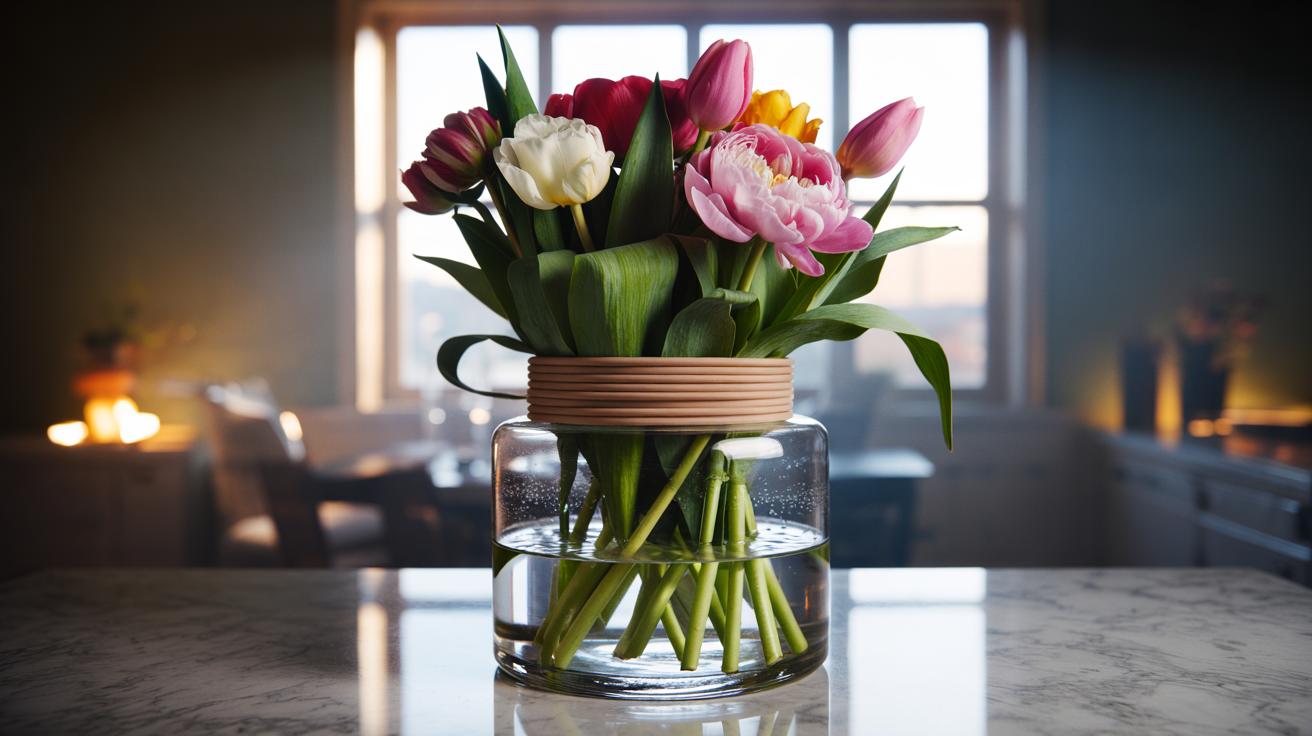
First, prep the flowers. Trim 1–2 cm from each stem at a 45-degree angle under water, strip submerged leaves, and mix fresh solution (tap water plus flower food). Now the banding. Slip a medium rubber band loosely around the stems about a thumb’s width above the waterline. This primary band keeps the bouquet cohesive without compressing the vascular tissue. Lower the stems into the vase, then adjust spacing with your fingers—airy, but contained. If a head looks crowded, ease the band a fraction; you’re shaping, not throttling.
Next, stabilise the vessel. Stretch a second band around the vase exterior near the base to add grip, especially on glass-and-stone pairings that love to skate. For extra control at the top, place a band around the rim and twist it into a figure-of-eight so two soft “rails” cross the mouth; guide a few stems between the rails to create a subtle cradle. This makes a tidy alternative to tape grids. Finally, rotate the arrangement to balance heights, and top up water to just beneath the inner band to avoid decay.
Choosing the Right Band, Vase, and Water Mix
Not all bands—or vases—behave the same. Go for fresh, supple bands that stretch without cracking. Glass vases showcase the technique because the band disappears against stems, but ceramics benefit too thanks to the anti-slip ring at the base. Keep the water clean and mildly acidic; commercial sachets balance pH and add nutrients, but a DIY option (half a teaspoon of sugar plus a few drops of bleach per litre) can tide you over. Clean water plus gentle tension is the winning duo.
| Vase Shape | Band Placement | Effect | Notes |
|---|---|---|---|
| Cylinder | One band on stems; one at base | Upright column, anti-slip | Ideal for roses, lilies |
| Wide-mouthed bowl | Figure-of-eight on rim | Discreet cradle prevents splay | Great for peonies, hydrangeas |
| Hourglass | Loose band above pinch point | Neck support, even spacing | Avoid tight constriction |
| Bud vase | Base band only | Stability without crowding | For delicate stems |
Select band width according to stem thickness: narrow for delicate tulips, broader for woody roses. Replace bands that feel tacky or brittle—they shed residue and lose tension. And remember the water: change daily, rinse the vase, and snip 5 mm off stems to keep uptake lively. Combine these small choices and you’ll see fewer droops, fewer topple scares, and happier blooms.
Safety, Care, and Longevity Tips
Gentle tension is safe; excessive squeeze is not. Check that the inner band sits above the waterline to avoid perishing and bacterial bloom. If stems are very soft (tulips, anemones), move the band slightly higher to support the neck without kinking. With woody stems (lilac, eucalyptus), score or re-split ends for better hydration before banding. If you hear a creak while stretching the band, it’s too tight for delicate stems. Keep arrangements away from radiators, fruit bowls (ethylene gas accelerates ageing), and direct sun that cooks petals and spikes evaporation.
Timing matters. Band early in the day when blooms are cooler and turgid. Refresh water when it clouds; that’s bacterial load threatening your xylem. If you notice sagging by afternoon, re-trim, rotate the bouquet, and slightly tighten the stem band—small tweaks restore the column. For dinner parties, add a discreet base band to every vase on polished tables or marble counters; the extra friction prevents heart-stopping slides. And if you want a fuller look, layer two light bands rather than one heavy one for the same hold with less pressure. The watchword is support, not strain.
A rubber band won’t replace fresh cuts, clean water, and cool rooms, but it amplifies all three by adding shape and stability that lasts the day. It’s thrifty. It’s fast. It’s oddly elegant in its invisibility. With a couple of loops you reduce droop, tame wayward stems, and keep the vase upright when the table is jostled. Ready to try it on tomorrow’s bouquet—perhaps peonies in a bowl or roses in a cylinder—and see how far simple tension can carry your flowers? What other small, almost hidden household tricks do you use to make arrangements behave beautifully?
Did you like it?4.5/5 (26)