In a nutshell
- 🧪 A simple rubber band adds preloaded tension, boosts friction, and limits micro‑movement, dramatically reducing clinks, chips, and breakages during the wash cycle.
- 🔧 Practical setup: choose a medium band, loop around the stem or bowl and anchor to rack wires, keep a finger’s gap between glasses, avoid over‑tightening, and opt for silicone in hotter programmes.
- 🌊 Inside the dishwasher, pulsed jets and vibrations create impulses; the band acts as a damper, absorbing shocks and preventing resonance that stresses rims and stems.
- 💷 Costs and alternatives: rubber bands are cheapest (≈£0.05–£0.20), silicone straps handle heat better (£5–£10), and clip‑on holders deliver the best stability (£10–£25).
- ✅ Care tips: remove bands after cycles, rotate to limit ageing, and control movement without compressing—hand‑wash irreplaceable crystal or secure it on the top rack.
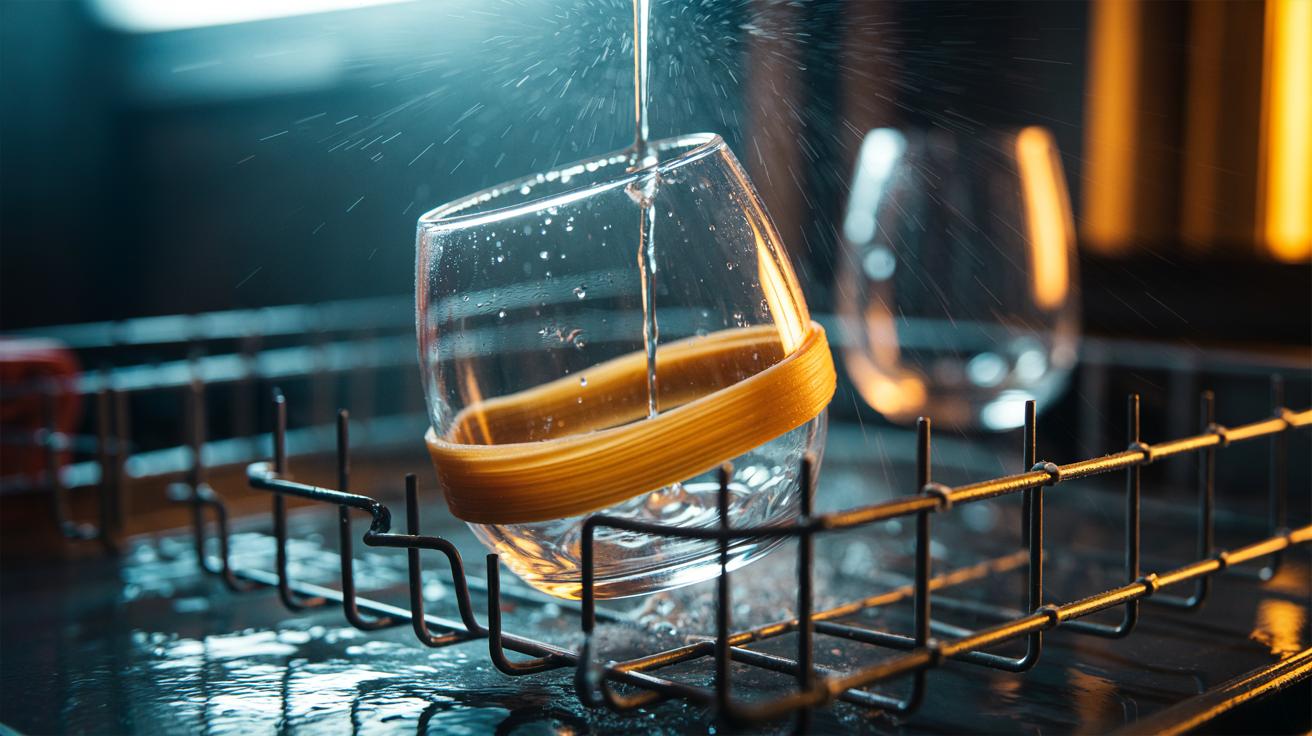
A humble rubber band can rescue your best glassware from the perils of the dishwasher. Loop it around the stem or body, anchor it to the dish rack, and suddenly wobble turns to stability. The trick isn’t magic; it’s tension. Elastic force presses the glass against a support point so it doesn’t rattle, tip, or tap its neighbour. Small change, big effect. It costs pennies, takes seconds, and can slash breakages, especially during vigorous spray bursts. Preventing motion is cheaper than replacing crystal. Here’s the science behind the hack, the right way to set it up, and when to upgrade to purpose-made holders.
How Simple Tension Prevents Breakages
Dishwashers don’t smash glasses through brute force alone. They do it through micro‑movement. Water jets nudge a glass; the rack vibrates; tiny taps accumulate until a rim chips. Introduce a modest preload tension with a rubber band and the picture changes. The band converts slack into grip, raising friction at the contact points and damping vibrations. The glass no longer resonates at the frequency of spray pulses, so the gentle shoves don’t snowball into dangerous oscillations.
Think of it as a seatbelt for stemware. The band creates lateral restraint and a small compressive force, which together reduce degrees of freedom. Less freedom, less banging. Elastomer stretch stores energy and releases it smoothly, not in sharp jolts. The result is fewer impacts between neighbouring items and fewer stress concentrations at rims and stems. In engineering terms, you’re increasing damping and lowering effective amplitude—an elegant fix that costs almost nothing and works in most household machines.
Setting Up the Rubber Band Method
Pick the right band first. Medium thickness, decent elasticity, not perished. Too thin and it snaps, too thick and it crushes. For wine glasses, loop the band around the lower bowl or the stem’s thickest point, then hook the other end to a rack wire. For tumblers, wrap the band once around the body and anchor to two wires to create a shallow V. Avoid any configuration that bends the stem or deforms the rim. Stability, not strangulation.
Spacing matters. Leave a finger’s width between glasses so they can’t kiss under spray. Position bowls and rims away from spray nozzles and utensil handles. Test the setup by nudging the glass; it should rebound gently without clinking. If the rack has stemware tines, use them as primary supports and the band as a secondary restraint. After the cycle, remove bands promptly. Heat and detergent can age latex. Choose silicone bands for higher temperature tolerance, or rotate bands to avoid brittleness. One minute of preparation beats hours replacing chipped glass.
Dishwasher Dynamics: Heat, Water, and Motion
Inside the machine, rotating spray arms deliver pulsed jets that strike dishes at changing angles. Each impact adds a tiny impulse. The rack vibrates; water slosh adds random excitation; heated air expands, then contracts during drying. It’s a noisy microclimate. Unsecured glassware translates those inputs into lateral wobble and vertical chatter. Hit the rack at just the right rhythm and a glass can amplify into a clink, then a crack.
Tension tamps down this chaos. By biasing a glass towards a fixed wire, the band increases normal force and thus friction, converting potentially destructive motion into harmless heat within the band’s polymer chains. The elastic acts as a damper, stretching under sudden loads and returning slowly, which blunts the spikes that would otherwise travel straight to fragile rims. Reduce motion, reduce collisions, reduce breakage. That’s the chain. This also keeps delicate edges away from hard cutlery and ceramic plates that act like hammers when the pump surges mid‑cycle.
Costs, Risks, and Alternatives
The rubber band trick is cheap and flexible, but it isn’t perfect. Natural rubber degrades with heat and detergent; it can leave marks on some finishes; and over‑tightening risks stress on stems. If you run intense high‑temperature programmes, switch to silicone straps. For frequent entertainers, clip‑on stemware holders create a dedicated channel that isolates each glass, while padded silicone ties add gentle grip without pressure points. Weigh your routine, your glass thickness, and your machine’s layout before choosing.
| Method | Pros | Cons | Best For | Approx. Cost (UK) |
|---|---|---|---|---|
| Rubber band | Ultra‑cheap, versatile, quick | Ages in heat, can pinch | Occasional cycles, mixed racks | £0.05–£0.20 each |
| Silicone strap | Heat‑resistant, gentle grip | Higher upfront cost | Regular use, hot programmes | £5–£10 per set |
| Clip‑on holders | Best stability, dedicated slots | Takes rack space, setup time | Stemware batches, crystal | £10–£25 |
Choose the lightest intervention that controls movement without compressing the glass. That’s the rule. If in doubt, hand‑wash irreplaceable crystal or place it on the top rack with a strap. Balance convenience against risk, cycle after cycle, and your favourite glasses will last far longer than you expect.
In the end, this is a story about small forces and smart prevention. A simple band adds just enough tension to turn a rattling rack into a quiet ride, protecting rims and stems from the cumulative taps that spell disaster. It’s frugal, fast, and surprisingly technical once you peel back the physics. Stability beats strength when the environment is chaotic. Will you stick with the trusty rubber band, step up to silicone, or invest in clip‑on holders to build a permanently safer home for your glassware?
Did you like it?4.5/5 (21)