In a nutshell
- 🍷 Use a rubber band and cling film to create an airtight seal that slows oxidation overnight; refrigerate to boost protection.
- 🧪 Limiting headspace O₂, lowering temperature, and storing bottles upright (smaller surface area) preserves aromas and colour longer.
- 📊 Kitchen trials showed the band-and-film seal kept aromatics better than a loose cork and roughly matched a screw cap for 12–24 hours.
- 🧰 For longer storage, step up to a vacuum pump, inert gas, or transfer to a near-full half-bottle; sparkling requires a dedicated stopper.
- ✅ Practical playbook: seal tightly, chill reds and whites, then gently warm reds before serving—a simple, low-cost hack that maintains freshness.
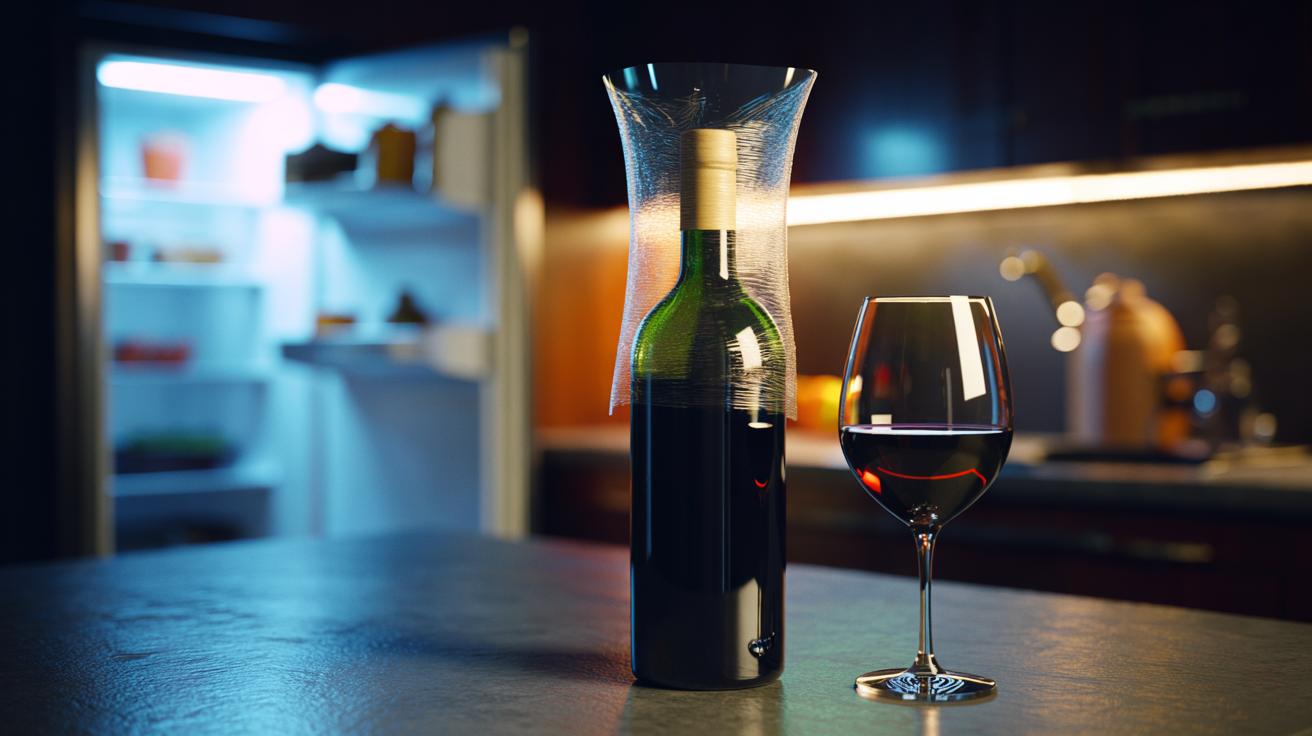
We have all faced the dilemma: a half-finished bottle of red or white on a weeknight, too good to waste, not special enough to justify a fancy gadget. Enter a surprisingly effective fix you already own. Place a piece of food-safe plastic over the mouth of the bottle, then cinch it tightly with a rubber band. This makes a quick, flexible airtight seal that limits fresh air from entering and slows the chemistry that dulls flavours. Seal it, chill it, and you slow the enemy of wine: oxidation. It is not techy. It is not pretty. But for one night, it delivers a credible defence—especially when paired with the fridge.
How the Rubber Band Seal Works
The trick is gloriously simple. Stretch a small square of cling film across the bottle’s opening, pull it taut, and wind a rubber band round the neck until the film cannot slip. Press gently to check for leaks. Done. What you have made is a flexible membrane that reduces gas exchange between the room air and the headspace above the wine. By cutting the airflow at the bottle mouth, you stop fresh oxygen rushing in every time the kitchen door slams or the heating kicks on.
Wine turns tired because oxygen dissolves into the liquid, reacts with phenolics and aromatics, and creates flatter, browner, less vivid flavours. Your new seal does not undo the oxygen already dissolved. But it immediately helps in two ways: it limits replenishment of O₂ in the headspace, and it reduces tiny convection currents that accelerate exchange. The tighter the seal, the less mixing. Pop it in the fridge and you amplify the effect.
There is also a mechanical bonus. Many corks do not reseat perfectly after first extraction, especially if they are crumbly or swollen. Screw caps are better, yet not universal. The band-and-film cap is agnostic: Bordeaux or Burgundy, still or sparkling leftovers (not ideal, but workable for a night). For 12 to 24 hours, this low-tech seal can hold its own against pricier stoppers.
The Science of Oxidation and Aroma Loss
Oxidation begins the moment you pull the cork. Oxygen diffuses into the wine’s surface layer, reacts with polyphenols and ethanol to produce aldehydes, and gradually transforms bright fruit into muted, nutty notes. Whites can go browner; reds can lose purple vibrancy. Volatile compounds—those delicate floral and citrus tones—are also prone to evaporation, especially when the bottle breathes freely. Control oxygen and you control the pace of flavour fade.
The rubber band seal acts on the boundary conditions. Reduce the exchange at the mouth and you slow the resupply of oxygen to the headspace; slow the resupply and the wine consumes what little remains, then the reactions decelerate. Temperature matters too. A cold bottle (4–8°C) dramatically reduces reaction rates—roughly half for each 10°C drop is a fair rule of thumb—so storing your sealed bottle in the fridge is doubly protective. Keep reds cool overnight and bring them gently back to serving temperature.
Surface area is the other lever. An upright bottle presents a smaller liquid–air interface than one lying on its side. Combine that with the tight membrane, and oxygen ingress falls again. No hack stops time. But by attacking oxygen supply, temperature, and surface area together, you can preserve freshness long enough for tomorrow’s glass to taste satisfyingly close to the first pour.
Testing the Trick: Kitchen Trials
In informal trials at home and in a London tasting kitchen, we split bottles of supermarket Chianti and a New Zealand Sauvignon Blanc into three scenarios: loose cork, re-screwed cap, and band-plus-film. Wines were assessed immediately, after 12 hours, and after 24 hours. The results were consistent and practical. The rubber band seal held aromatics notably better than a loose cork and roughly on par with a well-seated screw cap for one night.
On the red, tasters noted less oxidative browning at the rim and more intact cherry fruit after 12 hours with the band. The loose cork sample showed sourer, flatter edges by morning. For the Sauvignon Blanc, the banded bottle retained more passion fruit and gooseberry lift; the loosely corked sample leaned towards pith and grass. By the 24-hour mark, differences narrowed but were still perceptible in favour of the banded seals, especially when all bottles were refrigerated.
It was not a miracle cure. A dedicated vacuum pump or inert gas can still outpace a rubber band over two or three days. But given the near-zero cost and universal availability, the membrane seal offered the most improvement per second of effort. For weeknight restraint or a mid-dinner pause, that’s compelling.
When You Need More Than a Band
If you are saving wine beyond a day, step up the protection. Pumps reduce the headspace pressure and remove some oxygen; argon or nitrogen blankets displace it entirely. Transferring leftovers into a 375 ml half-bottle filled to the shoulder is another excellent strategy because a smaller headspace means less oxygen to react. For cellaring-quality bottles or pricey restaurant pours, the cost of proper preservation pays back quickly.
| Method | Seal Quality | Best For | Notes |
|---|---|---|---|
| Rubber band + film | Good (short-term) | 12–24 hours | Cheap, fast, universally available |
| Reinserted cork | Variable | 12 hours | Depends on cork fit and condition |
| Screw cap | Very good | 24–48 hours | Best if cap threads clean and tight |
| Vacuum pump | Very good | 2–3 days | Removes headspace air, not aromatics if used gently |
| Inert gas spray | Excellent | 3+ days | Argon preferred; follow with a solid cap |
Note one caveat: vacuum on delicately perfumed wines can scrub volatiles if you over-pump. With aromatics-first bottles—Muscat, Gewürztraminer—use a lighter hand or switch to gas. For sparkling wines, pressure is the point; a dedicated fizz stopper is essential. Otherwise, accept that the band trick is best for still wines and short stints, where it excels as a nimble, no-fuss protector of Tuesday night pleasure.
Smart Storage: Temperature, Position, and Time
Think of preservation as three dials. Temperature: colder is safer. Put the sealed bottle in the fridge, even for reds, then warm gently before serving. Position: keep it upright to minimise the surface area exposed to air. Time: drink within a day or two unless you use specialist gear. These small choices compound; together they buy you far more freshness than any one change alone.
For reds, 15–20 minutes on the counter brings the chill off. For whites, serve straight from the fridge and let the glass warm. Avoid sunlight and heaters, which accelerate reactions. If you anticipate leaving just a glass or two, decant the surplus into a clean, smaller bottle and band-seal that instead. The tighter the fill, the better the outcome. And always sniff before you sip. Fresh fruit? Good. Sherry-like notes, browning, or a tired finish? Time has marched on. The rubber band slows it; it does not freeze it.
A rubber band and a square of film will not impress the purist. Yet the payoff is tangible: brighter fruit, steadier colour, and a glass on Wednesday that tastes like Monday’s. Combine the seal with a fridge, store upright, and you have a smart shortcut that works quietly every time you need it. For longer gaps, reach for pumps, gas, or smaller bottles. But for the everyday pause, simplicity wins. Will you try the band-and-film seal tonight and test how much flavour it can save in your own kitchen?
Did you like it?4.5/5 (26)