In a nutshell
- 🧪 Science in a pinch: salt provides gentle abrasion while ice triggers slight surface contraction, breaking the grip of coffee tannins so stains lift fast without harsh chemicals.
- 🕒 30-second method: Rinse, add a teaspoon of salt, use an ice cube like a puck in slow circles, then rinse and dry; add a touch of lemon for stubborn rings—clean results in seconds.
- ⚠️ Material safety: Works well on ceramic, porcelain, and most stoneware; go light on matte finishes and avoid gilt, crackle glazes, or delicate decals—use bicarbonate of soda paste instead when in doubt.
- ⚖️ How it compares: Salt + ice is fastest and odourless; bicarbonate is gentle but slower; melamine sponge cuts quickly yet may dull glazes; denture tablets need soaking; bleach is powerful but smelly and risky.
- 🔁 Smart routine: A quick daily micro-scrub prevents build-up, costs pennies, and keeps mugs tasting clean—no residue, no aftertaste, just a simple, chemical-free habit that preserves the finish.
Stained mugs are the silent shame of many a British kitchen, a brown ring of stubborn tannins clinging to the glaze long after the last Americano cooled. There’s a neat fix that works in the time it takes to boil a kettle: a quick scrub with table salt and an ice cube. No bleach. No rubber gloves. Just physics and a pantry staple. The gritty salt adds bite, the ice brings sudden chill, and the stain gives way. This tiny intervention can restore ceramic in seconds, not hours. Here’s how the abrasive mix clears mugs immediately—and why it’s kinder to your crockery than you might think.
Why Salt and Ice Work So Fast
Coffee stains are mostly polyphenols, the brown pigments that lodge in micro-scratches on your mug’s glaze. They’re slick, but not invincible. Salt, especially coarse grains, acts like a field of microscopic chisels. The facets cut through the film without dissolving your cup’s finish. Then comes the cold. An ice cube makes the surface contract fractionally—fast—breaking the stain’s grip. The combination of gentle abrasion and thermal shock is what delivers the rapid result. Add motion and you’ve built a tiny rock tumbler in your palm, engineered to lift residue rather than smearing it around.
The chemistry helps too. As the ice melts, the salty slurry becomes a low-friction paste that distributes pressure evenly, so you polish rather than gouge. That matters for porcelain and stoneware where glazes vary in hardness. Tannins prefer slightly roughened zones; the salt finds them. Meanwhile, cool temperatures tighten the glaze lattice a touch, nudging particles up and out. The outcome is visible almost immediately: rings fade, corners brighten, and the interior regains its satin sheen. Think of it as targeted resurfacing without harsh chemicals or lingering odours.
Step-by-Step: The 30-Second Mug Rescue
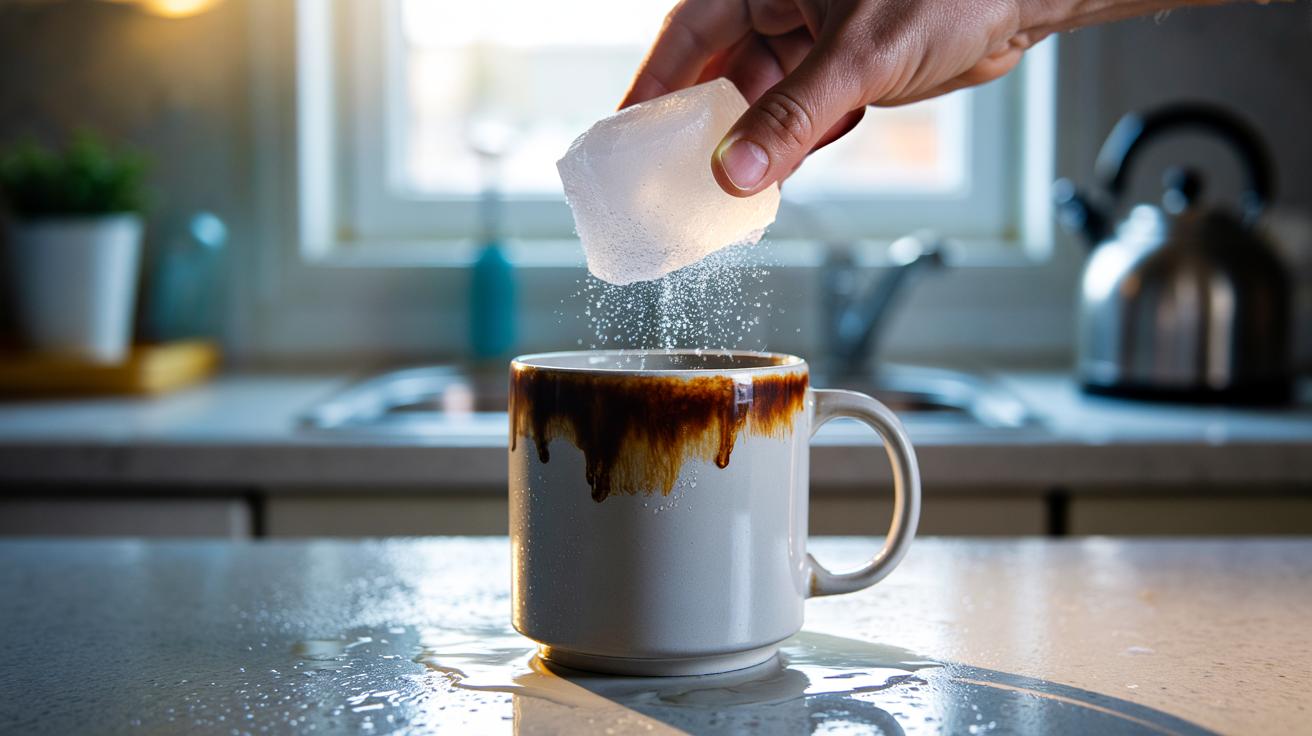
Tip out any dregs and give the mug a quick rinse. Sprinkle a teaspoon of salt over the stained area—fine table salt works, but a pinch of kosher or sea salt adds extra bite. Drop in one ice cube. Grip the cube with your fingertips and use it like a puck, pushing the crystals around the ring in firm, slow circles. Keep the pressure steady; let the grit do the work. You’ll see the brown film lift within 10–20 seconds. If the cube melts too quickly, add another and carry on for a final polish.
For stubborn rims, add a squeeze of lemon juice to the salt for a mild acid boost, then continue the scrub. Rinse well with hot water and check the sheen under good light. Any faint shadow? Repeat briefly. Dry with a soft cloth to avoid fresh mineral spots. This method suits daily maintenance too: a 10-second swirl after your last coffee stops build-up before it bites. It’s fast, inexpensive, and kinder to your mug than scouring pads or bleach-based gels. Bonus: it leaves no chemical aftertaste to haunt tomorrow’s brew.
Material Safety and When to Avoid the Scrub
Most everyday ceramic and porcelain mugs tolerate the salt-and-ice routine beautifully because their fired glazes are hard and non-porous. Stoneware also fares well, though matte finishes can show abrasion if you push too hard. Use a lighter touch on hand-thrown pieces. Stainless steel travel mugs? Possible, but test gently in a small area to avoid visible swirls on satin interiors. If in doubt, switch to a paste of bicarbonate of soda and water, which is softer than salt. Double-walled glass is riskier: sudden chill can stress thin walls, so skip the ice and use cool water plus a mild abrasive instead.
There are red lines. Avoid this method on bone china with gilt trim, metallic decals, or crackle glazes where salt can lodge in crazing lines. Enamelware with chips can rust if abrasives expose raw steel; treat carefully. Don’t use on lacquered or painted exteriors prone to scratching. If stains persist after gentle attempts, consider an enzyme cleaner or an overnight denture tablet soak to lift organics safely. Your rule of thumb: if the surface looks soft, decorative, or already worn, choose a kinder polish and skip the ice. A stain-free mug is no win if the finish is dulled.
How It Stacks Up Against Other Cleaners
Every kitchen has a favourite fix, but not all are equal on speed, safety, and aftertaste. The salt-and-ice technique wins on immediacy and neutrality: no bleach smell, no perfumed residue in your next cappuccino. Baking soda pastes are gentle and effective, though slower. Melamine sponges cut fast but can haze soft glazes if overused. Chemical bleaches blitz tannins but can etch decoration and leave odours. A quick glance at the options clarifies when to reach for which tool. Choose based on material, time pressure, and whether you can tolerate a chemical profile near your cup.
| Method | Time | Pros | Risks/Notes |
|---|---|---|---|
| Salt + Ice | 20–40 seconds | Fast, chemical-free, cheap | Use lightly on delicate glazes |
| Bicarbonate Paste | 1–3 minutes | Very gentle, odourless | Slower on heavy rings |
| Denture Tablet Soak | 15–30 minutes | Enzymes lift organics well | Not instant; needs rinse |
| Melamine Sponge | 30–60 seconds | Cuts fast with water | Abrasive; can dull finishes |
| Bleach Solution | 2–5 minutes | Very powerful | Odour, potential etching; rinse thoroughly |
For most weekday mugs, the abrasive chill of salt and ice is the sweet spot: speed without side-effects, and a finish that feels factory fresh. Reserve harsher methods for stained catering-ware or cups already cosmetically compromised. If you’re building a routine, do a micro-scrub after your last brew, then rinse and dry; prevention beats elbow grease. Keep a small jar of salt by the sink, and a tray of ice at the ready. It’s the minimalist’s cleaning caddy—always on, always effective.
In a world awash with sprays and suds, there’s something satisfying about a hack that relies on texture and temperature, not toxicity. The salt-and-ice scrub restores whiteness, respects glazes, and costs pennies, making it a smart habit for coffee lovers who like their cups as clean as their palate. It’s quick enough for a weekday rush, thorough enough for guests. Ready to try it on your most stained mug, or do you have a different go-to cleaner you swear by—and why does it win a spot at your sink?
Did you like it?4.4/5 (26)