In a nutshell
- 🥬 Rapid revive: Soak separated leaves in 1 litre ice-cold water with a pinch–1/4 tsp salt and 1 tbsp vinegar for 3–5 minutes, then rinse and spin dry thoroughly.
- 🧪 Science at work: A mildly hypotonic bath drives water into cells to restore turgor, while gentle acidity firms pectins and a tiny salt dose improves wetting without dehydrating.
- ❄️ Temperature matters: Cold stabilises membranes, slows softening enzymes, and sharpens crunch; a brief chill after spinning helps “set” texture.
- ⚠️ Common pitfalls: Avoid strong brine, warm water, and long soaks that leach flavour; keep kit clean, rinse briefly, and dry completely—excess surface water kills crispness.
- 🍋 Smart tweaks: Swap in lemon juice, reduce doses for delicate leaves, extend by a minute for sturdier ribs, and store revived greens on kitchen paper in a lidded box.
That bag of limp lettuce in your fridge isn’t destined for the bin. In a quick, clever twist of kitchen science, a bath of icy water with a pinch of salt and a splash of vinegar can restore snap in minutes. The trick relies on osmotic action—water moving across cell membranes to rebalance concentration—plus a gentle nudge from acidity that firms the plant’s scaffolding. It’s simple. It’s fast. It works astonishingly well for romaine, little gem, round lettuce, and mixed leaves. Done properly, you’ll see limp fronds transform into perky, crisp foliage without masking flavour or piling on sodium. Here’s how, and why, it works so quickly.
The Science of Osmosis in Lettuce Cells
When lettuce wilts, it’s not “going off” by default; it’s losing turgor pressure. Inside each leaf cell, a large vacuole holds water and dissolved sugars and salts. That internal solution is usually more concentrated than the rinse water around it. Through a semi-permeable membrane, water naturally flows from the dilute side to the concentrated side—classic osmosis—inflating cells like tiny water balloons. Lose water to warm air or time, and the balloons sag. Restore that balance, and the leaves spring back. The goal is to create a mildly hypotonic bath so water re-enters cells, not a harsh brine that drags more out.
Where do salt and vinegar fit? Counterintuitively, a tiny amount of salt can speed rehydration by improving wetting, helping cold water slide past waxy cuticles and into microscopic crevices. The small salt dose remains far less concentrated than the cell sap, so the soak stays hypotonic. Vinegar (acetic acid) drops the pH, which tightens pectin structures in cell walls and slows enzymes that soften leaves. The result is twin action: water surges in to refill vacuoles, while acidity subtly firms the plant’s scaffolding. That’s why the leaves feel crisper, not just wetter.
Temperature is the final lever. Cold reduces membrane leakiness and inhibits microbial enzymes that make leaves slimy. Couple that with gentle motion in the bowl, and you get rapid, uniform contact across cut edges. In practice, five minutes is enough for most lettuces to bounce back without becoming waterlogged.
The 5-Minute Method: Salt, Vinegar, Cold
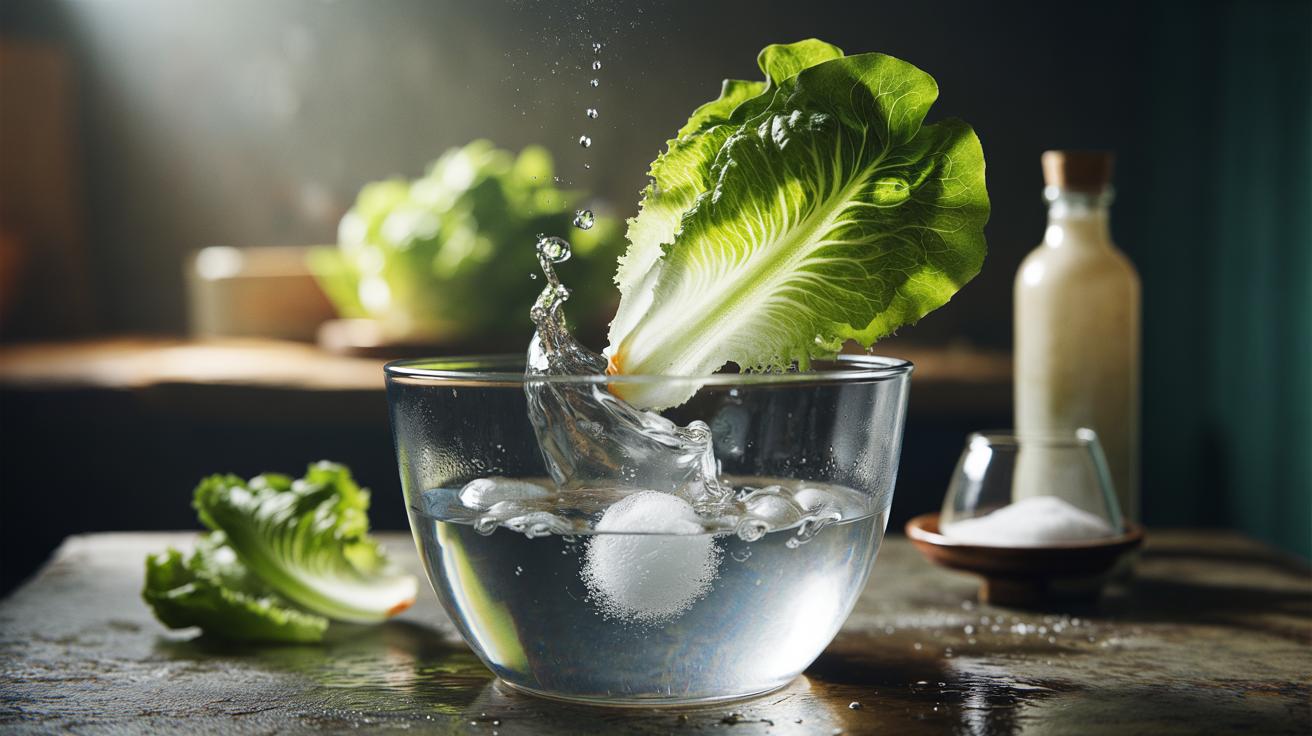
Use a large bowl, not the sink. Fill with 1 litre of ice-cold water, add a pinch to 1/4 tsp fine salt, and 1 tbsp clear vinegar (white wine or distilled). Swirl until dissolved. Submerge separated leaves, agitate briefly, then let them rest for 3–5 minutes. Drain, rinse quickly in cold fresh water, and spin dry thoroughly. That final spin is crucial; trapped surface water dulls crunch and dilutes flavour. A tiny pinch of salt will not dehydrate the leaves; the bath stays hypotonic, so water still flows into the cells.
| Ingredient | Typical Amount (per litre) | Primary Role | If You Overdo It |
|---|---|---|---|
| Ice-cold water | 1 litre + ice | Restores turgor via osmosis; cools membranes | — |
| Salt | Pinch to 1/4 tsp | Improves wetting; stays hypotonic at low dose | Soggy, saline leaves if too strong |
| Vinegar | 1 tbsp (5% acidity) | Firms pectins; tames enzymes; freshens flavour | Harsh tang if excessive |
Prefer lemon? Use 1 tbsp lemon juice instead of vinegar for a softer citrus note. For very delicate leaves, cut salt to a mere pinch. For tired romaine ribs, the full 1/4 tsp can help water slip into tougher tissues. Five minutes is enough—longer soaks add waterlogging, not crispness. Always spin or pat dry, then refrigerate the refreshed leaves for 10 minutes to set the crunch.
What Happens at the Cell Wall
The leaf’s bite comes from its cell wall network—cellulose fibres glued by pectins and hemicelluloses. When pH dips slightly from vinegar, calcium-pectate links in the wall can tighten, a bit like re-buttoning a corset. The effect is modest but perceivable: leaves feel firmer under your teeth. Meanwhile, aquaporin channels in membranes facilitate rapid water inflow, rebuilding turgor. You’re not “curing” the lettuce so much as re-pressurising it and stabilising the scaffold that translates pressure into crunch.
Why the salt at all? At low levels, ions reduce surface tension and help the cold bath permeate quickly across cut edges and microscopic stomata. That hastens rehydration in the time window you care about—minutes, not hours. Critically, the bath remains less concentrated than the cell interior, keeping net flow inward. Use a strong brine and you flip the gradient: water exits cells, wilting worsens, and flavour suffers. The mild acidity also interrupts pectin-munching enzymes and discourages slime-forming microbes clinging to leaf surfaces, which is why refreshed leaves often look brighter and keep better through the evening.
Texture is perception and physics. Refilled vacuoles push against tightened walls, the leaf arches, and snap returns. Cold shocks the tissue into holding that pressure a little longer. That’s the crispness you hear when the fork hits the plate.
Safety, Taste, and Common Pitfalls
Start clean: bowl, hands, spinner. Lettuce can harbour dirt and occasional pathogens in creases. The cold acidic soak helps reduce surface microbes, but it’s not a sterilising step. Rinse briefly after soaking to balance acidity and remove residual grit. Dry thoroughly. Excess surface water is the enemy of flavour and dressing adhesion. Store revived leaves in a lidded box lined with kitchen paper; they’ll hold a pleasing snap for hours.
Common mistakes? Too much salt, too much time, too warm water. A heavy brine draws water out, not in. Extended soaks leach flavour and vitamins. Tepid water accelerates softening. If leaves are slimy or smell sour, the game is up—compost them. For extra-fragile herbs and baby greens, halve both salt and acid, and limit the dunk to three minutes. Think of the method as a reset button, not a cure-all for decay. If you’re dressing immediately, season more lightly: the microdose of salt and acid in the soak subtly lifts taste, so your vinaigrette can be gentler.
Variations work well. Apple cider vinegar lends a soft fruit note; rice vinegar is clean and mild. A few ice cubes extend the cold edge on a warm day. For iceberg wedges, add an extra minute. For little gem halves, separate the outer leaves so the core hydrates evenly.
In the end, this is everyday kitchen physics, wielded with a light touch. A short soak with a pinch of salt, a splash of vinegar, and plenty of cold gets water moving where it should and firms the structures that make lettuce crisp. It’s cheap, fast, and surprisingly reliable across varieties. Handled right, five minutes is all it takes to turn a weary salad into a lively one. What else in your crisper might benefit from a similar osmotic refresh—cucumber slices, celery sticks, even radish coins—and how would you tweak the bath to suit their textures?
Did you like it?4.2/5 (21)