In a nutshell
- 🧪 Salt works fast by being mildly hygroscopic and promoting adsorption, pulling wine’s anthocyanin pigments from fabric within minutes.
- 🧻 Method matters: blot (don’t rub), blanket with salt, wait 5–10 minutes, rinse with cold water, then air-dry—heat sets stains.
- 🧂 Right salt, right job: fine table salt absorbs fast on shirts and linens; medium-coarse crystals aid capillary wicking on rugs and upholstery.
- 🧴 Smart escalations if a shadow remains: rehydrate with soda water, try bicarbonate paste, gentle vinegar mix, enzyme detergents, or cautious 3% hydrogen peroxide on whites.
- 🧵 Fabric care: treat silk and wool gently, test first, and seek professionals for set stains or dry-clean-only items.
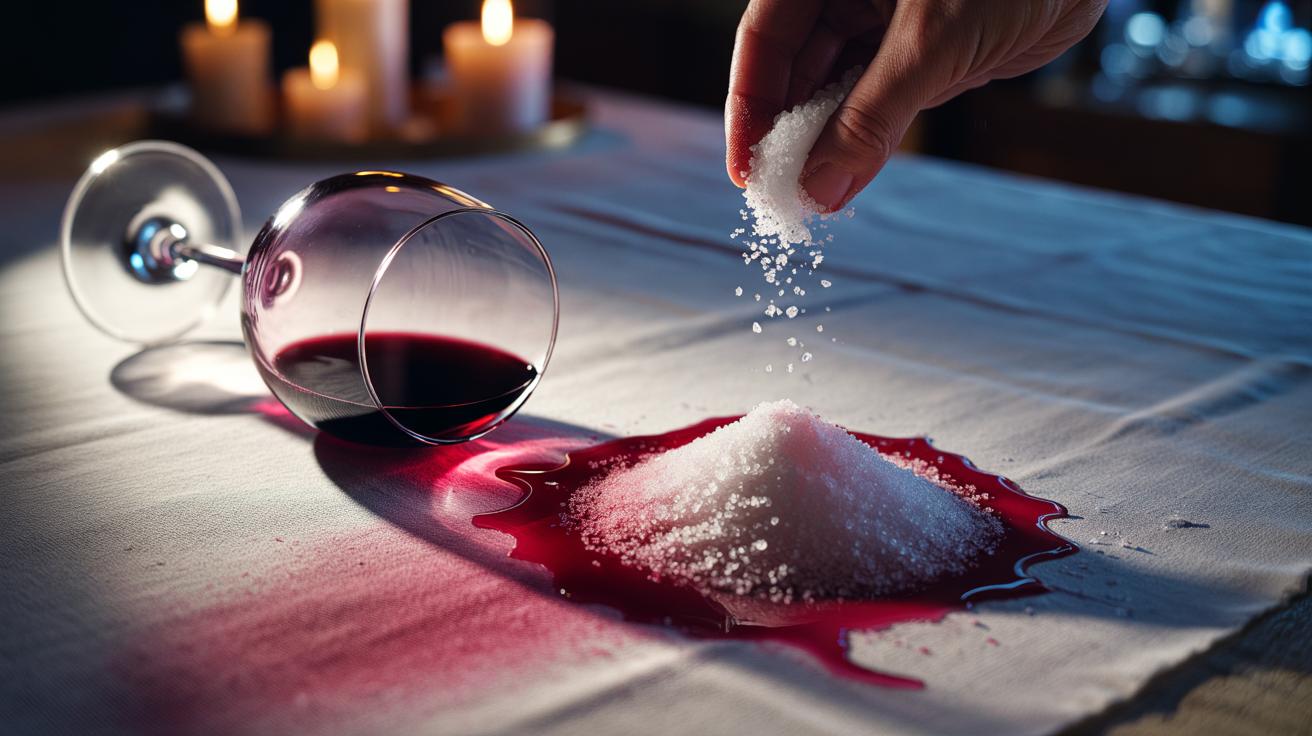
Red wine spills feel fatal, yet the fix is hiding in your kitchen. Plain salt, the same sodium chloride you scatter over chips, can lift a fresh Bordeaux blotch from upholstery or a linen shirt in minutes. The trick is simple physics meeting chemistry: crystals that thirst for liquid, surfaces that cling to colour, and a gentle pull that coaxes dye out instead of rubbing it in. Act quickly and avoid heat. That’s the cardinal rule. What follows is a clear, journalist’s guide to why it works, when it fails, and how to do it right the first time—so your evening ends with a sigh of relief, not a ruined sleeve.
How Salt Pulls Wine Pigment from Fabric
Wine stains look menacing because of anthocyanins and tannins—highly chromatic molecules that bind to fibres. Salt crystals tackle them on three fronts. First, they are mildly hygroscopic, wicking moisture through capillary action. By pulling liquid upward into the granules, salt reduces the wetness that drives colour deeper into the weave. Second, the crystal surface provides abundant sites for adsorption—a cling, not a chemical reaction—where pigment molecules stick to the salt rather than the fabric. Third, a concentrated layer of ions around the crystals changes the solution’s balance, nudging dye components to leave the fibre.
Timing is decisive. On a fresh spill, salt can remove 70–90% of the visible pigment, often more. On a set stain, its role shifts to pre-treatment. Do not rub; blot and cover. Coarse grains create micro-channels that pull liquid; fine grains pack densely and absorb quickly. Either way, the aim is the same: evacuate the wine into the salt bed before it oxidises and locks into the fabric’s protein or cellulose. In minutes, the mound turns pink, proof the crystals are doing the heavy lifting.
Step-by-Step: From Spill to Saved
1) Blot immediately with a clean, white cloth or paper towel. Press, lift, rotate. Keep advancing to a fresh section so you’re not re-depositing wine. Nobody ever saved a shirt by scrubbing.
2) Flood the area with table salt. A thick, even blanket—3 to 5 mm—across and just beyond the damp edge. The coverage matters; the stain migrates outward as it wicks.
3) Wait 5–10 minutes for fresh stains; up to 20 for heavier spills. You’ll see the salt turn pinkish as it draws pigment. If the mound saturates, carefully sweep it off and reapply a fresh layer.
4) Rinse from the back with cold water to push remaining colour out of the fibres. For washable fabrics, follow with a dab of mild washing-up liquid or laundry detergent, then launder cold. For upholstery or rugs, blot with water, then a tiny amount of detergent, and finish with a clean water rinse.
5) Air-dry only. Heat sets stains. Inspect; repeat the salt step if a faint shadow remains. For delicate fibres—silk, wool—do everything gently and test any detergent on an inconspicuous patch first.
Choosing the Right Salt and Tools
Any sodium chloride will help, but grain size affects performance. Fine table salt packs tight and absorbs fast; kosher or coarse sea salt creates channels that promote wicking on plush textiles. Add-ons matter less than you think: iodine doesn’t stain at these levels, and anti-caking agents are typically inert here. What matters most is volume and speed. Keep a jar handy near dining areas, next to clean white cloths, a soft brush, and a small scoop. A blunt knife is ideal for lifting saturated salt without dragging colour back across the fabric. For carpets, a handheld vacuum helps remove spent crystals before reapplication.
| Stain Type | Fabric | Salt Amount | Wait Time | Effectiveness |
|---|---|---|---|---|
| Fresh red wine | Cotton/linen | Generous blanket | 5–10 min | High |
| Fresh red wine | Wool/silk | Light cover | 5–8 min | Moderate |
| Set stain | Most washable | Two rounds | 20–30 min | Pre-treatment only |
Avoid rock salt pellets—too large to seat well against fibres. If you must choose one universal option, pick fine table salt for shirts and tablecloths, and a medium-coarse grain for rugs and upholstery where pile height benefits from channelled wicking.
When Salt Isn’t Enough: Smart Escalations
Salt is superb triage, not always a silver bullet. If a blush remains, try soda water to rehydrate the stain and revive capillary flow, then repeat the salt. For white, colour-fast cottons, mix a paste of bicarbonate of soda and water; apply for 10 minutes, rinse cold. A 1:1 blend of white vinegar and water can disrupt anthocyanin bonding, but test first. For stubborn patches on washable fabrics, a small amount of enzyme detergent helps dismantle tannins that add brownish cast. Whites only? A careful dab of 3% hydrogen peroxide can oxidise residual dye—rinse thoroughly afterward.
Delicates need caution. Wool and silk are protein-based; they can distort or spot. Keep exposure brief and use minimal liquid. Always test an inconspicuous area. If the garment is labelled dry clean only and the stain is old, seal it in a bag to prevent further oxidation and head to a professional cleaner, briefing them on everything you tried. They’ll appreciate the honesty, and your odds improve when chemistry is consistent rather than guesswork.
There’s quiet magic in those everyday crystals. The moment wine hits cloth, salt becomes both sponge and scaffold, pulling liquid and pigment before the chemistry sets hard. Keep the kit simple, act fast, and resist the urge to scrub. From weeknight mishaps to wedding reception wobbles, the same rules apply: blot, blanket with salt, wait, rinse cold, reassess. If a shadow lingers, escalate with care and test first. The result? Clothes and carpets live to pour another day. What will you stash in your dining room first-aid kit so the next spill is a non-event?
Did you like it?4.3/5 (22)