In a nutshell
- ⚡ A simple two‑device setup—solar PV plus a home battery—lets households self‑generate by day and use stored power at night to cut grid imports.
- ☀️ Typical systems (3–5 kWp solar + 8–10 kWh battery) can deliver 40–60% bill reductions annually by maximising self‑consumption and avoiding peak rates.
- 💷 UK costs often range £7,500–£13,500 installed; savings of £600–£1,200/yr put payback around 5–10 years, boosted by SEG export income.
- 🕒 Smart control enables time‑of‑use arbitrage: charge off‑peak or from sun, discharge during expensive hours, and schedule appliances to follow the solar curve.
- 🛠️ For best results, choose MCS‑accredited installers, size battery to evening use, consider a hybrid inverter, and confirm DNO (G98/G99) approvals.
Energy bills have become the UK’s quiet obsession. Families scan statements, juggle tariffs, and still feel squeezed. Here’s the twist: a two‑device setup is helping ordinary households slice energy costs dramatically without downgrading comfort. It pairs roof‑mounted solar PV with a home battery that stores spare daytime generation for evening use. Simple idea, big shift. By making your own power and time‑shifting it, you import less from the grid when prices bite. The result won’t magic bills to zero year‑round, but in spring and summer many see day‑to‑day grid demand fall to a trickle, while winter still benefits from smart peak avoidance and export earnings.
What Is the Two-Device Setup?
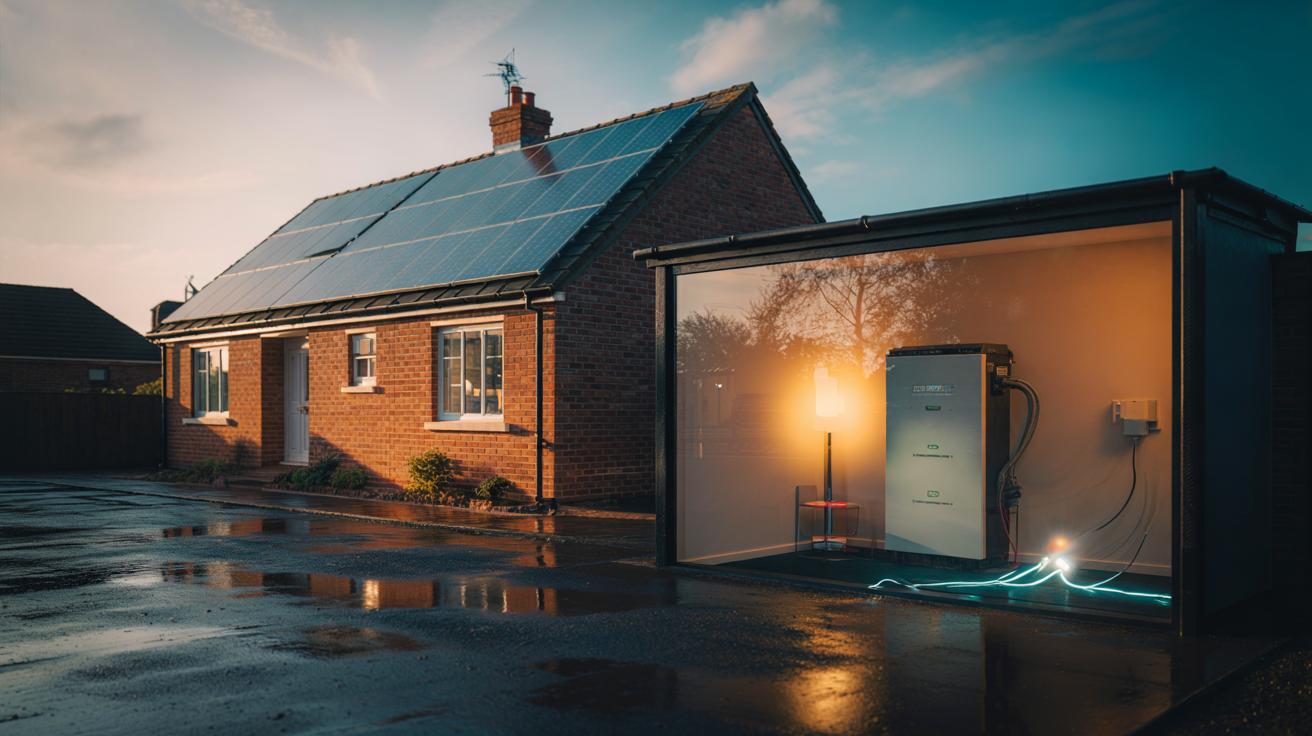
Think of it as a home energy loop. Device one is solar PV: panels turn sunlight into direct current, which an inverter converts into household AC power. Device two is a lithium‑ion battery (often coupled with a hybrid inverter) that captures excess generation you don’t immediately use. In practice, sunshine runs your home first, then tops up the battery, and only then spills power back to the grid. At night, the battery feeds the house, shaving or replacing imports. The loop quietly repeats daily.
This pairing targets the twin enemies of household bills: high unit prices and peak‑time charges. It boosts self‑consumption—the share of your own solar you actually use—turning intermittent production into predictable supply. A modest array (3–5 kWp) can meet daytime baseloads—fridge, router, standby—while charging an 8–10 kWh battery for the critical 4–9 pm slot. That’s when UK tariffs spike and kettles, ovens, and TVs ramp up. The two devices work like a personal mini‑grid: you harvest, you store, you spend strategically. No lifestyle overhaul required, just smarter timing baked into the hardware and app controls.
How It Halves Bills in the UK
UK bills rise on three levers: standing charge, unit rate, and when you consume. This setup attacks two of them. First, it slashes grid imports by generating on site. Second, it trims the most expensive hours by discharging during peaks. Every kilowatt‑hour you don’t buy at 35–45p is worth far more than a kWh exported at single‑digit pennies. On time‑of‑use tariffs, the battery can even arbitrage rates—charging from cheap off‑peak or surplus solar and discharging into peak, legally and automatically.
What does that look like in a typical semi‑detached using 3,000–3,500 kWh a year? A 4 kWp array with a 9 kWh battery can cover a large share of spring and summer use, often leaving only cloudy stretches to buy from the grid. Winter is tougher, but intelligent scheduling—running washing, dishwashers, and EV charging at solar‑rich hours or cheap off‑peak—keeps the meter honest. Households on SEG export tariffs earn for surplus generation, softening payback. Real‑world monitoring from installers and users commonly shows 40–60% bill reductions across a year, with summer months far higher. It isn’t magic; it’s mathematics plus timing.
Costs, Payback, and Real-World Results
Upfront cost depends on roof size, kit quality, and installer. For many UK homes, expect £4,500–£7,500 for a 3–4 kWp solar array and £3,000–£6,000 for an 8–10 kWh battery, installed. VAT relief on qualifying energy‑saving materials helps, while MCS-certified systems unlock SEG export payments. Annual savings swing with latitude, shading, tariffs, and habits. A sensible band? Often £600–£1,200 per year at current price‑cap levels, more on dynamic tariffs with diligent use. That puts payback in the 5–10 year range for many, with panels lasting 20–25 years and batteries typically warranted for 10+.
| Item | Typical UK Cost | Main Benefit | Notes |
|---|---|---|---|
| Solar PV (3–4 kWp) | £4,500–£7,500 | Generates daytime kWh | Best on south/SE/SW roofs; shading matters |
| Battery (8–10 kWh) | £3,000–£6,000 | Shifts energy to evenings/peaks | 10‑year warranties common; app controls vital |
| SEG Export | Payment per kWh exported | Income for surplus | Rates vary by supplier/tariff |
Degradation is modest: panels lose a sliver of output annually, batteries gradually drop usable capacity. Yet even with conservative assumptions, the numbers track. The headline is stability: you’re insulating your household from tariff spikes by making and timing more of your own power.
Choosing, Installing, and Using It Right
Start with the roof. Orientation (south is king, east/west close behind), pitch, and shade dictate returns. Get three quotes from MCS-accredited installers; ask for a site‑specific yield estimate and clear warranty terms. Inverter choice matters: a hybrid inverter simplifies wiring and control; optimisers on shaded strings can rescue output. Check DNO approvals (G98/G99) early; 3.6 kW of inverter capacity is common on single‑phase homes without extra paperwork, though larger systems are possible. Correct system sizing beats sheer capacity—match battery storage to your evening use and solar size to your roof and budget.
Then, lean on software. Set battery rules to prioritise self‑consumption in summer and cheap‑rate charging in winter. Use appliance timers so laundry and dishwashers ride the solar curve. If you have an EV, schedule charging off‑peak or in sun. A hot‑water diverter can be a later add‑on, but the core two devices already do the heavy lifting. Keep an eye on dashboards for a month, tweak, then let automation run. The more of your routine you align to generation and tariffs, the faster the system pays you back. And yes, it’s set‑and‑forget once dialled in.
For many UK households, this two‑device recipe—solar PV plus a smart home battery—is the cleanest route to slicing bills while future‑proofing against price shocks. It’s tangible, trackable, and quietly transformational: less buying at the worst times, more using what you make. The nuance sits in sizing, tariffs, and habits, not in hype. If cutting your grid imports by roughly half sounds ambitious, it is—but it’s also happening on ordinary streets right now. What would you power first with your own sunlight, and how would you tune your daily routine to squeeze the most value from it?
Did you like it?4.4/5 (20)