In a nutshell
- 🌅 Make one change: step outside for natural morning light before screens to boost mental clarity and mood all day.
- 🧠 Morning light anchors your circadian rhythm, signalling the SCN via ipRGCs to optimise melatonin at night and the cortisol awakening response by day.
- ⏱️ Practical protocol: get light within 30–60 minutes of waking; 5–10 mins if clear, 15–20 mins if cloudy; outdoors beats windows; delay phones.
- ⚡ Stack habits: pair light + light movement + protein, and delay caffeine 60–90 minutes for steadier focus and fewer afternoon crashes.
- ⚠️ Caveats and fit: consult if light-sensitive; align exposure with a biological morning for shift workers; limit late-night bright light to protect next-day clarity.
Every morning, millions of us reach for our phones before our feet touch the floor. Scientists now say we’re missing a simple, powerful tweak. Step outside first. A brief dose of natural morning light—before screens, email, or even coffee—appears to set the brain’s clock, stabilise hormones, and sharpen thinking for hours. It’s not a wellness fad, but a circadian lever you can pull in minutes. The cost is nothing. The payoff, potentially, is a day of cleaner focus and steadier mood. Ten minutes outdoors can outperform an hour under office lights. It’s science you can feel the very same morning you try it.
The One Change: Step Outside Before Screens
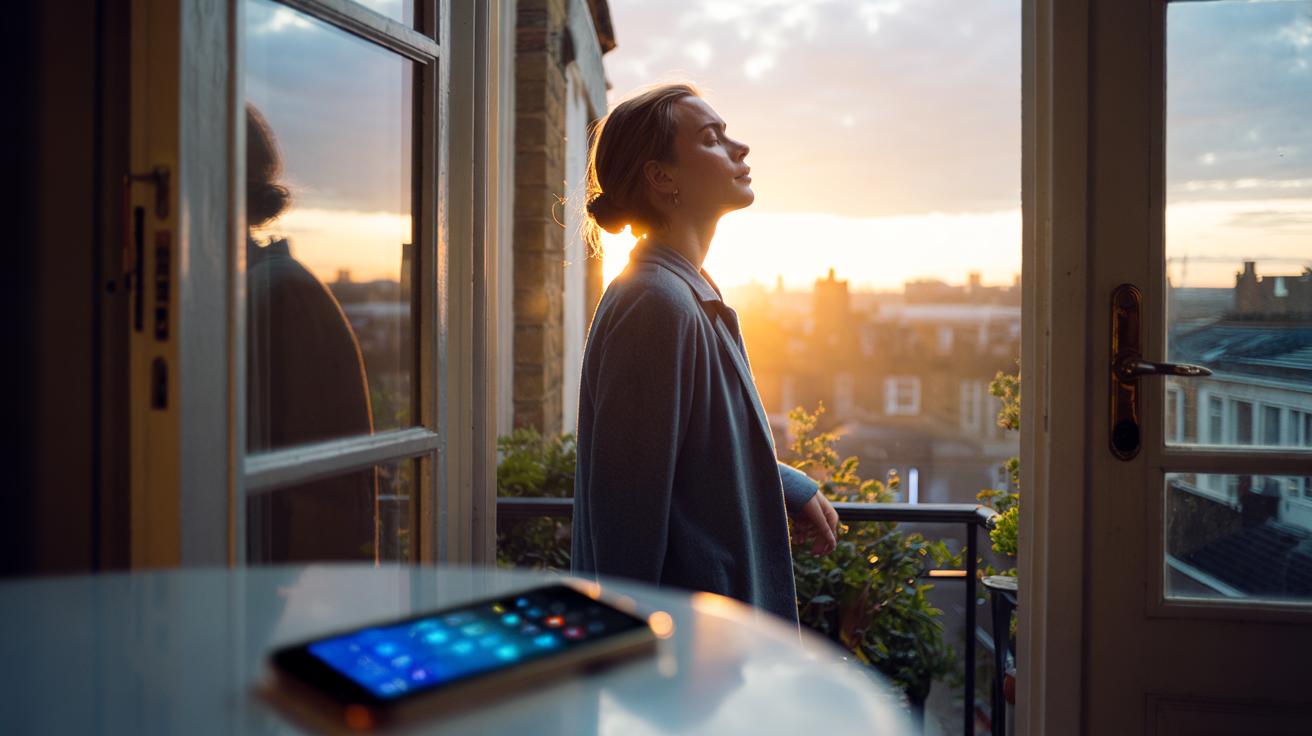
Here’s the prescription, straightforward and oddly freeing: on waking, go outdoors and face the day. Five to fifteen minutes is enough for most; more on overcast mornings. Don’t check your phone first. Don’t switch on every lamp. Let the sky—grey, pink, or bright blue—do the heavy lifting. That early light is rich in the exact wavelengths the brain uses to calibrate time. Morning light exposure strengthens your body’s daily rhythm so the rest of your schedule runs smoother, from thinking to appetite.
Even on a cloudy British morning, outdoor light typically delivers 10–30 times the intensity of indoor lighting. That intensity, measured in lux, feeds specialised retinal cells that “tell” the brain it’s daytime. People who adopt this one change often report fewer groggy hours, a tidier arc of energy across the day, and easier sleep at night. It’s not magic. It’s physics meeting biology, with a dash of habit design. Try it tomorrow, before the inbox can steal your attention.
Why Morning Light Works for Your Brain
Light is the master signal for your circadian rhythm, the 24-hour pattern that orchestrates hormones, temperature, and alertness. When photons hit intrinsically photosensitive retinal ganglion cells (ipRGCs), they route that data to the brain’s clock, the suprachiasmatic nucleus (SCN). The SCN then times the daily drop of melatonin at night and coordinates the cortisol awakening response in the morning. Dial the signal early and cleanly, and the rest of the day aligns.
For cognition, timing is everything. By anchoring the clock, morning light stabilises the windows when the prefrontal cortex performs best. That means fewer lulls in working memory, steadier attention, and faster decision-making. In practical terms, you notice it as mental clarity: thoughts feel “in one lane,” not scattered across four. A regular morning light cue also trims sleep inertia—the fogginess many feel after waking—without needing another espresso. Over weeks, the brain learns the pattern, and the benefits compound. You’re not forcing alertness; you’re giving it the right conditions to happen.
Practical Guide: Timings, Weather, and Windows
Think of morning light like breakfast for your brain. The ideal is simple: get outside within 30–60 minutes of waking. If the sun is bright, five minutes can suffice. If sky is milky or drizzly, stretch to 15 or 20. Sunglasses are fine for comfort, but skip very dark lenses. Through a window is better than nothing, yet glass filters the wavelengths that matter most; a doorway or balcony is a smarter compromise. Consistency beats perfection—do it most days, not perfectly every day.
| Factor | Guideline |
|---|---|
| Timing after wake | Within 30–60 minutes |
| Duration (clear sky) | 5–10 minutes |
| Duration (cloudy) | 15–20 minutes |
| Indoors vs outdoors | Outdoors preferred; open doorway if needed |
| Screen use | Delay until after light exposure |
Pair the light with a glass of water or a gentle walk to stack benefits. Many find that delaying caffeine by 60–90 minutes, once the natural cortisol wave is up, prevents afternoon crashes. The goal is a reliable, low-friction ritual that cues your body: morning has started, focus is available, and the day has a rhythm.
Synergies, Caveats, and Who Stands to Gain
Students under exam pressure. Shifted parents. Knowledge workers with long Zoom days. Anyone who wrestles with mid-morning brain fog stands to benefit. Combining morning light with light movement—an easy stroll or a few stairs—can compound alertness without jangling your nerves. Add a protein-forward breakfast if you’re prone to sugar dips. For many, that trio—light, movement, protein—is the crisp start they’ve been missing. The beauty is its minimalism: no subscriptions, no biohacking kit, just the sky and your shoes.
There are cautions. If you have a condition sensitive to light (such as certain retinal disorders or bipolar vulnerability to bright-light therapy), speak to a clinician about timing and dose. Night-shift workers can still use the principle, simply aligning light with their “biological morning” after waking. Remember that evening light works in reverse: intense light late at night can delay sleep and blunt next-day clarity. Keep late screens dim and warm. This is not a cure-all, but a strong foundation—one that makes other habits, from exercise to deep work, materially easier.
Tomorrow morning, skip the scroll and step outside. Watch the sky for a few minutes, breathe, and let the day arrange itself around that signal. You’ll likely feel the difference before lunch—steadier focus, cleaner transitions between tasks, less push required. Over a fortnight, the gains tend to stick. Small habit, big return. It’s a rare bargain in a noisy wellness world. Your calendar won’t change, but your brain’s timing can. Will you give the first ten minutes of your morning to the light, and see what it gives back?
Did you like it?4.5/5 (29)